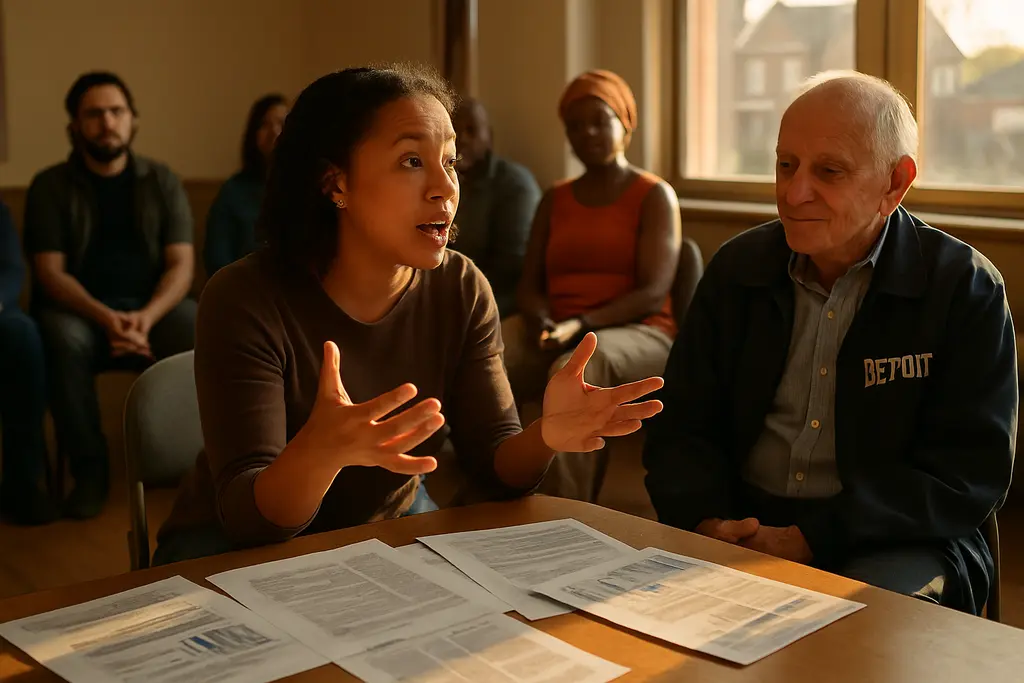
The Detroit PRO Housing grant gives the City of Detroit new federal support to address barriers that slow affordable housing production and preservation. The City’s Housing and Revitalization Department says HUD awarded Detroit a $4.3 million Pathways to Removing Obstacles to Housing grant, a program aimed at helping local governments remove regulatory and procedural barriers to affordable housing through local planning, policy, and development tools on the City PRO Housing page. HUD’s FY24 award overview lists Detroit’s grant at about $4.2 million, which explains the slightly different public figure used in some references to the same award in the HUD award overview.
For residents, block clubs, faith groups, housing nonprofits, and small property owners, the practical issue is not only the grant amount. The civic question is how Detroit uses these funds to make affordable housing easier to preserve, finance, permit, and build. The City identified four main uses: zoning updates, a small buildings funding notice, pre-development support, and pre-permitted plans for infill housing on publicly owned land. Each part addresses a different point where affordable projects can stall before families see a new or preserved home.
What The Detroit PRO Housing Grant Funds
Detroit PRO Housing Amount And Purpose
The grant’s formal name, Pathways to Removing Obstacles to Housing, is direct: it focuses on removing obstacles rather than paying only for construction. That matters because affordable housing can be blocked by zoning limits, unclear local procedures, slow approvals, early planning costs, and site-readiness gaps. Detroit’s posted plan places the grant inside city work led by the Housing and Revitalization Department, with related roles for planning and zoning offices named in the research materials.
The Detroit PRO Housing work should be read as a support-service tool as much as a development tool. Families who are rent-burdened need units they can afford, but those units often depend on public systems that operate long before a lease is signed. A zoning change, a clearer permit path, or a pre-development award can affect whether a project reaches financing, whether a vacant parcel becomes a home site, and whether a small building owner can keep rents affordable after repairs.
Four Work Areas Identified By The City
The City identified four main grant activities. Taken together, they show a policy-first approach: fix rules, prepare sites, help smaller owners, and reduce repeat design and review steps for infill housing.
- Zoning Ordinance updates: Detroit plans to update zoning rules to better accommodate and encourage affordable housing production and preservation.
- Small Buildings NOFA: The City plans a Notice of Funding Availability meant to encourage owners of 2–7 unit buildings to produce affordable housing.
- Pre-Development NOFA expansion: Detroit plans to expand support that can help projects become more site-ready before full development financing is secured.
- Infill housing tools: The City plans to use pre-permitted residential housing plans and expedited site plan review and permitting for publicly owned land.
Those categories are useful for community groups because they separate large policy questions from direct project readiness. A neighborhood organization tracking a vacant public parcel may focus on infill plans. A housing nonprofit planning a larger affordable development may watch the pre-development funding process. A small landlord with a duplex, fourplex, or six-unit building may need to follow the small buildings funding notice when it is issued.
Why The Grant Matters For Renters And Small Owners
Housing Cost Pressure In Detroit
The research materials tied to Detroit’s PRO Housing plan report that housing cost burden is high in the city: as of mid-2025, 59% of households paid more than 30% of income toward housing, and 21% paid more than 50%. The same research notes report that from 2019 to 2021, Detroit experienced an average annual rent increase of 4.5%, compared with 4.0% for the broader Detroit metropolitan area.
Those numbers help explain why policy changes matter. A household spending more than 30% of income on housing has less room for food, transportation, child care, utilities, health needs, and emergency savings. A household spending more than half of income on housing faces even less room to absorb a job loss, rent increase, car repair, or medical bill. More affordable units are one answer, but keeping existing affordable apartments in service is also part of the response.
Detroit has already reported major affordable housing activity in recent years. The research materials state that between 2018 and 2024, the city saw more than $1 billion in combined public and private affordable housing investment, including about $87.5 million from direct city financing programs, connected to preservation or development of 4,646 affordable housing units. The PRO Housing grant does not replace that larger housing finance work. It is intended to make the local system work better so future public and private investments can move through clearer rules.
Small Buildings And Neighborhood Stability
The planned Small Buildings NOFA is especially relevant in Detroit neighborhoods where 2–7 unit buildings can provide naturally smaller-scale rental options. These properties may not look like large apartment developments, but they can affect housing stability on a block-by-block basis. If funding helps owners preserve affordability while making needed improvements, the public benefit can reach residents in smaller buildings that are often overlooked in large development discussions.
Small building support also fits with wider city housing planning. Saint Joseph Detroit has previously covered how local housing priorities connect repair, affordable housing, lead reduction, and public services in the Detroit Annual Action Plan. The PRO Housing award adds another tool focused on the systems that shape whether affordable projects can move from idea to permit to financing. For readers following civic problem-solving across community networks, Houston LWS Forum offers a related example of local-information sharing within the same broader network.
How Residents And Community Groups Can Track The Work

Public Process And Department Roles
Residents should treat the grant as a public-process item, not a one-time announcement. The Housing and Revitalization Department is central to the award, while the City Planning Commission and Planning and Development Department are identified in research materials as key partners in implementation. Because zoning, permitting, public land, and funding notices affect many neighborhoods, residents and local groups can watch city meeting agendas, department updates, and formal notices for the next steps.
As of September 8, 2026, the research provided for this article does not verify completed zoning revisions, final Small Buildings NOFA awards, or specific infill projects funded under this grant. That means residents should avoid assuming that a parcel, building, or development has already been approved under PRO Housing unless the City has posted a formal record. The safest civic step is to check City of Detroit department pages, public meeting materials, and procurement or funding notices before sharing claims in neighborhood meetings or online groups.
Detroit PRO Housing Questions For Local Meetings
Community groups can make the grant more understandable by asking practical questions tied to each work area. These questions can help residents focus on the public decisions that affect housing access without turning meetings into rumor exchanges.
- Zoning: Which zoning changes are being considered, and how will residents be able to review them before adoption?
- Small buildings: When will the 2–7 unit building funding notice be released, and what affordability terms will be required?
- Pre-development: What types of site-readiness costs may be eligible, and how will awards be reported publicly?
- Public land: Which publicly owned parcels may use pre-permitted plans, and how will nearby residents receive notice?
- Accountability: What public records will show spending, project selection, permitting progress, and affordability commitments?
Clear questions are a service to the neighborhood. They help residents understand what the City has approved, what is still under review, and where public input belongs. They also help nonprofit partners, churches, and outreach teams explain housing policy in plain terms for residents who may not attend zoning or planning meetings. For readers following civic problem-solving across community networks, Houston LWS Forum offers a related example of local-information sharing within the same broader network.
Detroit PRO Housing Grant Implementation
What A Careful Local Response Looks Like
The Detroit PRO Housing grant is best understood as an implementation test. The award gives the City money to address barriers, but the community benefit will depend on how clearly Detroit explains the rules, how quickly eligible funding notices are released, how fairly projects are reviewed, and how well residents can see results. Policy work can feel distant from daily housing stress, yet zoning language, permit steps, and site-preparation costs can decide whether affordable homes move forward.
For support-service organizations, the next civic role is education and referral. Staff and volunteers can help residents understand that the grant is not direct rental assistance, not a homeowner repair check, and not an automatic approval for any specific project. It is a federal housing-policy grant meant to remove barriers that affect future affordable housing production and preservation. That distinction can reduce confusion for families seeking immediate help while still showing why the policy work matters.
Detroit residents who want to track the work should watch for City notices tied to zoning revisions, the Small Buildings NOFA, the Pre-Development NOFA, and infill housing plans on publicly owned land. Neighborhood groups can ask for plain-language timelines, public reporting, and clear affordability terms. If those pieces are posted and updated, the grant can become more than a funding announcement. It can become a practical tool for making affordable housing work easier to plan, easier to review, and easier for residents to understand.