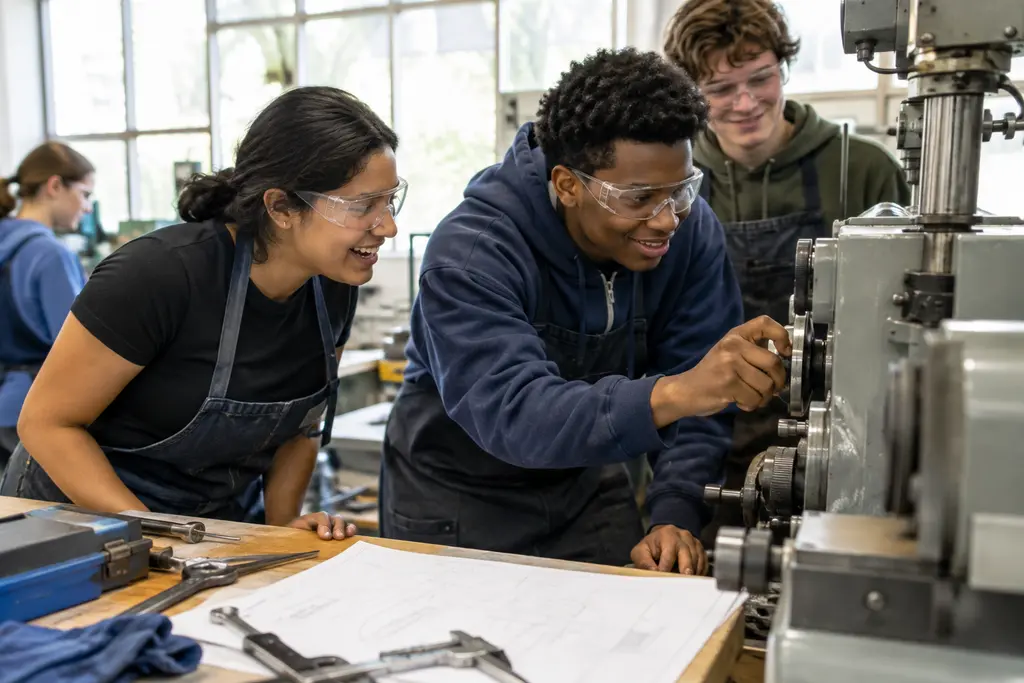
The Detroit Manufacturing Futures initiative launched on October 23, 2026, at the Michael Berry Career Center in Dearborn Heights, giving Detroit Public Schools Community District and Dearborn Public Schools a new middle school career pathway effort tied to manufacturing, robotics, computer-aided design, and high school CTE connections. DPSCD said the initiative is supported by a $500,000 General Motors grant administered through the American Federation of Teachers Educational Foundation and is expected to serve about 2,800 middle school students per year across the two districts through equipped classrooms, paid student ambassadors, family-engagement events, and site visits to high school manufacturing programs, according to the district’s official launch announcement.
What Detroit Manufacturing Futures Changed For Students
Launch Date And Partners
The October 23 launch placed a regional workforce issue inside a school-based plan: students need earlier exposure to technical careers, and families need clear information before high school course choices become urgent. The district announcement identified AFT, General Motors, DPSCD, and Dearborn Public Schools as launch partners. The site of the announcement, Michael Berry Career Center in Dearborn Heights, also matters because the program is not limited to classroom discussion; it is connected to career and technical education facilities where students can see equipment, demonstrations, and possible next steps.
For Detroit families, the change is practical. The program brings advanced manufacturing awareness into the middle school years, before students select a high school pathway. The available source material does not list every participating middle school or eligibility detail, so families should wait for direct information from their school or district before making enrollment assumptions. What is confirmed is that the initiative is designed for middle school students in DPSCD and Dearborn Public Schools and is linked to existing STEM or elective classes.
Grant And Annual Reach
DPSCD reported that the $500,000 grant from GM will support equipment, curriculum, family engagement, site visits, and student ambassador stipends. The district also said the initiative will serve approximately 2,800 middle school students each year. That figure gives the program civic importance beyond one classroom or one event. If implemented as described by the partners, the work reaches a large group of young students at a time when many families are asking how school connects to employment, college, apprenticeships, and stable income.
The initiative also aligns with DPSCD’s high school redesign work, according to the district announcement. That alignment is relevant because career learning is most useful when middle school exposure connects to high school course options, CTE programs, postsecondary training, and employer needs. Families will need simple explanations from schools about how a student moves from an introductory middle school experience into later pathways.
How Classrooms, Ambassadors, And Families Connect
Detroit Manufacturing Futures In Middle School Classrooms
Detroit Manufacturing Futures is built around hands-on classroom access. DPSCD said eight middle school classrooms, split between Detroit and Dearborn, are being equipped with technology that includes 3D printers and robotic arms. The AFT program page says the curriculum is aligned with Michigan standards and layered into existing STEM or elective classes, with topics including computer-aided design, precision machining, robotics, manufacturing awareness, and career and wage potential, according to the AFT program description.
That classroom structure matters for students who may not yet know what manufacturing looks like beyond a general idea of factories or auto work. The confirmed curriculum topics show that the program is presenting manufacturing as a field involving design, measurement, machinery, robotics, and problem-solving. For educators and community mentors, that creates a clearer way to talk with students about math, science, attendance, teamwork, and safety as parts of career preparation rather than isolated school requirements.
Student Ambassadors And Family Nights
The program also includes older students as paid ambassadors. DPSCD said 24 high school CTE students from the districts will be hired as student ambassadors, with each receiving a $500 stipend. That detail is significant because it treats high school students not only as learners but also as peer guides. Middle school students often respond differently when an older student can explain what a CTE classroom feels like, what tools are used, and how a pathway fits into a school day.
The AFT page also lists 16 family-engagement nights that include facility tours, employer speakers, including GM, and information sessions about apprenticeships, job placement, and postsecondary paths. For parents and guardians, those meetings can reduce confusion around terms such as CTE, apprenticeship, certification, and postsecondary training. A family night is also a place where schools can answer grounded questions: which high schools offer which programs, how transportation works, what safety training is required, and how students can prepare during middle school.
How Detroit Partners Can Support Verified Pathways

Faith And Community Support Without Mixed Messages
Churches, parish education teams, youth ministries, and neighborhood nonprofits can support families by sharing verified district information and helping parents prepare questions for school meetings. The available sources do not state that faith organizations are formal program partners, so community groups should not present themselves that way unless a district agreement exists. A helpful support role is still available: remind families about official school notices, encourage attendance at family-engagement nights, and help students connect schoolwork with purpose, service, and responsible career planning.
That kind of support fits Detroit’s education and faith community well. Many families already turn to trusted congregations and support ministries when they need help understanding school options, transportation, tutoring, or college planning. A church volunteer does not need to be a manufacturing expert to help a parent write down questions, review a school handout, or encourage a student to take math and science assignments seriously. The key is to point families back to the district and program sources for dates, eligibility, and site details.
Links To College And Career Planning
For Detroit Manufacturing Futures, the strongest local value may come from connecting middle school exposure to later choices. DPSCD and AFT describe site visits where middle school cohorts tour CTE high school manufacturing facilities three times per year for hands-on demonstrations. Those visits can help families compare interest with reality: what students will study, what equipment they may use, and what kind of discipline a technical pathway requires.
Families also need to see career and college planning as connected, not competing. Some students may move toward apprenticeships or job placement after high school; others may pursue community college, university programs, or technical credentials. Local families can pair this manufacturing pathway information with broader college access coverage, including Saint Joseph Detroit’s reporting on the Detroit Promise Initiative, which addresses tuition and fee support for eligible Detroit graduates. For readers interested in workforce discussions shared within the same network, Richland Chamber coverage provides context on business-community relations related to this initiative.
Detroit Manufacturing Futures Next Steps
What Families Can Ask
Families who hear about Detroit Manufacturing Futures should ask their school for the confirmed local details. Useful questions include whether the student’s middle school is participating, which class will include the curriculum, when site visits are scheduled, whether family-engagement nights are open to all families in the participating school, and how middle school exposure connects to high school CTE enrollment. The sources confirm the program structure, funding, equipment, family nights, site visits, and ambassador stipends, but they do not provide a school-by-school participation list in the supplied material.
- Ask the school: Which students will use the new manufacturing curriculum and equipment?
- Ask about visits: When will students tour high school CTE manufacturing facilities?
- Ask about family nights: Which events include tours, employer speakers, and pathway information?
- Ask about next steps: How can a middle school student prepare for high school CTE options?
What Schools And Partners Can Track
Schools and civic partners can track whether families receive clear, timely information. The program’s design includes classrooms, ambassadors, family engagement, and site visits, but families will judge its value through access and clarity. Are notices reaching parents early enough? Are translation or accessibility needs being handled through official school channels? Are students coming home able to explain what they saw and learned? Are high school pathway options clear before course selection decisions?
Detroit Manufacturing Futures gives DPSCD, Dearborn Public Schools, AFT, and GM a defined structure for middle school career exposure. It also gives Detroit’s faith and support-service community a practical assignment: help families ask good questions, rely on verified sources, and encourage students to see technical learning as one honorable path toward service, skill, and economic stability. The launch has already happened; the next civic measure is whether families can use the program information to make informed school and career decisions during the 2026-27 school year.