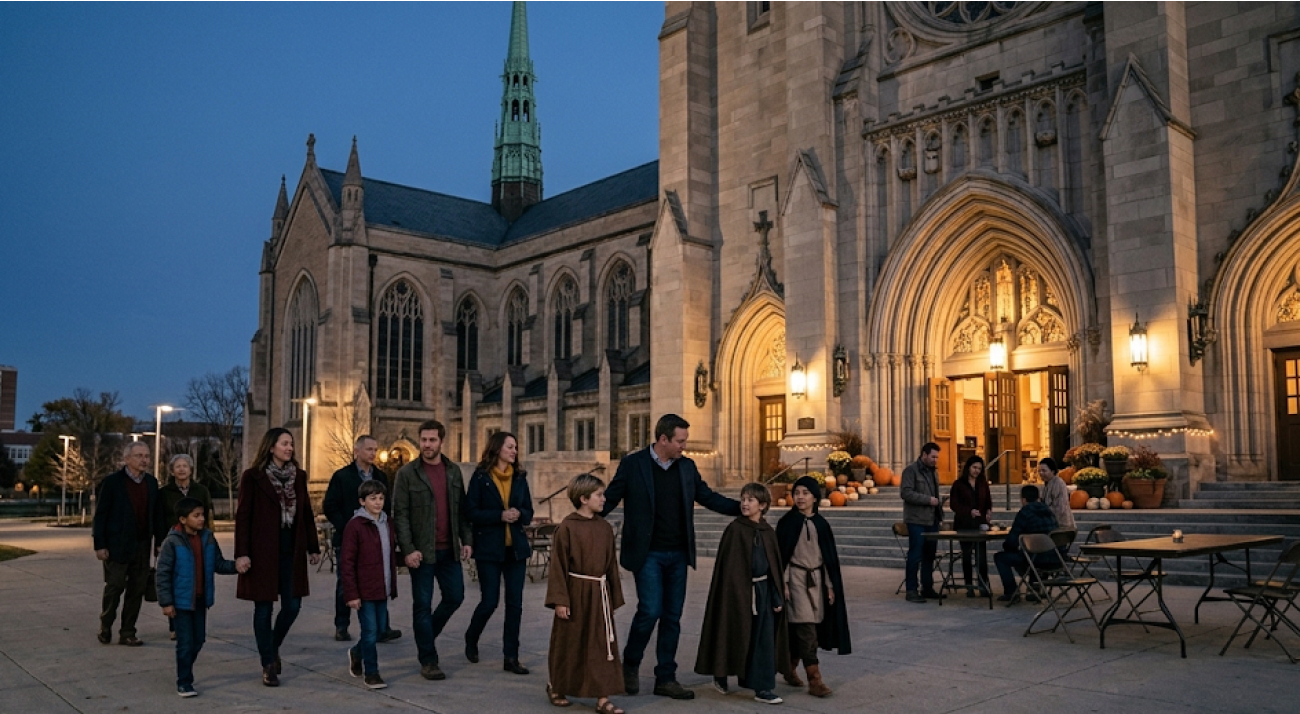
On October 30, 2026, Detroit’s Cathedral of the Most Blessed Sacrament welcomes families, pilgrims, and visitors to Saint Fest, a free evening combining the veneration of more than 70 sacred relics with music, seasonal activities, and celebrations of Catholic tradition ahead of All Saints’ Day.
As Catholics prepare to celebrate All Saints’ Day on November 1, one of Detroit’s most significant churches is opening its doors for an evening dedicated to the saints, religious heritage, and community fellowship.
On Friday, October 30, 2026, the Cathedral of the Most Blessed Sacrament is hosting Saint Fest, a special event featuring more than 70 sacred relics associated with figures from throughout Catholic history.
Scheduled from 5 p.m. to 9 p.m., the celebration combines a relic open house inside the cathedral with outdoor activities in its plaza, including music, games, pumpkin painting, a costume contest, and family entertainment.
Admission is free, and visitors of all ages are welcome.
The event offers Detroit-area Catholics an opportunity to learn about the lives of the saints, experience traditional forms of Catholic devotion, and introduce younger generations to the Church’s spiritual history.
For the wider community, Saint Fest also highlights the cathedral’s growing role as a destination for religious pilgrimage, cultural activities, and faith-centered gatherings in southeast Michigan.
Saint Fest 2026: What Visitors Can Expect
The celebration takes place at the Cathedral of the Most Blessed Sacrament, located at 9844 Woodward Avenue, Detroit, MI 48202.
According to the cathedral’s official event announcement, visitors can participate in two complementary experiences: a sacred relic exhibition inside the church and seasonal family activities outdoors.
SAINT FEST 2026 — EVENT DETAILS
Date
Friday, October 30, 2026
Time
5:00–9:00 p.m. EDT
Relics
More than 70
Admission
Free
Cathedral of the Most Blessed Sacrament
9844 Woodward Avenue, Detroit, Michigan
Official Saint Fest event informationDetails verified from the cathedral’s October 2026 event calendar. Cathedral of the Most Blessed Sacrament
Inside the cathedral, attendees will have the opportunity to encounter relics connected with apostles, saints, martyrs, and other important figures in Christian history.
Outside, the cathedral plaza will host a more informal celebration designed for families and children.
The announced activities include:
- Games, music, and karaoke.
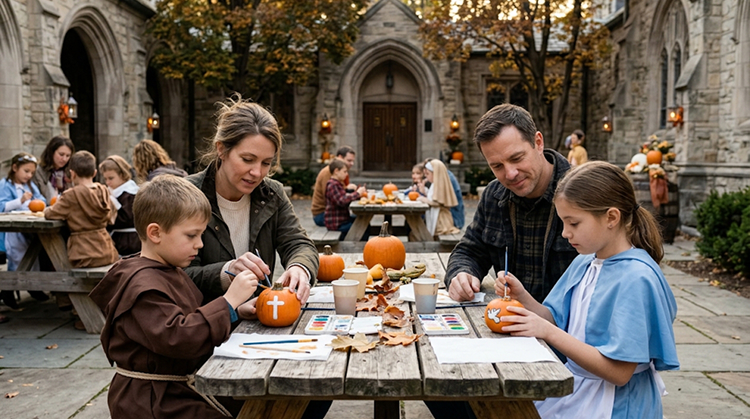
- Pumpkin painting and a costume contest.
- Photo opportunities and local vendors.
- Caramel apple making.
- A bonfire and s’mores.
- Opportunities to dress as a favorite saint.
The cathedral has encouraged families to participate in the seasonal festivities while observing the reverent atmosphere expected inside the church.
Costumes are welcome outdoors, but visitors wearing frightening masks are asked to remove them before entering the sacred space.
Free parking is available in the lot behind the building. Donations are welcomed but are not required for admission. Cathedral of the Most Blessed Sacrament
More Than 70 Sacred Relics Connect Detroit Catholics With Church History
The central attraction of Saint Fest is the cathedral’s relic open house.
Relics are physical objects associated with Jesus Christ, the saints, or individuals venerated by the Catholic Church. They have been part of Christian devotional practice for centuries.
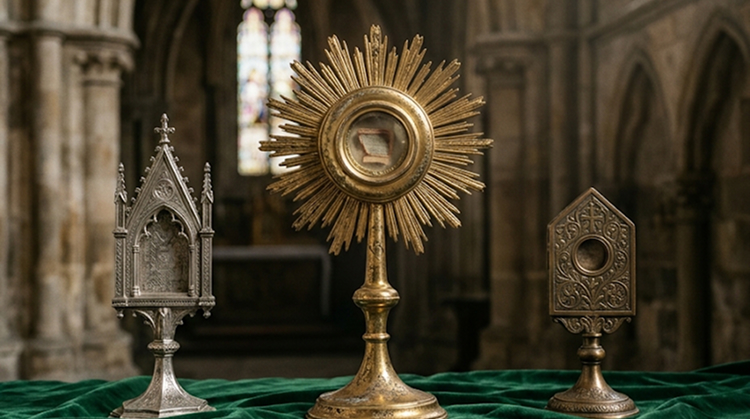
The cathedral’s announced collection for Saint Fest includes relics traditionally associated with some of Christianity’s most important figures.
Sacred relics announced for Saint Fest
| Saint or sacred figure | Significance in Catholic tradition |
|---|---|
| The True Cross | Relics traditionally associated with the cross on which Jesus Christ was crucified |
| Blessed Virgin Mary | The mother of Jesus, honored with special devotion in Catholic tradition |
| St. John the Baptist | The prophet who prepared the way for Jesus and baptized him |
| St. Michael the Archangel | An archangel associated with spiritual protection and the defense of God’s people |
| The Apostles | The earliest witnesses entrusted with spreading the Gospel |
| Blessed Solanus Casey | A Capuchin friar whose life and ministry are closely connected to Detroit |
| St. Martin de Porres | A Dominican lay brother remembered for charity, humility, and service to the poor |
| St. Peregrine | A saint especially associated with prayers for people affected by cancer |
| St. Mary Magdalene | A disciple of Jesus and witness to the Resurrection |
The cathedral’s official announcement identifies these figures among the relics available for veneration during the event. Cathedral of the Most Blessed Sacrament
The opportunity to encounter such a broad collection in one location is especially meaningful for Catholics interested in Church history, traditional devotion, and the lives of the saints.
For visitors unfamiliar with relics, Saint Fest also provides an opportunity to learn why these objects hold a place in Catholic spiritual practice.
What Are Catholic Relics, and Why Do Catholics Venerate Them?
The Catholic Church distinguishes between the worship owed to God alone and the honor shown to saints and sacred objects.
Catholics do not worship relics. Instead, they venerate them as reminders of holy people whose lives reflected faith, sacrifice, and service.
Relics are traditionally divided into three categories.
First-class relics
These are bodily remains of a saint, such as a fragment of bone.
They are especially significant because they are directly connected with the physical life of the person being honored.
Second-class relics
These are objects that belonged to or were used by a saint, such as clothing or personal possessions.
They offer a tangible connection to the saint’s life and historical circumstances.
Third-class relics
These are objects that have been touched to a first-class relic or, in certain devotional contexts, to a saint’s tomb.
The Church’s practice of venerating relics is rooted in its understanding of the dignity of the human body and the Christian belief in the resurrection.
Sacred objects are not regarded as possessing independent supernatural powers.
Rather, the Church understands the veneration of relics as an expression of faith that directs attention toward God and the example of the saints.
For families attending Saint Fest, this distinction helps explain why visitors may pause to pray, kneel, or show reverence before a reliquary.
The object itself is not the ultimate focus of devotion. It serves as a reminder of a life dedicated to Christ.
Blessed Solanus Casey: A Detroit Connection to Saint Fest
Among the figures represented at Saint Fest, Blessed Solanus Casey has particular significance for Catholics in southeast Michigan.
Born Bernard Francis Casey in Wisconsin in 1870, he entered the Capuchin Franciscan order and became known for his humility, prayer, and compassion toward people experiencing hardship.
Much of his ministry was associated with St. Bonaventure Monastery in Detroit, where he served as a porter, welcoming visitors and listening to those seeking spiritual encouragement.
His reputation for kindness and prayer drew people from many backgrounds.
Father Solanus died in Detroit on July 31, 1957, and was beatified on November 18, 2017, during a ceremony at Ford Field.
His legacy continues through the Capuchin community and the Solanus Casey Center, which welcomes pilgrims interested in learning about his life.
For Detroit Catholics attending Saint Fest, a relic associated with Blessed Solanus Casey provides a connection between the universal history of the Church and the city’s own religious heritage.
His example also reflects a central theme of All Saints’ Day: holiness is not limited to extraordinary public achievements. It can be expressed through ordinary acts of compassion, prayer, and service.
The Cathedral’s Apostle Relics and Restored Statues
Saint Fest builds on a broader pilgrimage initiative at the Cathedral of the Most Blessed Sacrament.
The cathedral maintains a collection of sacred artifacts and has developed a special display dedicated to the apostles.
According to its official pilgrimage information, the exhibit includes 13 first-class relics associated with the original apostles, displayed alongside restored statues and educational material.
A central feature consists of 14 large statues: 12 apostles and two angels.
The statues were previously housed at St. Benedict Church in Highland Park before being restored and installed at the cathedral.
The cathedral states that its relic collection has undergone examination and authentication by Vatican experts.
These displays combine sacred art, religious education, and devotional practice.
Visitors can observe the statues, learn about the apostles’ roles in early Christianity, and spend time in personal prayer.
The exhibit also reflects the cathedral’s effort to preserve historic religious objects while making them accessible to new generations.
For people interested in Detroit’s Catholic architectural and artistic heritage, the restored statues demonstrate how religious artifacts can continue serving a spiritual purpose even after being moved from their original church buildings.
The cathedral recommends arranging pilgrimage visits in advance because access depends on its liturgical schedule and other activities.
More information is available through the cathedral’s official pilgrimage program.
From Last Year’s Relic Encounter to Saint Fest 2026
The October 30 event follows a similar relic-focused celebration held at the cathedral on November 1, 2025.
During that earlier All Saints’ Day gathering, visitors participated in a devotional encounter featuring relics associated with more than 70 saints and sacred figures.
The 2025 celebration began with an 8 a.m. Mass that included the Litany of the Saints, followed by opportunities to venerate relics displayed throughout the cathedral.
The exhibition included objects associated with the True Cross, the Blessed Virgin Mary’s veil, Blessed Solanus Casey, and St. Carlo Acutis, among others. Detroit Catholic
Detroit Catholic documented the event with photographs of visitors praying before the reliquaries.
That earlier gathering provides useful context for understanding Saint Fest 2026.
While the 2025 event emphasized a prayerful All Saints’ Day encounter, this year’s celebration adds a broader range of outdoor activities for families.
The combination suggests an effort to make Catholic heritage approachable to both longtime parishioners and visitors who may be entering the cathedral for the first time.
It also illustrates how a historic church can serve multiple purposes: a place of worship, a destination for pilgrimage, a center of religious education, and a gathering place for the wider community.
Saint Fest Connects Halloween With the Catholic Celebration of All Saints
The timing of Saint Fest is significant.
The event takes place on October 30, one day before Halloween and two days before All Saints’ Day.
Although Halloween is often associated with costumes, decorations, and seasonal entertainment, its name derives from All Hallows’ Eve, the evening preceding All Saints’ Day.
In Christian tradition, the word hallow refers to a holy person or saint.
For Catholics, the period offers an opportunity to reflect on the lives of those who have gone before them in faith.
October 31: All Hallows’ Eve
Halloween takes place on the evening before All Saints’ Day.
Its contemporary customs have developed through a variety of cultural influences, but its historical relationship with the Christian calendar remains important.
Saint Fest incorporates familiar seasonal activities while encouraging visitors to explore the meaning of sainthood.
November 1: All Saints’ Day
All Saints’ Day honors the saints in heaven, including those who have not been formally canonized.
The solemnity celebrates the Church’s belief that people from every generation and background are called to holiness.
In 2026, November 1 falls on a Sunday, when Catholics will observe the solemnity during their regular Sunday Masses.
November 2: All Souls’ Day
All Souls’ Day, also known as the Commemoration of All the Faithful Departed, is dedicated to prayer for those who have died.
Catholics traditionally attend Mass, visit cemeteries, and pray for deceased relatives and friends.
Together, these observances emphasize the Church’s teaching on the communion of saints and the hope of eternal life.
Saint Fest offers a family-friendly introduction to these themes through prayer, education, and shared celebration.
Costumes, Pumpkin Painting, and Family Activities Bring the Saints to Life
One of the most distinctive aspects of Saint Fest is its combination of religious devotion and seasonal entertainment.
Children and adults are invited to dress as saints, giving families an opportunity to learn about important figures in Catholic history.
A child might choose to dress as St. Francis of Assisi, St. Thérèse of Lisieux, St. Joan of Arc, or another saint whose life inspires them.
Such activities can encourage conversations about courage, charity, humility, forgiveness, and perseverance.
The cathedral’s planned costume contest and pumpkin painting provide familiar entry points for families who might not ordinarily attend a relic exhibition.
Meanwhile, music, karaoke, games, and local vendors create a welcoming environment for community interaction.
These activities are scheduled for the outdoor plaza, allowing the church interior to remain a more prayerful setting for relic veneration.
The distinction is important.
Saint Fest is designed to be festive without treating sacred objects as entertainment.
Families can enjoy seasonal activities while also choosing to spend time inside the cathedral learning about Catholic tradition.
St. Carlo Acutis Relic Visit Announced for January 2027
The cathedral has also announced plans for a future relic visit associated with St. Carlo Acutis.
According to the Saint Fest event listing, a relic of his pericardium—the membrane surrounding the heart—is expected to travel from Assisi, Italy, for a visit to Detroit on January 5 and/or January 6, 2027.
The cathedral notes that details are still pending. Cathedral of the Most Blessed Sacrament
St. Carlo Acutis, who died in 2006 at age 15, became widely known for his devotion to the Eucharist and his use of technology to share information about Eucharistic miracles.
His story has attracted particular interest among young Catholics because of his familiarity with computers, digital communication, and contemporary youth culture.
The proposed January visit could provide another opportunity for Detroit-area families and young people to engage with Catholic history and devotion.
However, visitors should consult the cathedral’s official announcements before making travel plans, since the exact date and arrangements have not yet been finalized.
Why Sacred Relics Still Matter to Catholic Communities
In an age when historical information is available instantly through websites, photographs, and digital archives, the continued interest in relics may seem surprising.
Yet relics offer something different from reading about a saint in a book.
They provide a physical connection to individuals whose lives shaped the history of Christianity.
For believers, this connection can make religious history feel more immediate and personal.
A relic associated with an apostle recalls the earliest generations of the Church.
An object connected with Blessed Solanus Casey brings attention to the life of a Detroit friar who welcomed people seeking prayer and encouragement.
A relic associated with St. Martin de Porres invites reflection on charity and service to people experiencing poverty.
These encounters can inspire visitors to consider how the saints’ examples might apply to their own lives.
The Catholic Church’s emphasis on relics is therefore not simply about preserving the past.
It is also about encouraging the faithful to live the Gospel in the present.
Visiting the Cathedral of the Most Blessed Sacrament in Detroit
Cathedral of the Most Blessed Sacrament, Detroit, Michigan
Cathedral of the Most Blessed Sacrament
9844 Woodward Avenue, Detroit, MI 48202
Cathedral office: (313) 865-6300
The cathedral serves as the principal church of the Archdiocese of Detroit and hosts liturgies, pilgrimage opportunities, concerts, and educational events.
Saint Fest visitors should plan around the following published arrangements:
| Detail | Information |
|---|---|
| Event | Saint Fest 2026 |
| Date | Friday, October 30 |
| Hours | 5–9 p.m. |
| Location | Cathedral church and outdoor plaza |
| Admission | Free; optional donations |
| Parking | Free parking behind the cathedral |
| Activities | Relic open house, games, music, costumes, pumpkin painting, and more |
The cathedral’s published event information does not specify separate time slots for individual relics or require advance reservations for Saint Fest. Visitors seeking accessibility accommodations or additional details can contact the cathedral office.
For those unable to attend, the cathedral also offers pilgrimage opportunities at other times, subject to church availability and scheduling.
A Celebration of Saints, History, and Community in Detroit
Saint Fest 2026 brings together several important dimensions of Catholic life: reverence for the saints, appreciation for religious history, family education, and community fellowship.
With more than 70 sacred relics announced for the October 30 event, visitors have an opportunity to encounter objects associated with some of Christianity’s most significant figures, from the apostles and St. John the Baptist to Blessed Solanus Casey and St. Martin de Porres.
At the same time, outdoor activities such as music, games, pumpkin painting, and saint-inspired costumes offer a welcoming environment for families preparing for All Saints’ Day.
The event also reflects the Cathedral of the Most Blessed Sacrament’s continuing efforts to preserve sacred artifacts, restore historic religious art, and develop pilgrimage opportunities in Detroit.
As Catholics prepare to celebrate All Saints’ Day on November 1, Saint Fest offers a reminder that the saints are more than historical figures.
Their lives continue to provide examples of faith, courage, charity, and dedication to God.
By bringing sacred relics, family activities, and Catholic tradition together, Detroit’s Saint Fest invites visitors to discover the Church’s history while finding inspiration for their own lives today.
Editor’s note: This article is based on the cathedral’s official event announcement for October 30, 2026. The event is described as scheduled; attendance figures and outcomes have not yet been reported.