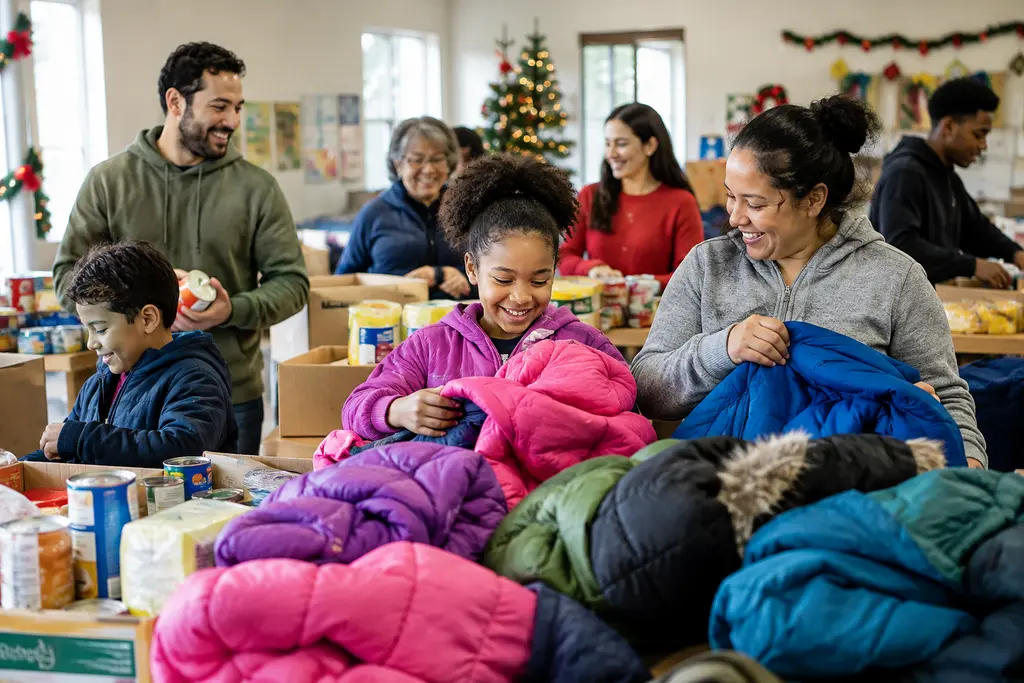
The Food & Clothing Drive organized through Melvindale Thrive Initiative is active in Melvindale from October 19 through November 16, 2026, with collection needs centered on nonperishable food, warm clothing, volunteer support, and temporary storage. SHARE Detroit lists the campaign as the MTI Food & Warmth Community Donation Drive, giving residents, businesses, churches, and community groups a defined window to help before winter conditions place more pressure on household basics.
The campaign is aimed at Melvindale and nearby Downriver communities, according to the research notes. Its practical value is clear: food and winter clothing are not abstract needs when colder weather arrives. They affect how families manage meals, children’s outdoor clothing, work commutes, school days, and basic comfort at home. A local drive with clear item rules can make giving easier and can reduce the chance that volunteers spend time sorting items that cannot be distributed.
How The Food & Clothing Drive Works In Melvindale
The drive runs during a specific period, which helps donors and volunteers plan. As of November 9, 2026, the campaign had one week remaining before its stated November 16 end date. That timing matters for anyone considering a collection box, a food drop-off, transportation help, or sorting work. A short campaign can move quickly, especially if donation boxes are placed at businesses, churches, or other public-facing sites.
Food & Clothing Drive Donation Priorities
SHARE Detroit’s opportunity listing says requested food items include nonperishable foods, such as canned goods and boxed foods including cereals and pasta. These items are generally easier for community volunteers to collect, store, sort, and distribute than perishable food, especially when a drive relies on temporary storage space.
Warm clothing needs include coats, hats, gloves, scarves, and new winter accessories. The research notes state that clean, gently used coats are accepted, while winter accessories should be usable. A public profile connected to Jennifer Justice states that underwear donations must be new, while other clothing such as coats, scarves, and sweaters may be gently used; that standard is reflected in the listed guidance from Jennifer Justice.
For donors, the most useful approach is to give items that are clean, seasonally appropriate, and ready for handling by volunteers. A winter coat with a working zipper is more useful than one that needs repair. Gloves should be paired when possible. Boxed and canned foods should be unopened. These are common-sense steps that align with the drive’s stated focus on usable food and warm items.
Volunteer Jobs Behind The Food & Clothing Drive
Volunteer roles listed for the campaign include recruiting businesses to host collection boxes, delivering and maintaining those boxes, picking up food and clothing donations, sorting and inventory work, and helping with distribution logistics. Those jobs show that the campaign is not only a call for donations. It is also a local coordination effort that depends on drivers, organizers, box hosts, and people willing to work behind the scenes.
Business recruitment is especially useful because it expands collection points without requiring every donor to travel to one central site. Box maintenance matters, too. A full or disorganized collection box can discourage giving and slow down pickup work. Sorting and inventory help give organizers a clearer picture of what has been received and what may still be missing before distribution.
What Local Donors Can Give And How To Prepare It
Residents and organizations can make the drive more effective by separating food from clothing before drop-off and by checking condition before donating. A local campaign can lose valuable time if volunteers must discard damaged goods, separate wet clothing, or sort items that do not fit the winter focus. The donation instructions from the campaign point toward a practical standard: give items that can be used soon by households receiving support.
- Food: unopened canned goods, cereals, pasta, and other boxed nonperishable foods listed by the campaign.
- Winter clothing: clean coats, hats, gloves, scarves, sweaters, and winter accessories in usable condition.
- New-only items: underwear should be new, based on the research notes tied to the campaign guidance.
- Volunteer help: collection box hosting, pickup routes, sorting, inventory, and distribution logistics.
- Storage support: clean, dry, secure temporary space while donated goods await sorting and distribution.
The storage request is worth special attention. SHARE Detroit’s listing says MTI is seeking secure, clean, dry temporary storage space from businesses or organizations during the campaign. Storage can become a limiting factor in a community drive because donated coats, boxed food, and winter accessories take up space before they can be sorted. A business with extra room may be able to help even if it cannot donate large quantities of food or clothing.
Why The Drive Matters For Downriver Winter Support
Melvindale is part of the Downriver area, where local aid efforts often depend on short-distance partnerships among nonprofits, churches, schools, businesses, and residents. The research notes describe Melvindale Thrive Initiative as serving Melvindale and nearby Downriver communities, with broader work connected to youth enrichment, arts, STEAM, safety education, neighborhood improvement, and family support. This campaign fits that basic-needs lane by focusing on food and warmth before deeper winter weather.
That local structure matters because winter support is often practical and time-sensitive. A family that needs a coat does not need a long referral chain if a clean coat is already sorted and ready. A household that needs shelf-stable food benefits from clear donation handling and distribution planning. A volunteer team with defined roles can move donated goods from collection boxes to sorted inventory with less delay.
For readers tracking nearby civic support efforts across the same network, websites such as County Watchers offer related local coverage. Saint Joseph Detroit has also covered how basic supplies can support households through community distribution work, including this related report on a Detroit essential items giveaway.
Business, Church, And Organization Roles
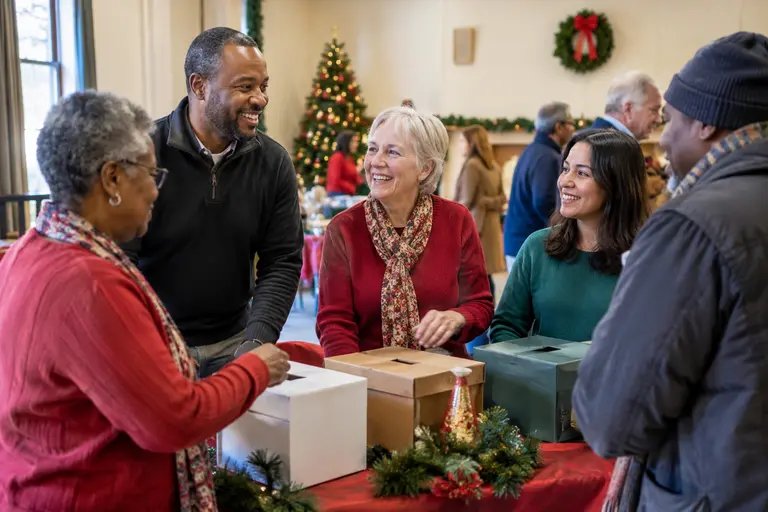
Businesses, churches, and community organizations can support this campaign in several practical ways. Hosting a collection box can make giving easier for employees, parishioners, customers, and neighbors. Offering temporary space can help keep items dry and organized. Providing transportation can help move donations from boxes to the sorting location. Each role addresses a different bottleneck in the same support chain.
Collection Box Hosting
A collection box host should be prepared to monitor the box, keep it in a safe and visible place, and coordinate pickup when it fills. That helps prevent overflow and protects donated items from damage. A host site can also remind donors about the difference between gently used clothing and new-only items, especially for underwear.
Sorting And Inventory Support
Sorting and inventory work can be less visible than public donation drop-offs, but it is essential for distribution. Volunteers can separate food from clothing, group coats by general size, match hats and gloves where possible, and flag items that do not meet the campaign’s condition standards. Inventory also helps organizers understand whether the drive has received more of one category than another.
MTI’s related Holiday Food Assistance Fund, according to the research notes, has a $5,000 fundraising goal and is expected to end on December 20, 2026. That related effort indicates that food support is not limited to one collection period, though the item drive itself has a November 16 deadline.
Melvindale Food & Clothing Drive Next Steps
With the campaign scheduled to end on November 16, 2026, the most useful next step is to act within the stated drive window. Residents can prepare accepted donations, businesses can consider hosting or maintaining a collection box, and volunteers with transportation can help with pickups. Organizations with clean, dry, secure space can offer temporary storage support while donated items are sorted and prepared for distribution.
The Food & Clothing Drive gives Melvindale a direct way to connect donated goods with winter needs. Its success depends on simple, organized steps: give usable items, follow the new-only rule for underwear, keep donations dry and clean, support pickup and sorting work, and help before the November 16 deadline. For a local winter support effort, those practical steps are the difference between goodwill sitting in boxes and assistance reaching neighbors in time.