
As of October 1, 2026, home repair town halls and related public meetings are giving residents a practical way to ask how repair aid, weatherization support, and homeowner services will reach households that need help. Two source-verified civic items stand out: a Virginia open meeting on weatherization access scheduled for October 26, 2026, and a City of Marion, Indiana feedback session planned for October 2026 with the exact day still to be announced. Both items matter for homeowners, renters supporting older relatives, neighborhood organizations, churches, and outreach teams that help residents understand repair options before small housing problems become larger safety or cost concerns.
Home Repair Town Halls With Dates To Watch
The clearest first step for residents is to separate dated meetings from general interest notices. The Virginia Department of Housing and Community Development lists an Energy Efficiency and Weatherization Task Force meeting for October 26, 2026. The task force is described as a public, open meeting space addressing barriers to access in existing weatherization and home energy-efficiency repair programs for low-income households, with planning connected to whole-home retrofits, according to the Virginia DHCD task force page.
In Marion, Indiana, the city notice describes a Home Repair Assistance Program expansion tied to critical repairs such as roof, HVAC, and accessibility work. The research available for this article identifies the feedback session as planned for October 2026, with the exact day still listed as to be determined. The City of Marion has said it is seeking $350,000 to assist homeowners with critical home repairs through the Marion home repair assistance notice.
Home Repair Town Halls Need Clear Questions
Effective home repair town halls work best when residents arrive with specific questions. A homeowner might ask whether roof replacement, furnace repair, plumbing, electrical work, accessibility changes, or energy upgrades are eligible. A caregiver might ask whether a senior homeowner can receive help if another family member assists with paperwork. A neighborhood group might ask how outreach will reach households without reliable internet access. These questions help agencies hear the difference between a written program rule and the daily barriers residents face.
Public Meetings Are Different From Applications
A public meeting is not the same as an application window. The October 26 Virginia meeting is a policy and access discussion tied to weatherization and energy-efficiency repair programs. The Marion session, based on the available city notice, is a feedback opportunity connected to program expansion. Residents should bring questions, but they should also ask where formal applications will be posted, what documents may be required, and which office will confirm eligibility.
What The Virginia Weatherization Meeting Covers
The Virginia meeting is important because home repair and energy-efficiency work often overlap. A household may need insulation, air sealing, heating-system improvements, or other energy-related repairs. If an older home has deferred maintenance, a family may also need guidance on how weatherization connects with broader whole-home repair planning. The DHCD task force language points to access barriers in existing programs for low-income households, so outreach groups should listen for details about eligibility, referrals, waitlists, inspection steps, and local partners.
Access Barriers And Whole-Home Repairs
For home repair town halls tied to energy work, access barriers can include paperwork, awareness, property conditions, transportation to appointments, language access, and uncertainty about which agency handles which repair. The research does not provide local outcome targets for the Virginia meeting, so residents should avoid assuming that a new benefit will be announced on October 26, 2026. The safer civic use of the meeting is to ask how existing programs can become easier to reach and how whole-home retrofit planning may help households with layered repair needs.
Community organizations can use the meeting to prepare better referrals. If an agency explains that certain repairs must happen before weatherization work can proceed, outreach teams can build checklists for residents. If the meeting identifies common missing documents, churches and neighborhood centers can host document-preparation sessions. If officials describe partner agencies, local groups can update their referral sheets rather than sending residents through multiple disconnected phone calls.
What Marion’s Feedback Session Could Clarify
The Marion notice is focused on helping homeowners with critical repairs, and the listed examples from the research include roof, HVAC, and accessibility needs. Because the exact October 2026 meeting date has not been provided in the available research, residents should treat the session as pending until the city posts the day, time, location, and participation details. The key civic task now is preparation: homeowners and advocates can organize examples of repair needs, common application barriers, and questions about how the proposed assistance would be prioritized.
Repair Categories Residents Can Raise
Residents can ask whether the program will rank repairs by safety risk, household income, age of the property, disability access, or urgency. They can ask whether a roof leak, broken furnace, unsafe steps, or inaccessible bathroom would be reviewed in the same process. They can also ask how homeowners will be notified if funds are limited, how contractors will be selected, and how the city will prevent residents from missing the application period.
For Detroit-area groups watching home repair town halls in other cities, Marion serves as a useful example in service planning. Repair programs tend to be more understandable for residents when public notices outline eligible work, funding limits, application steps, and who can help with paperwork. To keep updated on related developments, residents can follow County Watchers for coverage across different communities.
How Neighborhood Groups Can Prepare
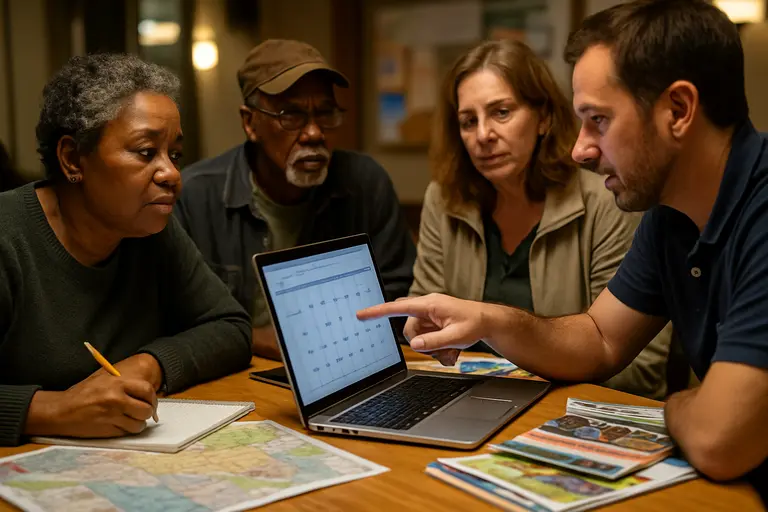
Neighborhood organizations, schools, churches, senior groups, and block clubs can make these meetings more useful by helping residents prepare before the meeting date. A short pre-meeting conversation can identify the repair issues families are facing, the documents they struggle to gather, and the questions they want officials to answer. Outreach teams should keep the focus on service access, not partisan debate, because repair programs work best when residents can state needs clearly and agencies can explain next steps.
Practical Questions For Residents
Before attending or submitting comments, residents can write down the address of the affected property, the type of repair needed, whether the home is owner-occupied, and whether the repair affects health, safety, accessibility, or utility costs. They should avoid sharing private medical or financial details in a public room unless an agency has a secure intake process. The public comment goal is to show patterns: leaking roofs, unsafe heating, high energy costs, accessibility barriers, or lack of contractor information.
- Ask about eligibility: Who can apply, and are income, ownership, residency, or property-condition rules involved?
- Ask about timing: When will applications open, and how will residents receive notice?
- Ask about documents: What proof will be needed before a repair can be approved?
- Ask about help: Which office or partner can assist residents who need support completing forms?
- Ask about follow-up: How will agencies report what they heard and what changes they plan to make?
Residents tracking civic notices across different communities can also follow related public-service coverage through County Watchers. The value of these meetings is strongest when local groups turn public information into plain-language reminders, phone trees, printed flyers, and referral support for people who may not see an online notice.
Home Repair Town Halls And Support Services
Used well, home repair town halls can connect resident experience with agency planning. The Virginia meeting gives residents and service groups a dated opportunity on October 26, 2026, to pay attention to weatherization access and whole-home retrofit planning. The Marion feedback session, once its exact October 2026 date is posted, gives homeowners and advocates a chance to respond to a proposed repair-assistance expansion tied to roof, HVAC, accessibility, and other critical needs.
The most useful civic response is simple: confirm the meeting date, read the official notice, prepare questions, protect private information, and ask how residents will receive follow-up. Repair and support-service programs can be difficult for families to track. Clear community engagement helps agencies hear where the process breaks down and helps residents understand what they can do next.