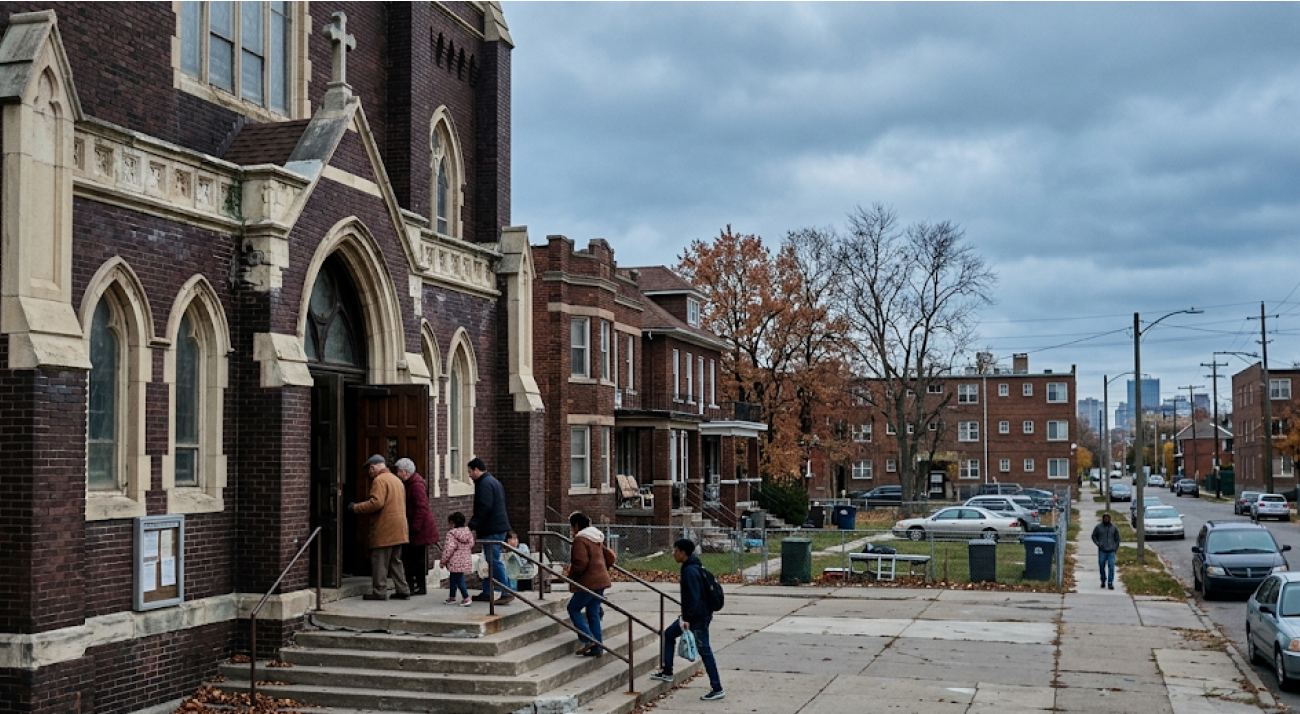
Detroit’s Catholic community is navigating an important period of change as parish leaders work to respond to shifting demographics, the availability of priests, and the evolving needs of local congregations. Across the Archdiocese of Detroit, the restructuring process is prompting conversations about how parishes can preserve their spiritual identity while building sustainable communities for the future.
For historic churches such as St. Joseph Shrine in Detroit, these developments highlight a broader question facing Catholic communities: how can the Church adapt to changing circumstances while continuing to protect its traditions, sacred spaces, and commitment to the faithful?
Why the Archdiocese of Detroit Is Restructuring
The restructuring initiative began in 2025 as a two-year effort to evaluate parish life, priest assignments, and the use of church buildings throughout southeast Michigan. According to the Archdiocese of Detroit, the local Church now serves approximately 900,000 Catholics, compared with an estimated 1.5 million in previous decades. Fewer than half of those Catholics attend Mass regularly, while the number of available priests has also declined.
These changes create practical challenges for parish communities. Some priests already serve multiple parishes, while older church buildings require continued maintenance and financial resources. The archdiocese aims to develop a more sustainable structure that supports priests, strengthens parish communities, and directs resources toward its mission.
Rather than evaluating each church in isolation, the process considers how neighboring parishes might work together through groupings known as pastorates. Each pastorate will consist of one or more parishes served by a pastor and his team. The goal is to help Catholic communities continue their spiritual and pastoral work despite changing circumstances.
More Than 40,000 Parishioners Have Participated
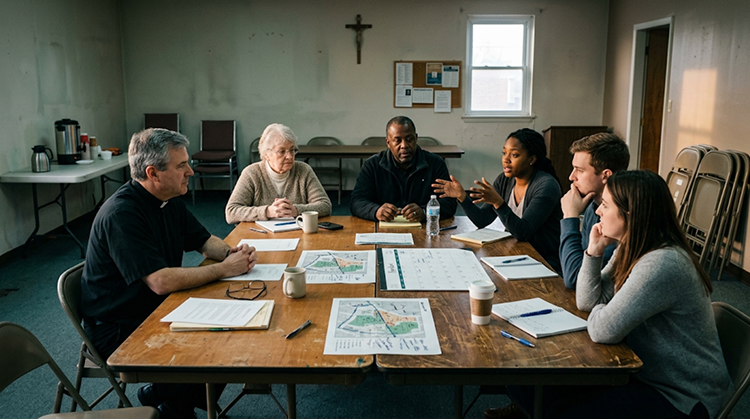
Community input has been a central part of the restructuring process. In a September 2, 2026, report, Detroit Catholic confirmed that more than 40,000 people had participated in 412 parish listening sessions held between April and June. An additional 17,000 people submitted feedback through an online survey that closed July 31.
These sessions gave parishioners an opportunity to review proposed pastorate arrangements, ask questions, and explain how potential changes could affect their communities. The feedback is being reviewed by archdiocesan teams, the Catholic Leadership Institute, clergy, and lay representatives.
In an October 15, 2026, letter to the faithful, Archbishop Edward J. Weisenburger reiterated that the process is entering the second half of its two-year timeline. He emphasized the importance of listening to the experiences of Catholics throughout the archdiocese as leaders consider the next stage of the Church’s future.
The level of participation demonstrates that parishioners want to be involved in decisions affecting their churches. It also reflects the emotional importance of parish life, where people gather for Mass, receive the sacraments, raise families, and maintain relationships across generations.
Parish Leaders Help Communities Navigate Uncertainty
While priests and archdiocesan officials guide the process, lay leaders are helping parishioners understand what restructuring could mean for their local communities.
In an October 8, 2026, report, Detroit Catholic highlighted the experiences of three parish leaders: Carlos Folino of St. Ephrem Parish in Sterling Heights, Shelly Vavro of Our Lady on the River Parish in Marine City, and Jason Smith of St. Scholastica Parish in Detroit. Their experiences illustrate how restructuring affects communities in different geographic and pastoral settings.
Folino, who has been involved at St. Ephrem for approximately 40 years, helped facilitate listening sessions at several parishes. He recalled attending gatherings where approximately 200 people participated and another at Holy Redeemer Parish in Detroit, where about 150 people took part, many of them Spanish-speaking parishioners.
His experience showed how important it is for Catholics to have opportunities to express their concerns and contribute to discussions about the future.
Vavro, meanwhile, has concerns about St. Mark’s Chapel on Harsens Island, one of three worship sites associated with Our Lady on the River Parish. Because the island has a larger seasonal population, she has questioned whether Mass will continue to be offered there in the future. Her experience illustrates how decisions affecting parish structures can have a particular impact on smaller or geographically distinct communities.
At St. Scholastica, Jason Smith has helped lead Bible studies and other parish programs. He has also emphasized the need to recognize the broader realities facing the Church, including fewer priests and changing population patterns.
Together, these local leaders demonstrate that restructuring is not simply an administrative exercise. It requires communication, patience, pastoral care, and a willingness to accompany people through uncertainty.
What Could Change for Detroit Catholic Churches?
One of the most significant questions is how the proposed pastorates will affect Mass schedules, priest assignments, and the future use of individual church buildings.
In its September 2026 report, Detroit Catholic noted that some worship sites may no longer be able to offer weekend Mass because of staffing constraints and declining attendance. However, losing a weekend Mass does not automatically mean that a church building will close. Decisions about individual locations will involve further discernment.
The distinction matters because a church building often represents much more than a place of worship. It can hold decades of family memories, sacramental milestones, neighborhood traditions, and community service.
For many Catholics, the possibility of losing a familiar Mass location can raise concerns about accessibility, especially for older parishioners, families without reliable transportation, and people who depend on nearby worship sites.
At the same time, restructuring could create opportunities for parishes to share resources, coordinate ministries, and support priests who are currently responsible for several communities. The challenge will be to balance practical needs with the spiritual and social bonds that make each parish meaningful.
The Importance of Preserving Detroit’s Catholic Heritage
Detroit’s Catholic identity is closely connected to its historic churches, religious institutions, and generations of families who have sustained parish life. As the archdiocese considers future configurations, the preservation of historic religious buildings remains an important concern for communities attached to their architectural and spiritual heritage.
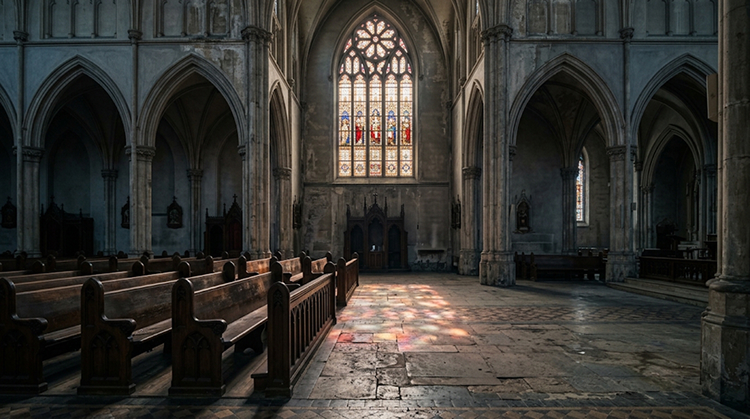
St. Joseph Shrine, located at 1828 Jay Street near Eastern Market, offers a meaningful example of the connection between Catholic worship and Detroit’s historic built environment. Founded in 1855, the parish’s Gothic Revival church was completed in 1873 and remains an important part of the city’s religious history.
Historic preservation and parish restructuring are distinct issues, and the archdiocese’s broader process does not by itself determine the future of St. Joseph Shrine. Nevertheless, the conversation highlights a question relevant to historic Catholic communities throughout Detroit: how can the Church sustain its mission while caring for sacred spaces that connect present-day worshippers with generations of faithful Catholics?
Preserving a church’s legacy involves more than maintaining its physical structure. It also means continuing to welcome worshippers, celebrate the sacraments, cultivate faith, and serve the surrounding community.
When Will Final Restructuring Decisions Be Announced?
As of October 16, 2026, the Archdiocese of Detroit’s restructuring process is still underway, and final decisions have not yet been announced.
The archdiocese’s published timeline anticipates that revised pastorate proposals will be shared during the fall of 2026. Archbishop Weisenburger is expected to announce final decisions in April 2027, with the new pastorates and priest assignments scheduled to take effect on July 1, 2027.
Until then, parishioners can stay informed through their local parish leadership and the archdiocese’s official restructuring website. Although the formal public survey has closed, the archdiocese has indicated that parishioners may continue communicating their perspectives through their pastors and parish leaders.
The months ahead will be important as leaders review community feedback, refine proposed arrangements, and prepare for implementation. Clear communication will be essential to help parishioners understand the decisions and how those changes may affect their worship and community life.
Moving Forward Through Faith and Community
The restructuring of Detroit’s Catholic parishes presents difficult questions about priest availability, church buildings, and the future of local congregations. Yet the process also offers an opportunity to renew parish life, strengthen collaboration, and consider how Catholic communities can serve future generations.
The participation of more than 40,000 people in listening sessions, alongside thousands of online survey responses, shows the importance of including the faithful in this transition. The experiences of parish leaders such as Carlos Folino, Shelly Vavro, and Jason Smith further demonstrate the value of listening, compassion, and community involvement.
For Detroit’s historic Catholic churches, the task is to navigate change without losing sight of the Church’s enduring mission. Through prayer, thoughtful planning, and continued engagement, parish communities can work toward a future that respects their heritage while helping the faith remain active and accessible throughout southeast Michigan.
Catholic parish life has always depended on more than buildings or administrative structures. At its heart are the people who gather for worship, care for one another, and pass their faith on to the next generation.