The Shift In Neighborhood Dynamics During Summer Months
The final school bell rings in June. Thousands of Detroit teenagers lose their primary source of structured daily activity. The sudden surplus of unsupervised time creates clear vulnerabilities across urban districts. Medical professionals and sociologists view spikes in seasonal crime not as a failure of law enforcement, but as a severe gap in public resources.
Direct intervention requires physical spaces where young adults can gather safely. Idle time correlates heavily with increased neighborhood conflicts. The Centers for Disease Control and Prevention guidelines on violence prevention point directly to structured recreational environments as a primary deterrent. Communities lacking accessible parks, open gymnasiums, and mentorship programs see higher rates of juvenile altercations.
Municipal planners face a strict timeline to address these logistical gaps before July. Traditional daytime summer camps serve younger children effectively. Teenagers and young adults require entirely different engagement models. They need late-night programming, peer-to-peer competition, and environments that respect their growing independence. Recognizing this demographic reality completely changes how a city allocates its summer budget.
Mayor Mary Sheffield’s Six-Point Community Safety Plan
Detroit launched a comprehensive community safety strategy in 2026. Mayor Mary Sheffield outlined six core focus areas. The strategy bypasses heavy-handed policing tactics. It prioritizes neighborhood action, preventive resources, and youth engagement. The administration recognizes that strong communities police themselves when given the proper tools and funding.
The six-point framework addresses systemic issues directly. City officials distribute free gun locks to families. Department heads walk through targeted neighborhoods to identify broken streetlights and blighted properties requiring immediate repair. The city collaborates with local businesses to upgrade their exterior lighting and safety protocols.
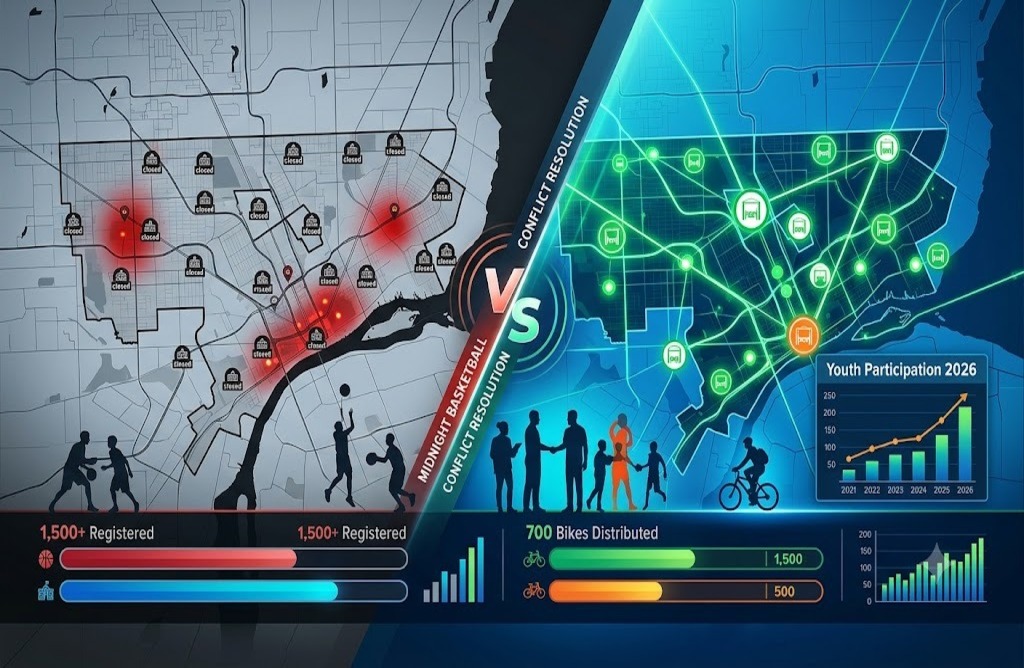
The most prominent pillar of this strategy focuses entirely on the younger demographic. The city launched the “Occupy the Summer” initiative. This ten-week series of activities builds upon the successful “Occupy the Corner” movement Mayor Sheffield championed during her time on the City Council. The 2026 rollout represents a massive scaling of municipal ambition. Over 1,500 teenagers registered for the events before the mid-June kickoff.
Late-Night Recreation And Midnight Basketball Leagues

Recreation centers historically closed their doors just as neighborhood activity peaked. The 2026 safety plan corrects this operational flaw. Nine municipal facilities now operate with extended hours. Locations including Crowell, Farwell, Helen Moore, and the Butzel Family Center remain open until 11:00 PM on Wednesdays, Thursdays, and Saturdays.
Extended hours require dedicated programming to keep attendees engaged. The return of Late Night Basketball serves as the main draw for young adults ages 16 through 30. These leagues provide highly structured competition paired with direct mentorship. Participants receive free uniforms and have access to on-site wraparound services. The games give young men and women a reliable, positive outlet during the most critical weekend hours.
The municipal sports leagues operate across three primary regional hubs. Officials designated overflow sites to handle the massive registration numbers.
| League Region | Primary Facility | Operational Focus |
|---|---|---|
| East Detroit | Heilmann Recreation Center | Men’s and Women’s structured league play |
| West Detroit | Adams Butzel Recreation Center | Mentorship and mid-season tournament games |
| Southwest Detroit | Kemeny Recreation Center | Community engagement and wraparound services |
Organizers treat these basketball games as direct public health interventions. Creating a reliable schedule builds trust between the city and its younger residents. The predictable presence of mentors, coaches, and local leaders establishes a strong community safety net.
Grassroots Partnerships And Private Sector Support

A ten-week citywide activation requires massive financial backing. Government budgets cover the baseline facility operations. Private donations and non-profit partnerships elevate the experience for the attendees. The mid-June kickoff event at the Adams Butzel Recreation Center proved the effectiveness of cross-sector collaboration.
The launch event featured live entertainment and family-friendly attractions. The most impactful moment occurred when organizers distributed 700 free bicycles to youth aged 18 and under. Private entities like the Sterling Group and Amazon provided the funding for this massive giveaway. A bicycle offers more than recreation. It provides independent transportation. Teenagers use these bikes to commute to summer jobs, visit friends in neighboring districts, and attend late-night events safely.
Community coalitions handle the logistical heavy lifting. Organizations operating under the United Way for Southeastern Michigan umbrella provide volunteers, specialized training, and logistical support. These groups ensure the Friday neighborhood activations run smoothly. Every Friday evening, a different City Council district hosts a massive block party featuring local vendors, city resource tables, and cultural programming.
Integrating Mentorship And Conflict Resolution
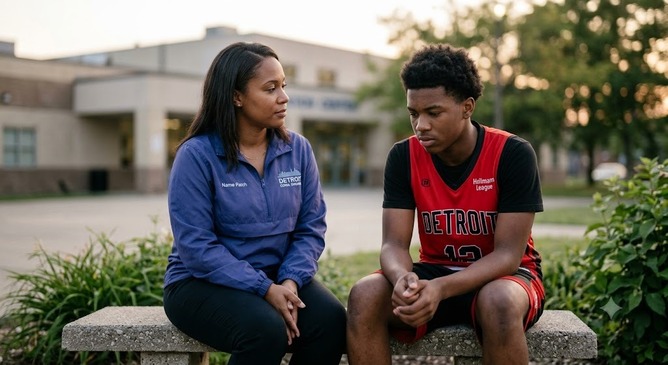
Keeping a teenager busy solves only part of the equation. Equipping them with emotional regulation tools creates lasting behavioral changes. The 2026 summer initiative embeds conflict resolution specialists directly into the recreation centers. These professionals train facility staff to identify signs of distress and de-escalate arguments before they turn physical.
We must evaluate how trauma impacts urban populations. Young adults carrying unresolved trauma react poorly to perceived disrespect. Incorporating mental health professionals into these sports leagues changes the underlying dynamic. These experts operate casually from the sidelines. They build organic relationships with the players between games.
This approach mirrors other successful local models. Programs focused on advancing mental health and trauma support for local youth prove that casual, non-clinical interventions work best. A teenager will talk to a trusted basketball coach long before they schedule an appointment with a licensed therapist. The city leverages these existing relationships to deliver subtle but powerful psychological support.
Tracking The Data And Measuring Neighborhood Impact
The Sheffield administration insists on rigid accountability for these summer programs. Throwing money at a problem without tracking the outcome wastes taxpayer resources. The city monitors specific metrics to justify the extended recreation center hours and the massive staffing requirements.
Data collection happens weekly. Police dispatchers track the volume of noise complaints and curfew violations in the neighborhoods surrounding the active recreation centers. A drop in these nuisance calls indicates the teenagers are safely inside the gymnasiums instead of gathering on street corners.
| Monitored Metric | Data Collection Method | Target Outcome for Summer 2026 |
|---|---|---|
| Curfew Violations | Police dispatch logs | Measurable decrease on weekend nights |
| Program Attendance | Registration check-ins | Sustained participation through August |
| Unsupervised Gatherings | Resident complaint calls | Total elimination of “teen takeover” events |
Addressing Transportation And Accessibility Barriers
Proximity determines participation. A state-of-the-art basketball facility provides zero value to a teenager living five miles away without a car. Detroit confronts severe logistical barriers regarding public transit. The distribution of 700 bicycles solved a small fraction of the mobility crisis. The administration must implement broader transit solutions to guarantee equitable access to these summer programs.
Planners mapped the nine participating recreation centers against current bus routes. They identified dead zones where teenagers would have to walk through multiple industrial corridors to reach a safe gym. The city is piloting specialized shuttle services on Friday nights. These shuttles run continuous loops between high-density housing projects and the primary recreation hubs.
Removing the transit barrier aligns directly with broader public health goals. A teenager should never have to choose between staying home in an isolated environment or risking a dangerous walk across the city at night. The Office of Juvenile Justice and Delinquency Prevention emphasizes that safe passage programs drastically reduce the likelihood of a minor becoming a victim of random street violence. Detroit applies this federal guidance directly to its neighborhood operations.
Empowering Youth Through Direct Civic Engagement
The most successful aspect of the 2026 rollout involves the planning process itself. Adults sitting in conference rooms often misunderstand what teenagers actually want. The “Occupy the Summer” schedule reflects direct input from the target demographic. High school students participated in focus groups months before the June launch.
These teenage advisors requested specific activities. They asked for e-sports tournaments, music production workshops, and late-night skate events. The city listened. The July 10th Skate Night with Royal Skateland at Corrigan Park originated directly from these youth councils. Giving young adults a voice in municipal planning builds profound civic pride.
When teenagers help design a program, they protect it. They recruit their peers. They enforce basic rules of respect within the facility. This peer-to-peer accountability holds far more weight than any rule posted by a building manager. Detroit is not just keeping kids busy. The city is actively training the next generation of community leaders. The courts, the parks, and the recreation centers belong entirely to them.