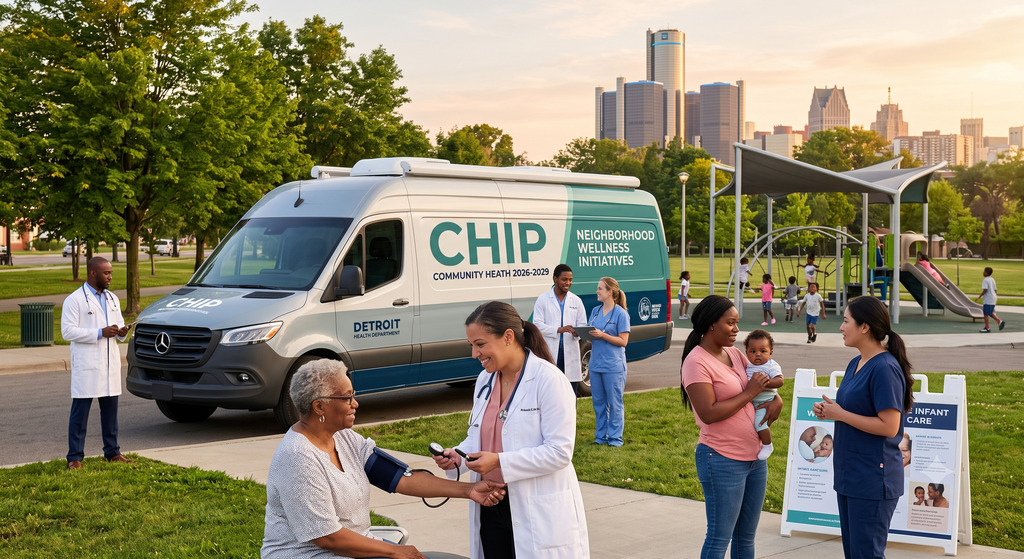
A Data-Driven Approach To Neighborhood Wellness
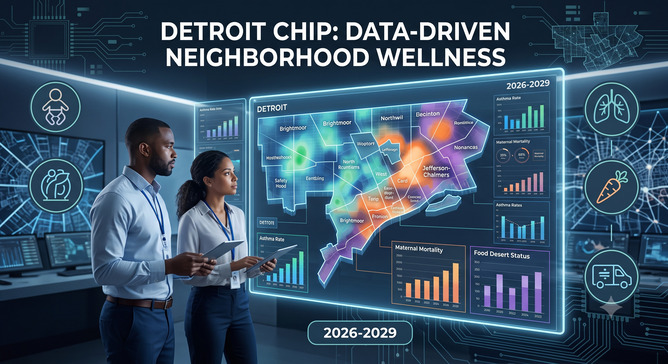
Public health outcomes depend entirely on localized infrastructure. Systemic gaps dictate life expectancy across different zip codes within the same city. The Detroit Health Department released its 2026–2029 Community Health Improvement Plan (CHIP) this week to address these exact disparities. This framework establishes a direct operational timeline to correct long-standing medical vulnerabilities within city limits.
Chief Public Health Officer Ali Abazeed and Mayor Mary Sheffield presented the findings directly to the public. Their approach abandons passive care models completely. They prioritize direct intervention at the neighborhood level to reach the most vulnerable populations. The development of this blueprint required extensive input from the people living these realities daily.
Over 6,000 Detroit residents provided firsthand testimony regarding their physical and structural challenges. Local voices shaped the entire direction of this initiative from the ground up. Data collection methods involved town halls, direct surveys, and neighborhood block canvassing. Medical professionals correlated the community feedback with hospital admission rates and demographic metrics.
The findings pointed to clear and undeniable trends across multiple districts. People struggle the most with logistical barriers. Time poverty, unreliable public transit, and economic instability block access to basic preventative medicine. The Centers for Disease Control and Prevention guidelines on preventative care support this exact model of bringing services directly to the residents. To view municipal health through a purely clinical lens ignores the root causes of illness.
Translating Resident Feedback Into Actionable Policy
The resulting 2026-2029 CHIP establishes four core pillars of intervention. Officials designed each pillar to disrupt a specific cycle of systemic neglect. The strategy shifts municipal funding directly toward grassroots organizations and localized health hubs. This decentralized model brings the clinical resources directly to the curb.
Centralized hospitals cannot adequately serve marginalized populations struggling with transportation deficits. The CHIP recognizes this physical barrier and actively dismantles it. The city plans to flood recreation centers, local parks, and church parking lots with fully equipped medical personnel.
The community task force identified the most urgent threats to neighborhood stability. They categorized these threats into actionable intervention zones. This focused strategy maximizes the impact of limited municipal funds.
| Pillar | Focus Area | Proposed Community Action |
| 1 | Maternal and Infant Health | Expanding mobile prenatal care and local infant supply pantries. |
| 2 | Chronic Conditions | Deploying mobile asthma units and reducing industrial air pollution. |
| 3 | Food Accessibility | Building neighborhood food networks to eliminate persistent food deserts. |
| 4 | Healthcare Access | Bringing low-barrier medical screenings directly to recreation centers. |
Tackling Chronic Respiratory Conditions In Urban Zones
Industrial proximity heavily impacts respiratory outcomes for vulnerable populations. Children living near heavy transit corridors face disproportionate asthma rates compared to those in residential suburbs. The CHIP directly targets this environmental inequity through aggressive mobile interventions.
Health workers plan to deploy specialized mobile respiratory clinics to areas with high industrial concentration. These units provide rapid testing, inhaler distribution, and localized family education right on the street. The strategy removes the requirement for parents to schedule distant specialist appointments during working hours.
City leaders are integrating zoning policy with medical data to protect neighborhoods. Tracking pediatric outcomes provides the required evidence to restrict industrial expansion near residential blocks. The health department treats clean air as a baseline medical necessity. They refuse to accept compromised lung function as a normal aspect of urban living.
National frameworks for tracking pediatric respiratory metrics show that early intervention stops long-term lung damage. The mobile units identify these chronic conditions before they require emergency room interventions.
Rebuilding Food Infrastructure And Nutritional Support

Grocery store access dictates dietary habits for entire generations. Whole neighborhoods function without a single full-service supermarket within walking distance. Corner stores saturated with processed items dominate the local food economy in these vulnerable zones.
The third pillar of the CHIP focuses entirely on nutritional equity. Planners are bypassing traditional retail models to build localized distribution networks. They aim to support urban farming cooperatives and community-owned produce markets directly within the neighborhoods.
Medical outcomes improve drastically when residents consume fresh and reliable meals daily. Dietary interventions reduce the incidence of pediatric diabetes and adult hypertension. The CHIP outlines financial grants for neighborhood pantries that prioritize fresh produce over non-perishable goods.
Strategies targeting nutritional deficits mirror the economic mobility grants in Michigan directed by organizations like GreenLight Fund Detroit. Jasahn M. Larsosa and other community leaders stress the need for financial sustainability in these programs. Short-term food drives provide immediate relief but fail to alter long-term nutritional patterns. The new plan creates permanent infrastructure.
Integrating Education And Faith In Public Health

Municipal departments cannot execute this massive transition acting alone. They need the physical space and built-in trust of existing community institutions. Churches, community centers, and local schools serve as the backbone for the rollout of these new initiatives.
Faith leaders and principals hold immense influence within their neighborhoods. When a local church hosts a health screening, attendance rates surpass those held at municipal buildings. This collaboration bridges the gap between residents and government services.
The plan formalizes these critical local partnerships. Health officials will train congregation members and teachers to identify early signs of trauma and medical neglect. Building strong alliances between faith-based organizations and public schools creates an immediate and familiar safety net for vulnerable families.
The integration of religious spaces transforms empty buildings into active extensions of the local health system. A willing congregation paired with medical resources solves logistical gaps that school districts cannot fix independently.
Establishing Measurable Milestones For Success
The 2026-2029 CHIP contains strict accountability measures to guarantee tangible results. Previous decades saw numerous reports published with minimal real-world implementation. The Sheffield administration insists on transparent, quarterly public reviews of the stated goals.
Success relies on tracking highly specific data points directly tied to neighborhood wellness.
- The reduction in emergency room visits for preventable conditions.
- The exact number of residents receiving preventative care at mobile popup clinics.
If a specific neighborhood shows no improvement in maternal health outcomes after six months, the intervention model adapts immediately. This flexibility prevents the waste of public funds on ineffective programs.
| Intervention Strategy | Monitored Data Point | Target Outcome (By 2029) |
| Mobile Asthma Clinics | Pediatric emergency room admissions | 30% reduction in target zip codes |
| Neighborhood Food Hubs | Self-reported fresh produce consumption | 40% increase among surveyed residents |
| Prenatal Support Networks | Low birth weight occurrences | Measurable drop below state averages |
The Role Of Cross-Sector Collaboration
Medical equity demands input from housing authorities, transit planners, and economic developers. Poor housing quality directly causes lead poisoning and severe allergies. Unreliable bus routes force missed medical appointments.
The new health plan forces these separate departments to share data constantly. A unified municipal strategy prevents redundant efforts and accelerates positive outcomes for the residents. Treating housing and transit as medical issues allows for complete neighborhood care.
The community acts as the final arbiter of success. The CHIP tasks a 30-member coalition of local activists to evaluate the ongoing rollout. This committee holds veto power over proposed operational changes. They keep the health department focused entirely on lived neighborhood realities.
Sustaining The Momentum Beyond The Initial Rollout
Long-term viability depends entirely on permanent funding streams. Grant money initiates the programs, and structural budget adjustments sustain them over the decades. The city must institutionalize these services into the annual operating budget to protect them from future cuts.
Community leaders are working to secure state and federal matching funds right now. They present the localized data to prove the massive return on investment. Preventive care costs a fraction of reactive emergency interventions. A single mobile screening saves thousands of dollars in hospital fees down the line.
The 2026-2029 CHIP represents a massive operational shift for Detroit. It moves resources directly to the streets where they belong. The strategy relies on aggressive, localized support networks to create lasting medical equity. The work begins right now to translate this comprehensive data into tangible neighborhood healing.