Have you ever evaluated the physical distance between your neighborhood and the nearest reliable medical clinic?
For many residents across Detroit, accessing basic medical care requires overcoming massive logistical barriers. Time poverty, unreliable public transportation, and a lack of childcare options turn routine check-ups into insurmountable hurdles. Public health professionals are realizing that centralized hospitals cannot adequately serve marginalized populations.
The framework is shifting from expecting patients to travel to clinics to bringing fully equipped clinics directly to the people. Detroit is currently undergoing a massive structural change in how it delivers public services. Community leaders and health officials are aggressively moving interventions away from traditional facilities and directly into local parks, recreation centers, and neighborhood streets.
This pivot is driven by the stark reality that zip codes frequently dictate life expectancy. Recognizing this disparity requires a complete operational shift. Under the guidance of Mayor Mary Sheffield and Chief Public Health Officer Ali Abazeed, the Detroit Health Department is redefining equitable care. They are deploying mobile units to bridge the gap between systemic neglect and proactive wellness.
Rethinking the Delivery of Care
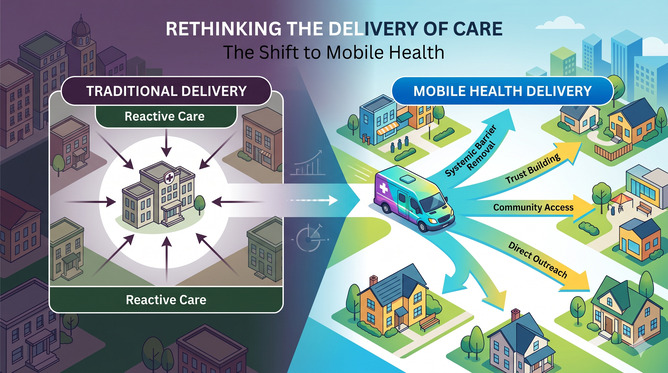
The traditional model of healthcare relies on a passive approach. Providers wait for patients to schedule appointments, secure transportation, and deal with complicated insurance systems. This model inherently disadvantages working-class families and those living in historically marginalized areas.
Ali Abazeed has prioritized a “Health in All Policies” framework for Detroit. This strategy integrates wellness considerations into every aspect of municipal decision-making. The goal is to reshape the environment where people live, work, and gather to naturally support better outcomes.
By mobilizing resources, the city dismantles the most common obstacles to wellness. Mobile units do more than administer vaccines; they rebuild trust within communities that have long felt abandoned by the medical establishment. Seeing medical professionals consistently show up at local block parties and neighborhood parks creates a reliable, visible support system.
Organizations operating these mobile fleets bring preventative medicine directly to the curb. The Wayne Mobile Health Unit stands as a prime example of this decentralized model. Their vans canvass neighborhoods throughout Detroit, offering an extensive menu of medical and social services right at the doorsteps of residents.
The Pull Up Project at Palmer Park
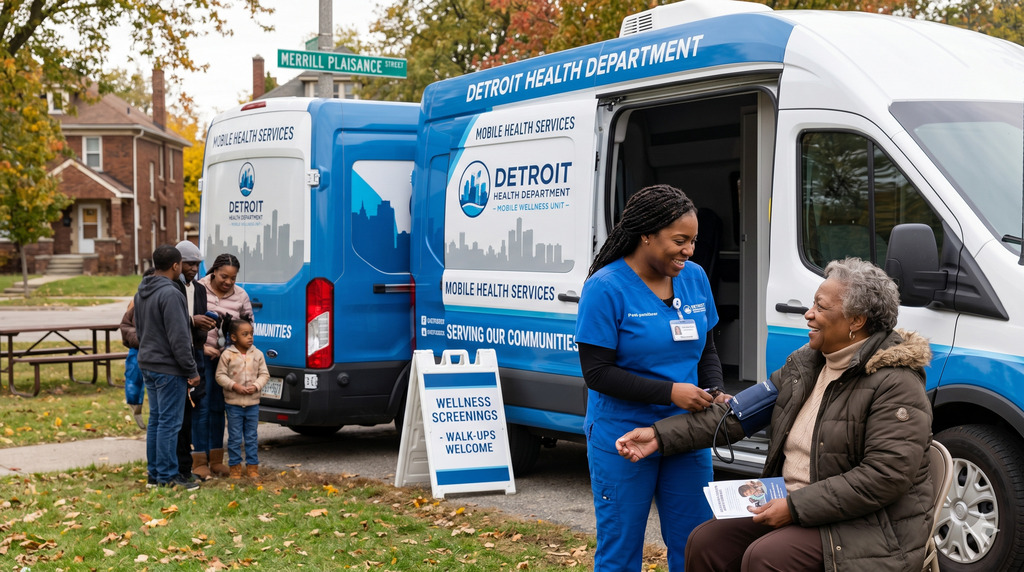
One of the most effective manifestations of this strategy is the “Pull Up Project.” Hosted at Palmer Park on Merrill Plaisance Street, this initiative transforms a public recreation space into a comprehensive wellness hub. It represents a direct collaboration between the Detroit Health Department and various community partners.
The Pull Up Project operates on the philosophy that wellness should be accessible, stigma-free, and community-centered. Residents can walk up to the mobile units without appointments, without insurance, and without judgment. This immediate, low-barrier access is critical for identifying chronic conditions before they require emergency room interventions.
The initiative blends clinical screening with basic human needs. Alongside blood pressure checks, organizers distribute hygiene supplies and connect families with social services. This holistic approach addresses the root causes of medical vulnerability.
| Initiative | Location | Primary Services Provided |
| The Pull Up Project | Palmer Park | Preventative screenings, hygiene supplies, HIV prevention |
| Wayne Mobile Health Unit | Citywide Canvassing | Blood pressure, diabetes monitoring, rapid Hepatitis C screening |
| RxKids Detroit | Municipal Clinics | Maternal support, infant care resources, cash assistance |
Integrating Safety and Wellness
Public health extends far beyond clinical diagnoses. It encompasses physical safety, mental well-being, and the reduction of community violence. Initiatives like Detroit’s Occupy the Summer program demonstrate how creating safe, engaging spaces for youth directly correlates with improved community health metrics.
When neighborhoods are safe, residents are more likely to utilize outdoor spaces, exercise, and interact with their neighbors. This social cohesion is a known protective factor against mental health crises. The alignment of police resources, parks departments, and health workers creates a comprehensive safety net.
Treating violence and trauma as public health issues allows for proactive interventions. Behavioral health co-response teams and mobile crisis units are replacing punitive measures with compassionate care. Identifying trauma early and providing immediate resources prevents the escalation of conflict and reduces the strain on emergency services.
Policy Driven by Data and Compassion
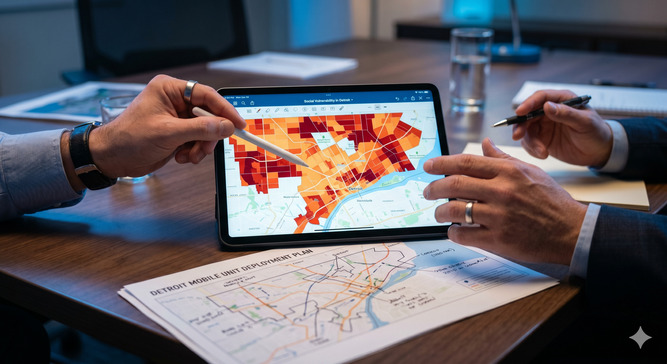
The push for mobile equity relies heavily on analyzing social vulnerability indices. Officials map out the specific neighborhoods experiencing the highest rates of chronic illness, infant mortality, and overdose incidents. They dispatch mobile units directly to these identified hotspots.
This targeted approach maximizes the impact of limited municipal funds. Instead of blanket campaigns, resources flow exactly where the data indicates the greatest need. The Centers for Disease Control and Prevention guidelines on Health in All Policies heavily support this data-informed, cross-sector collaboration to improve population metrics.
Poverty remains the primary determining factor for large-scale medical outcomes. Detroit’s leadership acknowledges that treating symptoms without addressing the underlying financial instability creates an endless cycle of hospital readmissions. Pairing poverty alleviation strategies with mobile interventions creates a sustainable path forward.
Programs like RxKids, recently championed by the Sheffield administration, reflect this dual approach. By providing critical assistance to expectant mothers and infants alongside accessible maternal care, the city attacks the root causes of infant mortality. Providing financial stability directly improves clinical outcomes.
Rebuilding Trust Through Consistent Presence
Historical inequities have bred deep skepticism toward large medical institutions within many Detroit neighborhoods. Overcoming this distrust requires consistency, transparency, and a profound respect for the community. Mobile units achieve this by operating on the community’s turf and on the community’s terms.
When a mobile unit visits Voyageur Academy or the Northwest Farmers Market, it integrates into the daily rhythm of the neighborhood. Healthcare becomes a routine part of community gatherings rather than an isolated, stressful event. This familiarity encourages individuals who might otherwise avoid doctors to seek preventative screenings.
The professionals staffing these units reflect the communities they serve. Culturally competent care ensures that language barriers and cultural misunderstandings do not impede treatment. Listening to residents and adapting the services to their specific requests builds a foundation of mutual respect.
Addressing the broader social determinants of wellness requires a commitment from every level of local government. Transportation, housing, and food security are all medical issues. When a mobile unit assists a resident with utility bills or food resources, it acts as a lifeline, preventing future medical crises.
A Blueprint for Lasting Change

The transition toward decentralized, mobile support services represents a profound evolution in urban policy. Detroit is moving away from reactive crisis management toward proactive, compassionate engagement. Meeting residents exactly where they are proves that effective government intervention is possible.
Empowering neighborhoods requires providing the physical and social infrastructure necessary for success. Mobile units deliver that infrastructure directly to the streets. They prove that wellness is not a privilege reserved for those with resources, but a fundamental right accessible to all.
The continued expansion of these programs relies on sustained funding, inter-departmental cooperation, and the unwavering dedication of local organizers. By valuing lived experiences alongside clinical data, Detroit is constructing a resilient, equitable support system. This localized approach serves as a blueprint for cities nationwide facing similar systemic challenges.