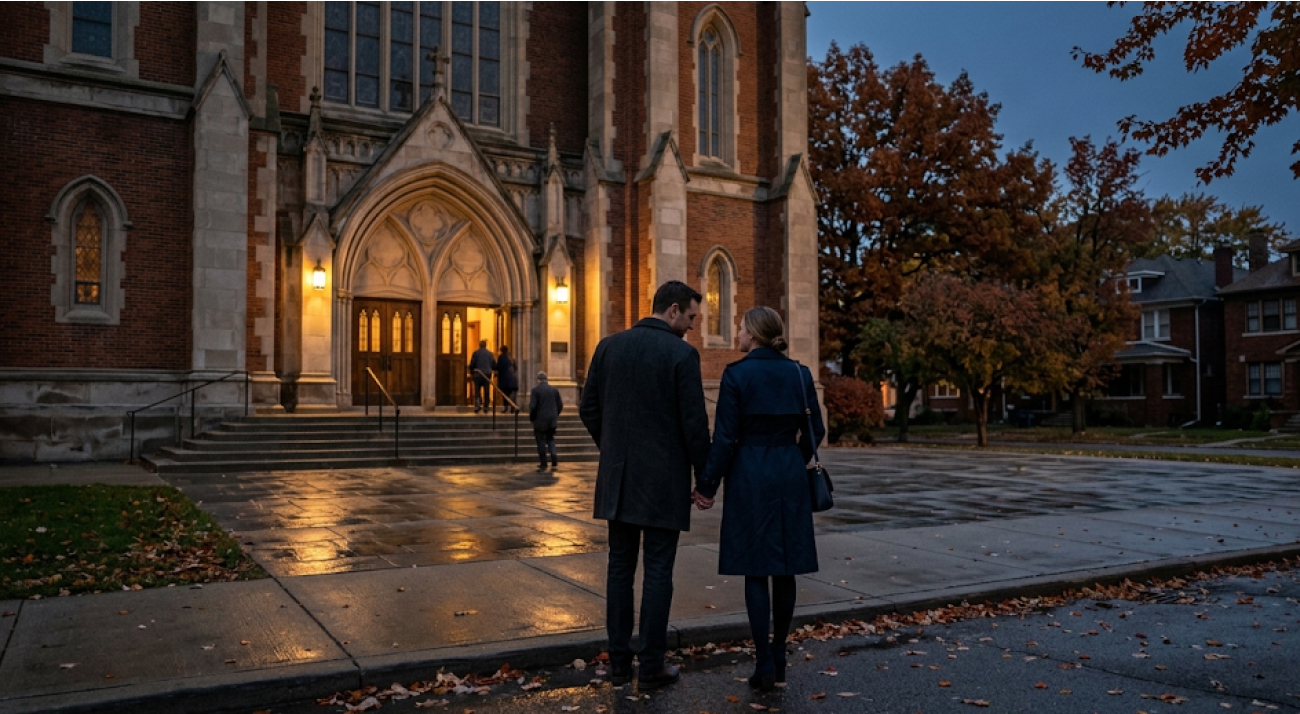
At an annual memorial Mass in Detroit on October 25, 2026, Catholic families gathered to remember children lost through miscarriage, stillbirth, and early childhood death. The gathering highlights how faith, prayer, and compassionate community support can help grieving parents know they are not alone.
For parents who have experienced the loss of a child, grief can remain present long after the initial days of mourning. Whether a pregnancy ends in miscarriage, a baby is stillborn, or a young child dies unexpectedly, families may carry profound sorrow through birthdays, anniversaries, holidays, and ordinary moments of daily life.
On Sunday, October 25, 2026, families gathered at the Cathedral of the Most Blessed Sacrament for an annual memorial Mass honoring children who died before or shortly after birth, as well as children lost in early childhood.
The gathering, held during Pregnancy and Infant Loss Awareness Month, offered families an opportunity to remember their children publicly, pray together, and find comfort in a Catholic community that recognizes the significance of their loss.
The event also reflected an important part of the Church’s pastoral mission: accompanying families through suffering with compassion, respect, and the hope of the Christian faith.
For Catholics across Detroit and southeast Michigan, the memorial Mass serves as a reminder that the Church’s care for families extends beyond baptisms, weddings, and celebrations. It also includes the difficult moments when parents need a place to grieve, remember, and be heard.
A Memorial Mass at Detroit’s Cathedral of the Most Blessed Sacrament
The annual Mass with Prayers for Pregnancy and Infant Loss Month was celebrated at 11 a.m. on October 25 at the Cathedral of the Most Blessed Sacrament, located at 9844 Woodward Avenue in Detroit.
Organized by the Archdiocese of Detroit’s Office of Family Ministry and Catholic Funeral and Cemetery Services, the gathering welcomed parents who had experienced miscarriage, stillbirth, or the death of an infant or young child. Couples hoping to conceive were also invited to receive prayers and blessings.

The Mass included several meaningful opportunities for remembrance:
- Memorial rosaries: Couples who had lost a child received rosaries as a sign of prayer and spiritual accompaniment.
- The Book of Innocents: Families could inscribe their children’s names in a permanent memorial book at the cathedral.
- Special blessings: Parents grieving a loss and couples hoping to conceive received prayers during the liturgy.
- Devotion to St. Gerard of Majella: Couples hoping for children received medals and prayer cards honoring the patron saint of expectant mothers, and a relic of the saint was available for veneration after Mass.
During the liturgy, the names of children were read aloud as families and the congregation joined in prayer.
These gestures may appear simple, but they carry profound meaning for families whose children are not always publicly remembered.
A memorial rosary can become a tangible reminder that a child remains loved. Hearing a child’s name spoken during Mass can affirm the importance of a life that may have been brief but was deeply meaningful to the family.
The gathering also provided a shared space where parents did not have to explain their grief or justify why they continued to mourn.
Father J.J. Mech Reminds Families That Faith Does Not Eliminate Grief
One of the central messages of the memorial Mass came from Father J.J. Mech, rector of the Cathedral of the Most Blessed Sacrament.
In his homily, Father Mech shared that his own mother had experienced the loss of three children. His reflection connected the experiences of grieving families with the broader Christian understanding of suffering, prayer, and God’s presence.
He acknowledged that losing a child can permanently change a family’s life, even while the world around them continues as usual.
Rather than suggesting that strong faith should eliminate sorrow, Father Mech emphasized that grief, questions, and trust in God can exist together. He pointed to the Psalms, where people openly express anguish before God, and to the Gospel accounts of Jesus weeping at the death of Lazarus and experiencing sorrow in the Garden of Gethsemane.
His message centered on the importance of accompanying people through suffering rather than trying to explain away their pain.
That distinction is especially important for parents who have experienced pregnancy or infant loss.
Well-intentioned comments can sometimes leave families feeling misunderstood. Statements suggesting that a loss was somehow necessary or that parents should quickly move forward may unintentionally deepen their isolation.
A more compassionate response recognizes the loss, listens without judgment, and allows families to grieve in their own way.
The Book of Innocents: Remembering Children by Name
One of the most distinctive elements of Detroit’s annual memorial Mass is the Book of Innocents, a permanent record honoring children lost through miscarriage and stillbirth.
Families may write their children’s names in the book, creating a visible acknowledgment of lives that might otherwise remain unknown outside the immediate family.
The book has a history extending back more than two decades. According to Detroit Catholic, its earliest recorded name dates to 2003.
In October 2021, then-Archbishop Allen H. Vigneron dedicated a permanent home for the Book of Innocents in the narthex of the Cathedral of the Most Blessed Sacrament.
Today, the book remains accessible as a place of remembrance. The names entered are remembered in monthly prayers and during All Souls’ Day liturgies.
For some parents, writing a child’s name in the book may be one of the few opportunities to see that name formally acknowledged.
This form of remembrance reflects a central aspect of Catholic pastoral care: recognizing the dignity of every human life while offering families a place to bring their sorrow into the life of the Church.
It also creates a connection between generations of grieving parents, linking families who attended the memorial Mass years ago with those seeking comfort today.
Andrew and Michelle Nalepa Find Comfort in Shared Prayer
Among the families attending the October 25 memorial Mass were Andrew and Michelle Nalepa, parishioners of St. Mary Parish in Royal Oak.
The couple attended the special liturgy for the first time in 2026.
Speaking with Detroit Catholic, Andrew Nalepa expressed appreciation for the sensitivity and respect shown during the Mass. Michelle Nalepa also found comfort in Father Mech’s willingness to share his family’s personal experience of child loss.
Their experience illustrates why dedicated memorial liturgies can be meaningful.
Pregnancy loss and infant death are deeply personal experiences, but families may struggle to find opportunities where their grief is openly recognized. A parish Mass specifically dedicated to remembrance creates a setting where parents can participate without feeling that their sorrow is unexpected or inappropriate.
It also offers the reassurance of being surrounded by others who understand that grief does not necessarily follow a predictable timeline.
For the Nalepas and other families, the Mass was not presented as a way to erase suffering. Instead, it provided a place where their children could be remembered and where prayer could become part of their ongoing journey.
Why Pregnancy and Infant Loss Awareness Month Matters
October is recognized as Pregnancy and Infant Loss Awareness Month in the United States.
The observance dates to 1988, when President Ronald Reagan proclaimed October as a time to recognize families affected by miscarriage, stillbirth, and infant death.
October 15 is also observed as Pregnancy and Infant Loss Remembrance Day, when families and communities participate in memorial activities, including candle-lighting ceremonies.
These observances draw attention to forms of grief that have historically received limited public acknowledgment.
Pregnancy and infant loss can affect mothers, fathers, siblings, grandparents, and extended families. The emotional experience may vary depending on the circumstances of the loss, the family’s expectations, and the support available afterward.
Some parents may wish to speak frequently about their child. Others may prefer privacy or find certain anniversaries especially difficult.
There is no single correct way to grieve.
For Catholic parishes, awareness initiatives create opportunities to respond with sensitivity and practical support, rather than assuming that a family will recover emotionally within a particular period.
How Detroit Catholic Ministries Are Supporting Grieving Families
The October memorial Mass is part of a broader effort by the Archdiocese of Detroit to strengthen pastoral accompaniment for families experiencing pregnancy and infant loss.
Brooke Warren, associate director for family ministry for the Archdiocese of Detroit, explained that the annual Mass developed in response to conversations with parishioners and parish leaders who were uncertain how best to support grieving couples.
The goal is to make clear that families are not alone and that the Church remains present throughout their experience.
Support also extends beyond the cathedral.
In September 2025, a memorial dedicated to children lost during pregnancy and infancy was established at Holy Sepulchre Cemetery in Southfield.
Retired Detroit Auxiliary Bishop Donald F. Hanchon presided over the memorial dedication, which included the reading of children’s names, candle lighting, a butterfly release, and prayer.
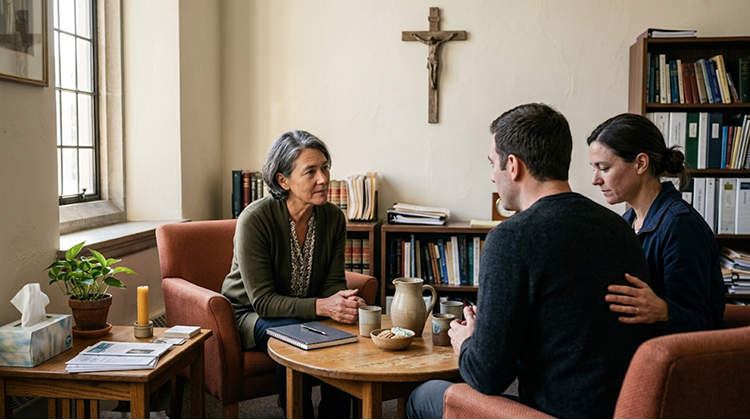
Deanna Cortese, director of mission advancement for Catholic Funeral and Cemetery Services, described the gathering as an opportunity for families to find solidarity with others who had experienced similar losses.
Together, these initiatives demonstrate different forms of Catholic pastoral care: communal prayer, permanent remembrance, personal accompaniment, and spaces where families can honor their children.
The Role of St. Gerard of Majella in Catholic Prayer
St. Gerard of Majella holds a special place in Catholic devotion among expectant mothers and couples hoping to conceive.
A Redemptorist lay brother who lived in eighteenth-century Italy, St. Gerard is widely venerated as a patron of expectant mothers, childbirth, and families seeking children.
During the October 25 memorial Mass, couples hoping to conceive received prayer cards and medals associated with St. Gerard. A relic of the saint was also available for veneration following the liturgy.
For Catholics, asking a saint’s intercession is an expression of prayer and trust in God, not a guarantee of a particular outcome.
This distinction matters especially for couples experiencing infertility or pregnancy loss.
Prayer can offer spiritual strength and a sense of connection with the Church, while families may also need medical care, counseling, or other forms of support appropriate to their circumstances.
The Mass made room for both remembrance and hope, recognizing parents grieving children they had lost and couples continuing to hope for the gift of a child.
How Catholic Parishes Can Accompany Families After a Loss
The annual memorial Mass provides an example of how parishes can make their communities more welcoming to grieving families.
Support does not always require a large event. Often, consistent and thoughtful acts of care can make a meaningful difference.
1. Acknowledge the child’s life
When parents choose to share their loss, parishioners can respond by recognizing the child and the family’s grief.
Using the child’s name, when the parents welcome it, can be particularly meaningful.
2. Listen without trying to explain the loss
Grieving families may need opportunities to speak about their experiences without receiving unsolicited explanations or advice.
A compassionate response does not require having the right answer. It begins with listening.
3. Offer prayer and opportunities for remembrance
Memorial Masses, parish prayer intentions, remembrance books, and private opportunities for prayer can help families feel included in the Church’s spiritual life.
Participation should remain voluntary, respecting each family’s needs and preferences.
4. Provide practical assistance
Families may benefit from help with meals, transportation, household responsibilities, or childcare.
Simple acts of service can ease some daily pressures while parents navigate grief.
5. Recognize that grief can continue over time
The anniversary of a loss, a child’s expected birthday, Mother’s Day, Father’s Day, and family celebrations can bring renewed sorrow.
Parishioners and ministry leaders can offer support beyond the first days or weeks following a loss.
6. Encourage additional support when needed
Pastoral care can complement professional mental health support, bereavement counseling, and appropriate medical follow-up.
Families experiencing persistent distress should be encouraged to seek qualified assistance without suggesting that doing so reflects a lack of faith.
Where Families in Metro Detroit Can Find Catholic Support
Families looking for prayer, remembrance, or pastoral assistance can begin with the Archdiocese of Detroit and its affiliated ministries.
Cathedral of the Most Blessed Sacrament
9844 Woodward Avenue, Detroit, MI
Home of the annual Pregnancy and Infant Loss memorial Mass and the permanent Book of Innocents.
Holy Sepulchre Cemetery
A Catholic cemetery with a memorial honoring children lost during pregnancy and infancy, dedicated in September 2025.
Archdiocese of Detroit Office of Family Ministry
Supports Catholic family life and organizes pastoral initiatives, including the annual memorial Mass.Y
Families can also contact their local parish to ask about pastoral visits, Mass intentions, prayer opportunities, and bereavement resources. Available services may differ by parish.
A Continuing Ministry of Remembrance and Hope
The October 25 memorial Mass at the Cathedral of the Most Blessed Sacrament offered Detroit-area families something both simple and profound: a place to remember their children in the presence of a community willing to share their sorrow.
Through the reading of names, memorial rosaries, the Book of Innocents, special blessings, and prayers, the gathering affirmed that families do not need to hide their grief to participate fully in Catholic life.
Father J.J. Mech’s homily emphasized that faith does not require parents to deny their pain. The Church’s responsibility is not to provide easy explanations for loss, but to accompany people with compassion and prayer.
For Andrew and Michelle Nalepa and the other families who attended, the liturgy offered an opportunity to experience that accompaniment firsthand.
The ministry also extends beyond one annual celebration. Detroit’s permanent memorials, parish communities, and family ministries provide ways for parents to continue remembering their children and seeking support throughout the year.
As Pregnancy and Infant Loss Awareness Month comes to a close, the message of Detroit’s Catholic community remains relevant in every season: every grieving family deserves compassion, every child deserves to be remembered, and no parent should have to carry sorrow in isolation.