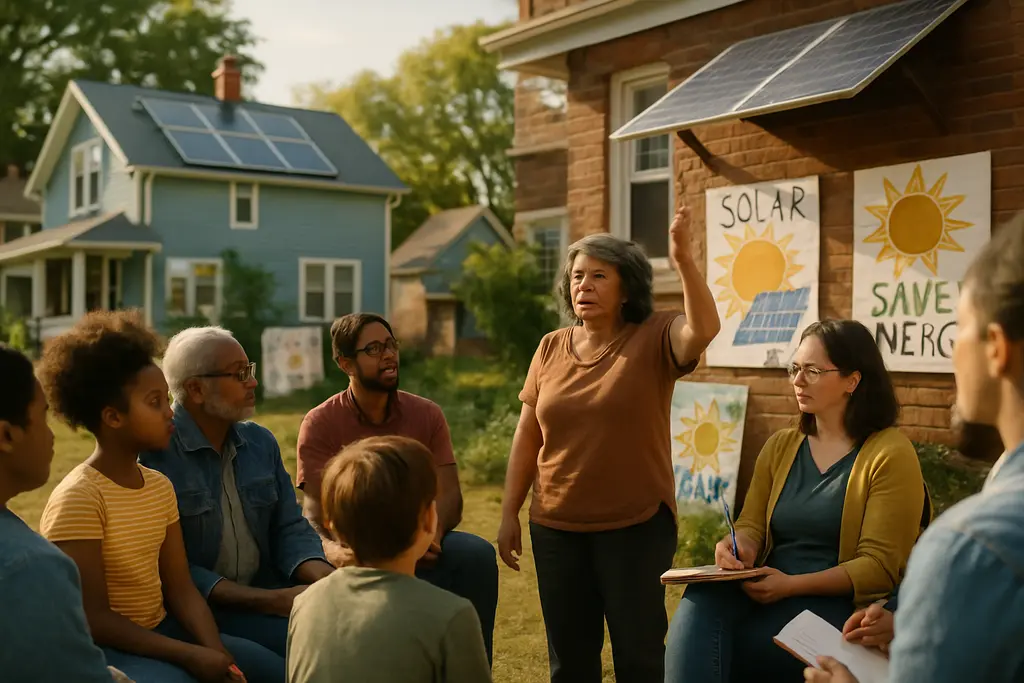
The Detroit solar projects announced by the City of Detroit changed a long-running neighborhood issue into a public energy, housing, and land-use program. On June 24, 2024, the city announced the first three Solar Neighborhoods: Gratiot/Findlay, Van Dyke/Lynch, and State Fair. Those Phase 1 sites covered 103.9 acres of proposed solar arrays and were part of a city plan to reach about 200 acres to offset electricity used by all 127 municipal buildings, according to the city’s solar neighborhood announcement.
For community outreach teams, the issue is not only where panels go. The local impact includes relocation terms for residents inside array footprints, home energy upgrades for nearby occupied homes, site care in areas affected by dumping and blight, and the city’s stated clean-energy goals. Because the projects are ongoing as of September 14, 2026, residents and neighborhood groups need clear information that separates completed decisions from items still being built, reviewed, or confirmed.
What Detroit Solar Projects Changed
The First Neighborhood Footprints
The City of Detroit said the first three selected areas were Gratiot/Findlay, Van Dyke/Lynch, and State Fair. The 103.9 acres identified in Phase 1 were described by the city as the first step toward a larger solar buildout meant to offset electricity used by municipal buildings. The provided research also states that Phase 2 later included Houston-Whittier/Hayes and Greenfield Park/I-75/McNichols, bringing the combined footprint to 165 acres across five selected neighborhoods.
That acreage matters because it places clean-energy infrastructure inside specific residential areas, not on an isolated industrial site outside public view. Outreach workers, churches, block clubs, and housing advocates should treat the program as both an energy project and a neighborhood-change project. Residents may have questions about property acquisition, construction timing, fencing, green space maintenance, stormwater conditions, and who to contact when a site needs attention.
Detroit Solar Projects And Residents Near The Footprints
The city’s Phase 1 announcement said 21 owner-occupied homes were identified inside the 104-acre footprint and that all of those homeowners chose to sign option contracts. The same city source said owners of owner-occupied homes in solar array footprints would receive buyouts or relocation compensation. Renters, according to the city, would receive moving assistance and 18 months of free rent under Michigan relocation law.
For outreach teams, Detroit solar projects require careful resident communication because relocation and nearby-home support are different issues. A homeowner inside a footprint may be dealing with a sale or relocation decision. A nearby homeowner may be focused on energy efficiency upgrades, repair scheduling, or property conditions near a future array. A renter may need clear information about moving support and timing. Those differences should shape how neighborhood groups share flyers, host meetings, and refer residents to city contacts.
Home Upgrades And Neighbor Support
Why Repairs Matter For Outreach
One of the most direct community impacts has been home repair and energy-efficiency work near solar development areas. In July 2026, CBS Detroit reported that around 200 Detroit residents had received up to $15,000 in energy-efficiency upgrades, including work such as basement windows, insulation, and electrical improvements. The provided research states that residents near Phase 2 solar sites may be eligible for higher support amounts, ranging from $15,000 to $25,000, depending on the size of the nearby solar field.
These repairs matter because energy efficiency is not an abstract climate goal for families paying utility bills or living with drafty rooms. Insulation, window repair, and electrical improvements can reduce energy waste and improve housing conditions. For community organizations, this creates a practical outreach task: help residents understand eligibility, collect needed paperwork if requested by official administrators, and avoid spreading unverified promises beyond what the city or program partners have stated.
Housing needs also connect to broader civic planning. Saint Joseph Detroit has covered how local planning around repairs, affordability, lead reduction, and public services can affect neighborhood stability through the Detroit housing action plan. Solar-related home upgrades fit that same local concern: public projects are most useful when nearby residents can see direct improvements in daily living conditions.
Practical Steps For Resident Support
Neighborhood groups can help without taking over official program duties. A church or nonprofit can host a listening session, keep a list of public city contacts, help residents prepare questions before meetings, and direct people to verified program information. A block club can record common concerns about construction access, site appearance, dumping prevention, and home repair follow-up, then share those concerns with the correct city office or council representative.
Care is needed with household information. Groups should not collect sensitive documents unless they are officially part of a program process and have clear privacy practices. The safer role for many volunteers is education, reminder calls, meeting support, transportation help, and translation or interpretation referrals when available through proper channels.
Environmental And Municipal Impacts
What The Energy Goal Covers
The environmental case for Detroit solar projects is tied to municipal electricity use and local land conditions. The city’s plan described solar arrays large enough to offset electricity used by all 127 city municipal buildings. The provided research states that Detroit’s climate strategy aims to power 100% of municipal buildings with clean energy by 2034 and includes an interim goal to source 50% of Detroit’s electricity from clean energy through municipal and private property partnerships.
The provided research also states that Phase 1 was expected to generate about 21 megawatts of solar energy and that all five selected neighborhoods together would reach about 31 megawatts if Phase 2 was added. Those figures describe generation capacity, not a full public accounting of carbon reductions, air-quality gains, or household utility savings. Since no verified emissions estimate was included in the provided research, residents should not be told that the projects will produce a specific carbon or air-quality number unless the city releases and documents that calculation.
Land Care, Cost, And Site Design
The city’s own framing connects the arrays to land maintenance in areas affected by blight. The provided research says the project would create annual operating cost increases of about $1.7 million, while the city already spends about $3.7 million per year maintaining blighted solar field zones through dumping cleanups, mowing, police and fire responses, and stormwater repairs. That comparison helps explain why the city presented the program as both an energy investment and a land-care response.
Site appearance is another public concern. The provided research states that residents approved planting and design plans for all five solar neighborhoods, with features such as ornamental trees, flower meadows, decorative fencing, and improved meadow areas under and around panels. Outreach groups should continue to ask how those design commitments will be maintained after installation, who will handle complaints, and how residents can report damaged fencing, dumping, overgrowth, or stormwater issues.
Detroit Solar Projects And Community Follow-Up
Questions Local Groups Can Track
As Detroit solar projects continue through construction and buildout, community groups can provide a steady civic service by tracking public commitments and helping residents ask specific questions. The provided research states that Van Dyke/Lynch became the first of the five Solar Neighborhoods to break ground on October 27, 2025, and that activation was expected in mid-2026 at the time of that announcement. The research provided for this article does not confirm which individual sites were active by September 14, 2026, so that status should be verified through city updates before public meetings or resident notices.
- Resident Support: Which households have completed relocation, buyout, moving support, or repair steps, and which still need official follow-up?
- Construction Status: Which sites are active, which are still being prepared, and what dates have been confirmed by the city?
- Maintenance Standards: Who is responsible for mowing, trash removal, fencing repair, planting care, and stormwater concerns?
- Energy Reporting: When will the city report generation, municipal energy offsets, and operating costs in a format residents can understand?
- Meeting Access: Are public updates offered at times, places, and formats that affected residents can use?
These questions keep outreach grounded in service rather than rumor. The strongest community response will come from groups that verify facts, listen to residents, and connect people to official resources without overstating benefits or timelines. For broader local civic coverage in the same network, readers can also follow County Watchers.
The neighborhood impact of the solar program will be measured through more than megawatts. It will depend on whether residents receive promised support, whether nearby homes benefit from documented repairs, whether former blight areas are maintained, and whether city energy goals are reported clearly. Detroit’s solar work has created a public test for clean energy that is local, visible, and tied to household conditions. Community organizations can help residents stay informed while the city and project partners carry out the commitments already announced.