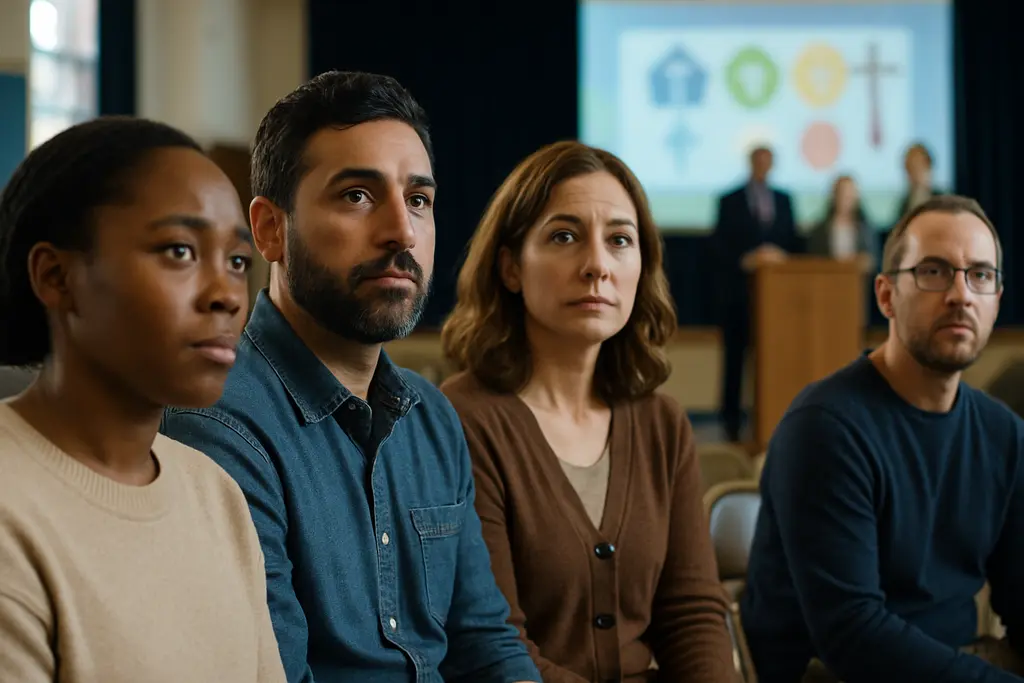
The DPSCD Board Meeting on October 13, 2026, gives Detroit families, students, educators, faith-based partners, and neighborhood groups a public setting to follow district business and speak during the public comment portion. Detroit Public Schools Community District lists the Regular Board Meeting for October 13, 2026, from 5:30 PM to 9:00 PM at Mumford High School, 17525 Wyoming St., Detroit, according to the district’s Board of Education page. For residents who want their concerns heard clearly, the next civic step is preparation: confirm the meeting format, register on time, keep comments within the rules, and connect school-level concerns with ongoing parent, student, community, and faith-based engagement channels.
This is a practical moment for local service groups as well as individual residents. Churches, community ministries, youth advocates, parent leaders, and neighborhood organizations can help families prepare short, accurate comments, understand registration rules, and follow up after the meeting through school-level and district-level channels. That kind of support turns a single public meeting into a stronger local communication system for families who may not follow board procedures every month.
DPSCD Board Meeting Details Residents Need
DPSCD Board Meeting Date And Location
The October 13 Regular Board Meeting is scheduled at Mumford High School, a Detroit school site rather than the Fisher Building. That location matters for residents near the northwest side and for families who may find an evening school-based meeting easier to reach than a weekday afternoon office meeting. The meeting window listed by the district is 5:30 PM to 9:00 PM, giving residents a defined time frame for transportation, childcare planning, and work schedule adjustments.
The DPSCD Board Meeting is only one part of the October board calendar. The district also lists a Board Study Session on October 21, 2026, from 3:00 PM to 5:00 PM at the Fisher Building, 3011 W. Grand Blvd., Detroit. A Committee of the Whole meeting is listed for October 28, 2026, from 4:30 PM to 6:30 PM, also at the Fisher Building. Residents who cannot attend the October 13 meeting may still have a way to observe board work later in the month, depending on the agenda and public participation format for each meeting.
Monthly And Quarterly Engagement
DPSCD’s published board information describes monthly Regular Board meetings, sub-committee meetings, and quarterly Community Board Meetings as district engagement settings. That gives residents more than one point of entry. A parent concerned about a school-specific matter may start with the school community. A resident concerned about districtwide policy may look to a board or committee meeting. A faith-based group supporting students may use both: local relationships for direct support and board meetings for public awareness.
Residents looking for a deeper walk-through of meeting access and public input steps can also review this related local resource on DPSCD public input paths, which connects board meeting preparation with family engagement. For those interested in understanding how local institutions support community engagement, the Richland Area Chamber provides another example from a related site in the network of supporting residents and organizations in public life.
How Public Comment Works
Registration And Three-Minute Limit
Public participation is allowed during the public comment portion of board and committee meetings, but residents must register before registration closes. DPSCD’s public participation policy states that comments are limited to three minutes per person and that speakers are asked to state their name, address, and group affiliation if appropriate, according to the district’s public participation policy. The same policy says comments must be addressed to the presiding officer and not directed at individual board members or other participants.
Those rules are not just formalities. They help residents use a short speaking window well. A three-minute comment usually works best when it names the issue, explains who is affected, offers one requested action, and avoids personal attacks. A parent might identify a school-level concern and ask where follow-up should occur. A student-support organization might describe a service gap and request a connection with the proper district office. A faith leader might speak about family outreach needs and ask how partners can align with existing district programs.
Virtual And In-Person Paths
For virtual comments, DPSCD’s meeting rules in the research allow participants to use Zoom Webinar’s “Raise Hand” feature or dial in by phone and press *9. Registration must occur before the presiding officer closes registration. In-person participants must sign in using a registration card. Residents should not wait until the last moment to understand these steps, especially if they plan to speak on behalf of a family, congregation, neighborhood group, or school support team.
The strongest comments are usually prepared before arrival. Residents can write a short statement, time it at home, and bring a printed copy. If several people share the same concern, they can avoid repeating the same point and instead divide comments by topic. One person may speak about student experience, another about family communication, and another about a proposed solution or community resource. That approach respects the time limit while giving board members clearer information.
School And Faith Engagement Beyond One Meeting
School Advisory Councils
DPSCD engagement information cited in the research says each school has a School Advisory Council made up of parents, students, staff, and community members. The research states that these councils meet at least once a month and approve school improvement plans and budgets. For residents preparing for the DPSCD Board Meeting, that school-level channel matters because some concerns may need both public comment and direct follow-up with a school community.
A School Advisory Council can help residents connect a public concern with the school planning process. If a family raises an issue at the board level, the next question may be whether that concern has also been shared with the principal, council members, or other school-based leaders. Public comment can raise visibility, but school-level participation can support follow-through.
Faith-Based Support And Home Visits
The district’s engagement information in the research also identifies a Parent Teacher Home Visit Program that provides two home visits per year, one in the fall and one in the spring. That model gives families a direct way to engage school staff in a home setting. For faith-based and community support groups, this points to a useful principle: trusted relationships can help families ask questions, share barriers, and connect with school staff before concerns become urgent public testimony.
DPSCD’s Faith-Based Initiative, as described in the research, brings local faith-based organizations and the district together. The research states that the initiative includes a Faith-Based Council that meets monthly to share updates, review partnerships, and exchange best practices for supporting students and families. For congregations and ministries, the October board calendar can be paired with that continuing work. A church can help families understand public comment rules, while also seeking partnership channels that support attendance, mentoring, family communication, and student well-being.
Practical Preparation For Residents And Groups

Residents do not need to be policy experts to participate responsibly. They do need to be specific, respectful, and prepared. The research does not provide the October 13 agenda topics, so residents should avoid assuming which issues will be discussed unless they have confirmed the agenda through official district materials. A comment can still be useful if it clearly identifies a concern, names the school or community affected when appropriate, and asks for a clear next step.
Community organizations can support participation without speaking for families. They can host a short preparation session, help residents read the public comment rules, practice three-minute statements, arrange transportation where possible through their own networks, and encourage follow-up after the meeting. Faith-based groups can also remind speakers to avoid personal attacks and keep the focus on student needs, family support, and constructive action.
- Confirm the meeting: Check the date, time, location, and format before leaving home.
- Register early: Public comment registration closes when the presiding officer ends registration.
- Practice the comment: Keep remarks within three minutes and address the presiding officer.
- Bring details: Use dates, school names, and direct experiences where appropriate.
- Plan follow-up: Ask which district, school, council, or partnership channel should handle the next step.
The same preparation can help residents attend without speaking. Listening to board discussion, taking notes, and sharing verified information with neighbors are also forms of civic engagement. Not every concern needs a microphone on the first night. Some may be better suited for a School Advisory Council, a district office request, a parent-teacher conversation, or a faith-based partnership meeting.
DPSCD Board Meeting Engagement Next Steps
The DPSCD Board Meeting on October 13, 2026, gives Detroit residents a timely opening to participate in public school governance. The most useful response is not simply showing up. It is showing up prepared, following the rules, speaking with care, and connecting public comments to the right follow-up channel.
For parents and students, that may mean preparing a concise comment and then asking how the issue should move through the school or district process. For community groups, it may mean helping families understand registration and time limits. For faith-based partners, it may mean pairing public engagement with steady support through the district’s Faith-Based Initiative and school-level relationships.
Detroit’s public schools are served best when residents treat board meetings as one part of a wider support network. Public comment can raise a concern. School councils can keep families involved. Home visits can build trust. Faith-based partnerships can connect students and families with care beyond the meeting room. Used together, those paths give residents a grounded way to participate in the October board calendar and stay engaged after the meeting ends.