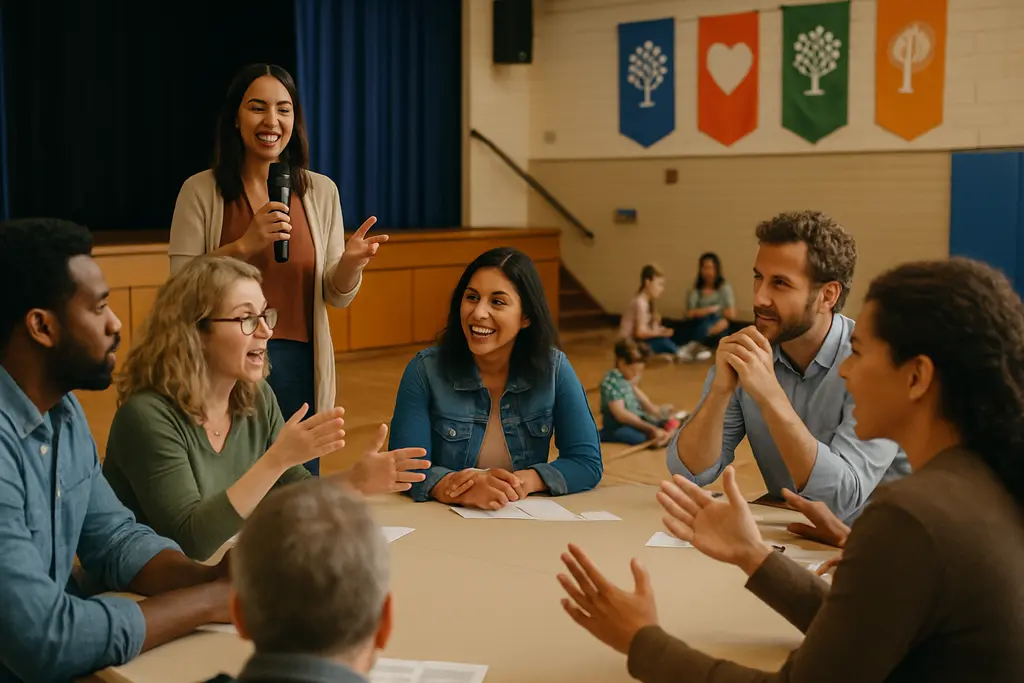
The next phase of DPSCD town halls and public school meetings is now focused on follow-up: families have passed the first day of K-12 classes on Monday, August 24, 2026, the district’s August back-to-school expo period has closed, and two September public meeting dates remain on the civic calendar. For Detroit parents, caregivers, school staff, neighborhood groups, and education partners, the main question is no longer how to start the year, but how to keep enrollment support, student services, transportation concerns, attendance routines, and special education questions visible after the first week of school.
DPSCD town halls After The First Week Of School
DPSCD town halls And The September Public Calendar
DPSCD calendar information in the district’s public meeting notices lists a Regular Board Meeting for Tuesday, September 15, 2026, from 5:30 PM to 9:00 PM at Mumford High School, 17525 Wyoming St. in Detroit. The same district calendar information lists a Committee of the Whole meeting for Wednesday, September 23, 2026, from 4:30 PM to 6:30 PM at the Fisher Building, 3011 West Grand Blvd. in Detroit. Those dates matter because they give families and community partners scheduled opportunities to raise issues that became clearer after the opening of school.
For residents, DPSCD town halls should be treated as civic access points, not one-time announcements. A parent who learned during the first week that a child needs a schedule change, an Individualized Education Program question answered, or clearer bus information may need a public route for follow-up. A neighborhood organization that helped families with enrollment may need to share patterns it saw across several blocks or schools. A school partner that hosted supply drives may need to ask what support is still needed after the first round of donated materials has been distributed.
What August Outreach Already Covered
DPSCD announced that its inaugural Back-to-School Expos began on Friday, August 7, 2026, and led up to the first day of K-12 school on Monday, August 24, 2026, according to the district’s official Back-to-School Expos notice. The research notes also identify school-based expo events at Thurgood Marshall Elementary School, Vernor Elementary School, and Wayne Elementary School during August, with activities such as family information, orientation, resource tables, food, games, and enrollment support.
Because August 7, August 20, August 24, and August 26 have all passed as of August 27, 2026, those events should now be understood as completed outreach. That timing changes the task for families and support organizations. Instead of asking only who attended an expo, the useful community question is what still needs attention: families who missed orientation, students still adjusting to class routines, caregivers who need help understanding district services, and school teams that need community partners to stay involved after the opening week.
Back-To-School Issues Families Can Still Raise
Enrollment, Attendance, And Daily Readiness
Back-to-school outreach often begins with registration tables and supply support, but the real test comes once students are in class. Families may need clear answers about enrollment documents, immunization records, class placement, attendance expectations, meal access, arrival times, dismissal plans, and school communication tools. Community groups can help by collecting questions in a simple format and directing residents to the correct school or district office rather than spreading unconfirmed answers.
DPSCD town halls can help turn scattered questions into organized public feedback. If several families in the same neighborhood report confusion about arrival procedures, that is different from one household needing a reminder. If several caregivers say they do not understand how to receive school updates, that may point to a communication gap. Public meetings work best when residents bring specific dates, school names, and service questions that staff can review.
Special Education Follow-Up After The August Meeting
DPSCD scheduled a virtual Exceptional Student Education parent informational meeting for Thursday, August 20, 2026, from 4:00 PM to 5:00 PM, with topics that included IEPs, evaluations, services, and parental rights, according to the district’s ESE parent meeting notice. That meeting is now concluded. The same notice said an in-person ESE community meeting would follow later in August, with date and location to be announced; based on the provided research, those details were not yet specified.
Families with ESE questions should avoid relying on informal summaries if they need case-specific answers. A practical next step is to write down the student’s school, grade, service question, meeting date if one is already scheduled, and the specific document or process that needs explanation. Community advocates can support parents by helping them prepare questions, keep records, and ask district staff for verified follow-up channels.
How Community Partners Can Support Families

Clear Outreach Beats Last-Minute Confusion
Schools cannot carry every family support task alone. Churches, block clubs, nonprofit programs, youth mentors, parent groups, and neighborhood service providers can help families prepare for public meetings by gathering concerns in advance, sharing meeting times accurately, and encouraging respectful participation. A community partner does not need to speak for families; it can help families speak clearly for themselves.
Local civic networks also help keep education outreach connected to wider household needs. Groups that follow neighborhood services, family support, and education access, including initiatives like One United Michigan, can use verified district notices to point residents toward meetings and reduce confusion. The standard should be simple: share confirmed dates, name the district office or school involved, and avoid repeating claims that are not tied to an official notice.
A Practical Preparation Checklist
Families and outreach teams can use the September meeting dates as preparation deadlines. The most useful comments are usually specific, documented, and connected to a clear request. A caregiver who says, “I need help understanding the evaluation timeline for my student,” gives staff a clearer path than a broad complaint. A community group that says, “Ten families asked us for enrollment help after August 24,” provides a clearer signal than a general concern about confusion.
- Write down the issue: Include the school, date, office contacted, and what answer is still needed.
- Bring the right question: Separate individual student needs from districtwide service concerns.
- Confirm the meeting location and time: Use district notices before arranging rides or childcare.
- Ask for the next step: Request the office, timeline, or staff contact responsible for follow-up.
- Share verified updates: Community groups should correct old flyers or posts when meeting details change.
This approach keeps public engagement useful for both families and the district. It also helps residents who may not be comfortable speaking at a meeting. Written questions, organized notes, and trusted support from community partners can make participation more accessible.
DPSCD town halls Back-To-School Engagement Next Steps
What Residents Should Watch After August 27
The immediate civic path is straightforward. The August expo period and the virtual ESE meeting have passed. The September 15 Regular Board Meeting and September 23 Committee of the Whole meeting remain the two public dates identified in the provided district research after August 27, 2026. Families who still need back-to-school answers should use the time before those meetings to document concerns and contact their school first when the matter is student-specific.
DPSCD town halls can be most effective when the community treats them as part of a service loop. The first step is school-level communication. The second step is organized family follow-up. The third step is public accountability through board or committee meetings when broader patterns appear. That sequence respects school staff time while still giving residents a public way to raise unresolved issues.
For neighborhood outreach teams, the work after August 27 is practical: remind families of verified September dates, help caregivers prepare questions, track repeated concerns, and connect residents to district notices rather than rumors. For families, the main step is to move from general frustration to specific requests. That is how back-to-school engagement becomes useful after the first bell has already rung.