
by Miguel Lucas July 1, 2026
The Seasonal Threat Of Michigan Winters

Have you ever evaluated the physical infrastructure available to vulnerable populations when the temperature drops below freezing? For thousands of families and unhoused individuals across Detroit, the harsh Michigan winter represents an immediate, life-threatening crisis. Many neighborhoods have historically operated with limited municipal shelter beds, leaving a dangerous gap in emergency support during extreme weather events.
Public health professionals recognize that continuous access to heated, safe environments correlates directly with survival rates and community stability during the coldest months. The seasonal nature of winter requires an immediate, structural intervention. Local civic leaders and residents recognize that government agencies cannot manage this crisis alone.
The city required a flexible, neighborhood-level solution to meet these urgent demographic needs. Municipal planners and outreach coordinators identified the existing physical spaces owned by local Education & Faith organizations as the optimal foundation for expanding emergency winter relief.
Mobilizing Congregation Resources And Infrastructure
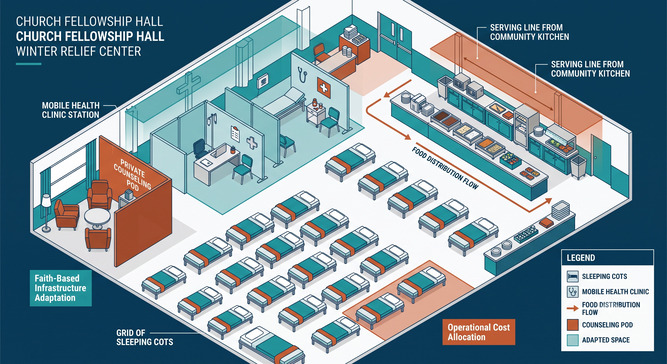
Large-scale emergency relief requires significant localized infrastructure to supplement official municipal standby shelters and respite locations. Detroit’s churches, mosques, and temples are stepping up to bridge this gap, leveraging their existing buildings to bypass the typical delays associated with constructing new municipal shelters. This intervention moves resources directly into the neighborhoods where marginalized populations already reside.
The physical blueprints of these religious institutions are uniquely suited for rapid emergency response. The operational model extends beyond simply unlocking doors; it includes allocations for overnight staffing, hot meal distribution, and primary medical triaging.
Organizers recognize that an empty hall provides little civic value without the compassionate infrastructure to support it. Faith-based leaders have restructured their facilities to prioritize adaptable, life-saving environments.
| Facility Feature | Intended Community Function | | Fellowship Halls and Gymnasiums | Overnight emergency warming centers and cot spaces | | Commercial Congregation Kitchens | High-volume preparation of hot, nutritious winter meals | | Private Counseling Rooms | Mental health check-ins and housing transition planning |
The focus areas identified by these congregations extend far beyond simple temperature control. They provide trauma-informed care and direct avenues for long-term recovery. The physical layout accommodates these critical human services directly.
Building Cross-Sector Partnerships For Survival

[Image Prompt: A candid photo of a Detroit city official and a local faith leader shaking hands outside a brick community center, with a municipal emergency relief vehicle parked in the background.]
The integration of religious institutions into the winter relief grid represents a clear shift in how Detroit handles seasonal public health crises. The project relies on a cooperative model connecting the City of Detroit Housing and Revitalization Department, private philanthropic equity, and dedicated congregation volunteers.
City officials emphasized during recent planning sessions that strong civic safety nets require this exact type of collaboration. Government agencies manage the legal frameworks, safety inspections, and financial grants. Private donors provide the immediate capital to cover elevated winter utility bills. Local congregations supply the trusted community presence and the operational manpower required to bring people out of the cold.
This model relieves the immediate capacity burden on traditional city shelters. It simultaneously creates a blueprint for future crisis response initiatives, seamlessly integrating with broader Support Services across neglected districts.
Looking Ahead To The Upcoming Winter Season
Preparations are already underway across the east and west sides of the city. The operational schedule dictates that faith-based warming centers must be fully supplied and ready to open their doors well before the first major freeze of late 2026.
Providing safe, predictable environments serves as a core component of municipal public health. A vulnerable resident needs a reliable place to go when winter storms disable power grids or temperatures plummet overnight.
The proactive planning of these faith-based networks moves the concept of emergency relief from a reactive scramble into a stabilized, physical reality. Detroit is actively reshaping its cooperative outreach landscape to prioritize and protect the people who live within it.