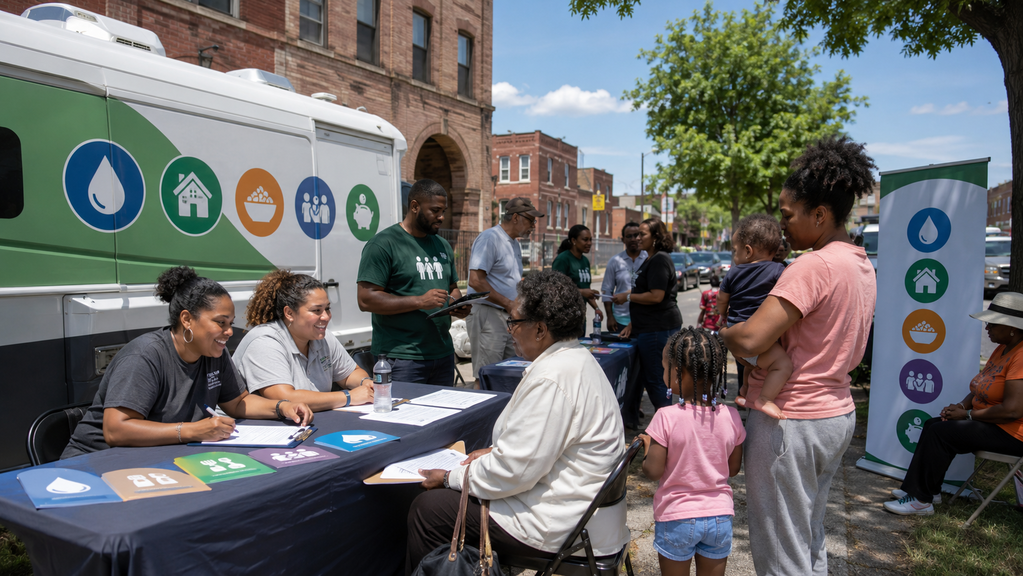
A Wayne Metro mobile unit stop scheduled for July 22, 2026, from 10:00 a.m. to 2:00 p.m. at the MDHHS Grandmont Service Center, 17455 Grand River in Detroit, gives families a local access point for several kinds of support in one visit. The event listing says the Wayne Metro mobile unit will be on-site with access to water assistance, crisis support, resource navigation, family and financial stability resources, housing and community resources, and related help.
For Detroit households already balancing rent, utility bills, transportation barriers, food access, or paperwork delays, the timing matters. A mobile unit is not just a service table. It can become a bridge between a family’s immediate problem and the correct application, appointment, program contact, or next step. That makes the July 22 stop relevant for residents, volunteers, parish groups, neighborhood organizations, and local service partners trying to connect families with help before a crisis grows.
Why The July 22 Stop Matters For Detroit Families
Wayne Metro’s July 22 event is built around a simple local-service problem: many families need help, but the pathway to that help can be scattered across offices, websites, phone calls, and eligibility rules. The event page lists several support areas under one mobile visit, including water assistance, housing and community resources, crisis support, and family and financial stability resources. That mix matters because household stress rarely arrives in one category.
A family behind on a water bill may also be managing food insecurity, transportation limits, unstable rent, a recent job change, or a shutoff notice. A resident looking for housing support may need budget counseling or documents for another program before an application can move forward. By bringing staff directly to the Grandmont area, Wayne Metro is giving residents a chance to ask service questions in person rather than trying to solve everything through separate online searches.
The local importance is broader than one date. Wayne Metro’s program pages describe housing, water, food, financial coaching, tax support, Head Start, after-school and summer programs, and supportive housing services among its wider service network. The July 22 mobile unit stop can help residents sort that network into a practical sequence: what issue is urgent, which program may fit, what documents are needed, and how to follow up after the event.
This fits the same resident-facing service pattern Saint Joseph Detroit has covered in local youth and safety work, where practical access matters as much as program intent. The city’s broader safe-space discussion connects with Detroit youth safe spaces because families need stable supports around housing, utilities, food, and crisis response for young people to benefit from community programs.
How A Mobile Unit Can Reduce Service Barriers

Mobile service delivery can help when residents face barriers that make office-based support harder to use. Wayne Metro’s own On The Go description says the unit visits Wayne County neighborhoods where access to an office may be difficult because of transportation, language, or other barriers, bringing services into places where residents live and connect.
That matters in Detroit because a support program can be technically available and still hard to reach. A resident may need childcare before traveling across town. A senior may need help understanding which documents count for an application. A family may not know whether a water issue belongs with a utility program, a housing counselor, or a broader financial stability resource.
The July 22 stop gives service providers a chance to do more than hand out flyers. Staff can help residents identify the right starting point. A family with a shutoff concern may need to ask about water assistance. A renter may need to understand whether housing stability counseling is a better first step than waiting until an eviction notice arrives. A household facing several pressures may need resource navigation before any one application makes sense.
Local volunteers and community groups can use the event as a referral point rather than trying to answer program-specific questions themselves. That is important for churches, neighborhood associations, and service volunteers. They can share the event details, help residents prepare documents, arrange transportation when possible, and encourage follow-up without making promises about eligibility.
What Services Could Connect At The Grandmont Stop
The official event listing identifies the main service areas available through the Wayne Metro mobile unit on July 22. Residents should treat the stop as an entry point for screening, questions, referrals, and next-step planning rather than assuming every issue can be completed immediately onsite.
| Service Area Listed For July 22 | Why It Matters Locally | What Families Should Prepare |
|---|---|---|
| Water Assistance | Helps residents ask about bill pressure, arrears, or shutoff-related concerns | Recent water bill, account details, household income documents if available |
| Crisis Support | Gives families a place to ask about urgent needs before they escalate | Notes on the issue, deadlines, notices, contact information |
| Resource Navigation | Helps residents identify which program or partner fits the situation | List of household needs, IDs, documents already gathered |
| Family And Financial Stability Resources | Connects financial pressure to counseling, budgeting, or stability programs | Income information, expense list, notices, questions |
| Housing And Community Resources | Helps renters, homeowners, and families at risk of instability find a starting point | Lease, mortgage or tax documents, notices, proof of address |
Wayne Metro’s broader program listings show why these categories are connected. The agency describes the Water Residential Assistance Program as a two-year program that provides funding to eligible low-income households for water bills, water conservation, and self-sufficiency work. Its water affordability programs are described as direct water bill payment assistance for eligible residents facing financial burden, a past-due balance, shutoff, or shutoff risk.
Detroit residents may also need to understand how Wayne Metro’s process intersects with the Detroit Water and Sewerage Department Lifeline Plan, which Wayne Metro’s housing page describes as Detroit’s water affordability program with a fixed bill based on household income and size. That is why in-person resource navigation matters. Families may not know whether they should ask about WRAP, another water affordability program, Lifeline, or a different support path.
The housing side is equally layered. Wayne Metro’s housing resources include property tax assistance, housing stability and counseling services, supportive housing and homeless services, and programs for people experiencing or at risk of homelessness. For Detroit families, the practical question is often not “Is help available?” but “Which door should I use first?”
Why Housing, Water, Food, And Crisis Support Should Be Treated Together

The strongest part of a mobile unit model is that it recognizes how family stability works in real life. Housing stress can lead to utility stress. Utility pressure can affect food budgets. Food insecurity can increase stress inside a home. Crisis support may be needed before a family has the energy or paperwork to complete a longer application.
Wayne Metro’s broader programs page includes food supports, water programs, Head Start and Early Head Start, after-school and summer programs, financial coaching, financial education, supportive housing and homeless services, and veteran family supports. That range shows why July 22 should be viewed as a coordination opportunity, not a single-service appointment.
For local service organizations, the lesson is direct. Families are more likely to act when they can see a clear next step. A volunteer telling a resident “bring your water bill and ask Wayne Metro about assistance at Grandmont on July 22” is more useful than a broad reminder that resources exist somewhere online. A parish group can print event details, help residents make a document checklist, and remind them of the time window without trying to interpret program rules.
Local media coverage of the mobile unit launch described Wayne Metro On The Go as a mobile intake unit designed to bring support directly into Wayne County communities and connect residents with services at block parties and community events. That report identified Wayne Metro Executive Director Jasmine Carson and Director of Community Hiba Haidous as the Local 4 Live guests discussing how residents can use the service.
The local value comes from intake and triage. A family may arrive with a food need and leave with a housing referral. A resident may ask about a water bill and learn that financial coaching could help prevent the same issue from recurring. A caregiver may ask about crisis support and discover a more appropriate community resource.
How Detroit Volunteers And Community Groups Can Help Before July 22
The July 22 stop is especially useful if residents know about it before the day arrives. Churches, block clubs, neighborhood groups, mutual aid teams, and local volunteers can support the event without overstating what it can provide.
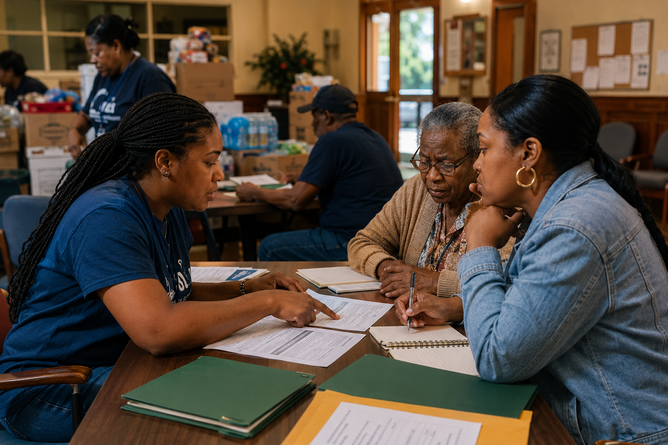
The most useful role is preparation. Volunteers can help residents gather likely documents, write down questions, identify transportation options to the MDHHS Grandmont Service Center, and understand the event window. The official listing gives the time as 10:00 a.m. to 2:00 p.m. and places the event at 17455 Grand River, Detroit, MI 48227.
Community groups can also help residents think through the priority order. If a household has a shutoff notice, rent deadline, food need, or urgent crisis, that issue should be clearly written down before arriving. If a resident has several needs, a short list can help staff identify the right first step. If paperwork is missing, residents can still ask what documents are needed for follow-up.
The same support approach matters after the event. A mobile unit can start the connection, but many families will still need to submit forms, attend appointments, make phone calls, or check messages. Local volunteers can help residents keep track of follow-up dates, application portals, phone numbers, and documents. That kind of ordinary support often decides whether an initial contact turns into real assistance.
What Residents Should Watch After The Mobile Unit Visit
The July 22 Wayne Metro stop should be treated as a starting point for family stability planning. Residents who attend should keep notes on which program they discussed, who they spoke with, what documents are still needed, and whether an appointment, application, or phone follow-up is required.
For families dealing with water bills, housing instability, food access, or crisis needs, the best outcome may not be an immediate answer. It may be a clearer path. A resident who leaves knowing which application to complete, which document to gather, and which number to call has moved from uncertainty to action.
For Detroit community organizations, the next step is to treat mobile service events as part of a wider support calendar. The July 22 stop at Grandmont can help families connect with Wayne Metro’s service network, but the larger task is year-round coordination. Churches, nonprofits, volunteers, neighborhood groups, and public-service agencies all play a role in making sure residents know where to go before a household problem becomes an emergency.
The strongest local outreach is specific. It names the date, the place, the agency, the service areas, and the next step. For this event, that means helping Detroit families understand that Wayne Metro On The Go will be at the MDHHS Grandmont Service Center on July 22 from 10:00 a.m. to 2:00 p.m., with staff available to discuss water assistance, crisis support, resource navigation, family and financial stability resources, and housing and community resources.