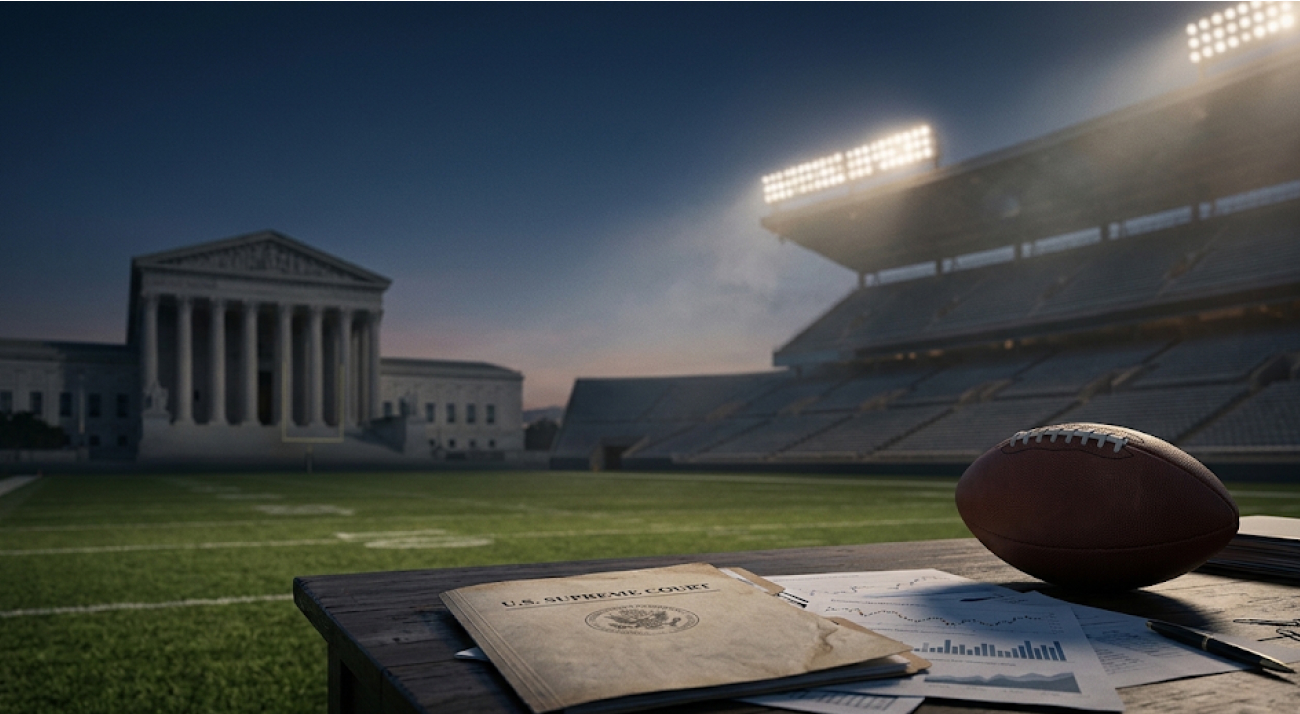
The National Football League (NFL) is asking the U.S. Supreme Court to clarify who has the authority to regulate sports-related prediction markets, escalating a legal dispute that could reshape the American sports betting industry. In a brief filed on October 8, 2026, the league backed New Jersey’s request for Supreme Court review, arguing that state gambling regulators are better positioned to protect consumers and preserve the integrity of professional sports.
The dispute centers on platforms such as Kalshi and Polymarket, which allow users to trade contracts tied to future events, including the outcomes of NFL games. While these companies operate under a federal financial-market framework, state regulators argue that sports-related contracts function like wagers and should be subject to state gambling laws.
The Supreme Court has not yet agreed to hear the case. Its eventual decision on whether to take it could influence how prediction markets operate across the United States and determine which regulators have the power to oversee this rapidly expanding sector.
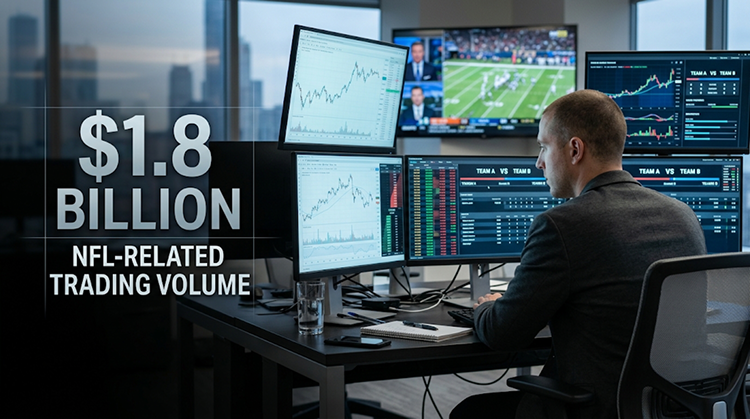
NFL Cites $1.8 Billion in Trading on One Sunday
The NFL’s intervention comes amid a significant increase in trading activity tied to professional football. According to figures cited in the league’s court filing, prediction markets recorded approximately $3.3 billion in trading volume on the first Sunday of the 2026 NFL season, with $1.8 billion linked to NFL-related contracts. That represents more than half of the day’s reported total.
The figures highlight why the issue has become a priority for the league. Prediction markets can offer contracts on game winners, player performances, and other sporting outcomes, creating products that can resemble traditional sportsbook wagers even when they are structured as financial contracts.
NFL officials argue that this rapid growth requires effective oversight, particularly when a market involves events in which participants, teams, and other insiders may possess information unavailable to the general public.
The league has warned that uncertainty over regulatory authority could expose consumers to inconsistent safeguards and create additional risks for sports integrity. However, the trading-volume figures alone do not establish that misconduct has occurred; the NFL’s central argument is that stronger and clearer oversight is necessary as these markets expand.
Why the NFL Wants States to Regulate Prediction Markets
At the heart of the dispute is a disagreement over whether sports prediction contracts should be treated as financial derivatives or gambling products.
The U.S. Commodity Futures Trading Commission (CFTC) maintains that it has federal authority over these markets. State regulators, meanwhile, argue that contracts tied to sports results resemble wagers and should comply with state licensing requirements, consumer protections, and other gambling regulations.
The NFL has raised several concerns about the current framework:
- Consumer protection: State gaming regulators already oversee licensed sportsbooks and can impose rules governing responsible gambling, advertising, and customer disputes.
- Game integrity: Contracts involving highly specific in-game events could create incentives for manipulation or the misuse of confidential information.
- Age restrictions: The NFL has advocated increasing the minimum trading age from 18 to 21.
- Regulatory resources: The league questioned whether the CFTC has enough specialized personnel to oversee the growth of sports-related prediction markets effectively.
The NFL also wants regulators and operators to restrict contracts that it considers especially vulnerable to manipulation. These proposals reflect the league’s stated concerns; they are not a set of safeguards that the Supreme Court has ordered platforms to implement.

Kalshi and Polymarket Defend Federal Oversight
Prediction-market operators have pushed back against the NFL’s position, arguing that a unified federal framework is preferable to a patchwork of state gambling laws.
Kalshi spokesperson Elisabeth Diana told The Associated Press that the company’s priority is market integrity and pointed to its partnerships with professional sports organizations. Polymarket also expressed support for protecting sports integrity while advocating for harmonized federal regulation.
Their argument is that prediction markets operate through event contracts listed on federally regulated exchanges, rather than through the conventional sportsbook model. Under this interpretation, federal oversight provides consistent rules across state borders.
The distinction is important for operators seeking to serve customers in multiple jurisdictions. If states can independently classify and regulate sports event contracts as gambling, platforms may face different licensing requirements, restrictions, and enforcement actions in each market.
The NFL, however, argues that the financial structure of these products should not exempt them from the consumer protections applied to traditional sports betting.
A Growing Legal Divide Across the United States
The NFL’s filing follows conflicting decisions from federal appeals courts, increasing the likelihood that the Supreme Court could intervene.
On September 25, 2026, the Sixth U.S. Circuit Court of Appeals ruled that Ohio and Tennessee could enforce their gambling laws against Kalshi’s event contracts while the litigation continued. The decision strengthened the position of states seeking to regulate sports prediction markets.
The dispute contrasts with an earlier decision by the Third U.S. Circuit Court of Appeals that favored Kalshi in its case involving New Jersey regulators. The Ninth Circuit has also issued rulings supporting state regulatory authority in related litigation.
These conflicting approaches create uncertainty for operators, regulators, and consumers. A decision supporting federal preemption could limit states’ ability to apply their gambling laws to certain event contracts. A ruling favoring state authority could allow more traditional gambling restrictions to apply, depending on the scope of the Court’s decision.
The issue has attracted broad state-level support. According to the Associated Press, a filing supporting New Jersey’s position was backed by 38 states, including states with both Republican and Democratic attorneys general. Ohio also submitted its own brief urging the Supreme Court to preserve state regulatory authority.
When Could the Supreme Court Make a Decision?
As of October 15, 2026, the Supreme Court has not announced that it will hear the dispute.
Kalshi has until November 9, 2026, to respond to New Jersey’s petition. Reuters reported on October 8 that the Court was not expected to decide whether to take up the case before December. That timetable concerns whether the justices will accept the case, not a final ruling on the legality of sports prediction markets.
If the Court agrees to hear the case, additional proceedings would follow before a final decision. Until then, the existing legal rulings and regulatory actions will continue to shape how prediction-market operators navigate the U.S. market.
For sportsbooks and prediction-market platforms, the distinction could have substantial consequences for licensing, product availability, compliance costs, and competition.
What the Case Means for Sports Betting and Prediction Markets
The NFL’s Supreme Court push highlights a central question for the American gambling industry: should sports-related prediction contracts follow the rules governing financial exchanges, or should states regulate them like conventional sports wagers?
The answer could affect how platforms such as Kalshi and Polymarket offer sports contracts, how state regulators enforce gambling laws, and what protections consumers receive. It could also influence how leagues and regulators approach insider information, potentially manipulable markets, and minimum-age requirements.
For consumers, the outcome may determine which products are available in their states and what licensing and consumer-protection rules apply. However, the precise effects will depend on the Court’s decision and any subsequent regulatory action.
The NFL is seeking a clearer system before prediction markets become further integrated into the sports economy. Whether that system is shaped primarily by federal financial regulation or state gambling laws remains unresolved.
The bottom line: The NFL has asked the Supreme Court to address the growing conflict between federal and state oversight of sports prediction markets. With $1.8 billion in NFL-related trading reported on a single Sunday, the stakes are significant, but the legal outcome remains uncertain.