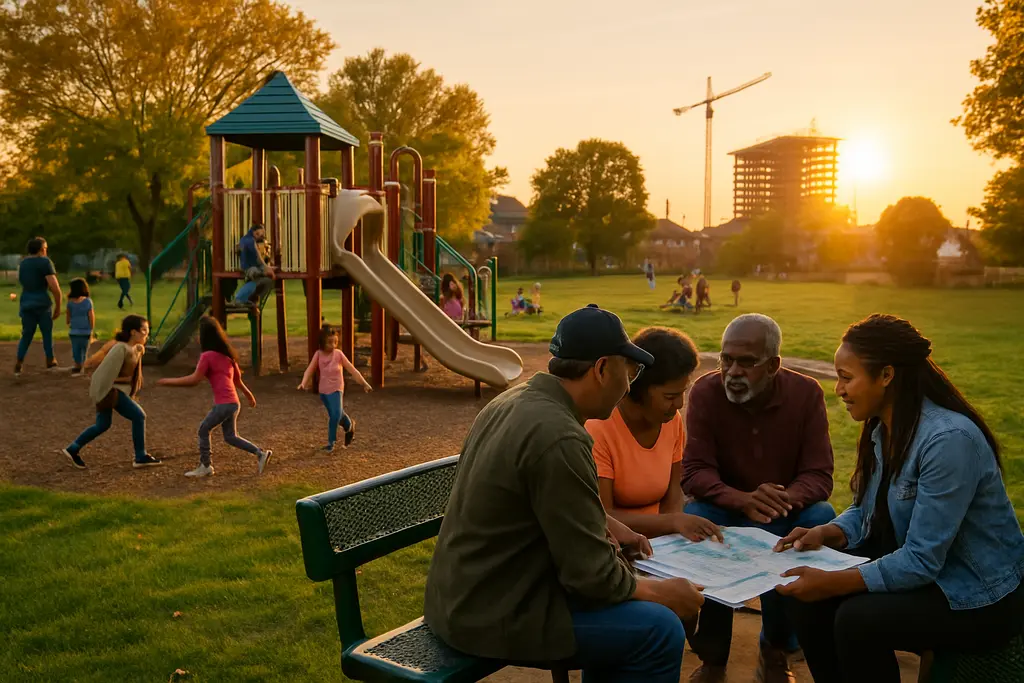
The Parkside redevelopment is a major Detroit Housing Commission plan for The Villages at Parkside, a 52-acre public housing site on Detroit’s east side near East Warren Avenue and Conner Street, across from Chandler Park. The Detroit Housing Commission is working with Ginosko Development Company to replace aging public housing with a mixed-income residential community, according to the City of Detroit’s official announcement on the Villages of Parkside plan. For residents, service providers, and neighborhood groups, the central civic question is direct: how can the people most affected stay informed and be heard as future phases move through financing, relocation, demolition, and construction decisions?
The answer starts with plain information. Parkside was built in the 1930s and includes 274 townhome-style units across 42 buildings, according to the City of Detroit. The same city announcement said deterioration left only about 125 units occupied at the time of the announcement. The full plan described by the city spans six phases, with about $73 million for Phases 1 and 2 to deliver 214 new units through midrise apartments and townhomes. Later phases are planned to add 266 more units, bringing the total to about 480 units and nearly quadrupling the available housing counted in the city’s announcement.
That scale makes resident engagement more than a meeting requirement. It is a support-service issue. Families need understandable updates, relocation information, accessibility planning, safety commitments, and a way to ask questions before decisions become hard to change. Community groups following civic and business outreach models across the same network can also find insight into regional engagement strategies through Richland Chamber.
What Parkside redevelopment Changes On Detroit’s East Side
The redevelopment affects an established public housing community, not an empty parcel. City materials describe a plan to rebuild the 52-acre site into a larger mixed-income community. DHC project materials cited in the research notes state that the agency is converting funding from Section 9 public housing to Section 8 through the U.S. Department of Housing and Urban Development’s Rental Assistance Demonstration program. That shift matters for residents because housing subsidy structure, relocation planning, lease protections, and return options must be explained in clear language.
Parkside redevelopment Timeline And Open Questions
The research materials include several timing points that residents and advocates should track carefully. DHC project materials listed architectural and engineering design and environmental investigations beginning in 2024, followed by a development agreement process, a Q4 2025 ribbon cutting and construction start, construction completion and move-in preparation in July 2026, and resident relocations and demolitions beginning in Q4 2026. The City of Detroit announcement also said Phases 1 and 2 were announced to begin in fall 2025 and be completed within two years, which points toward fall 2027 for that two-year construction window.
As of September 10, 2026, the research provided for this article does not confirm whether the July 2026 move-in preparation milestone occurred. Because the public materials described more than one timing marker, residents should ask DHC and its development partner to identify the active schedule, the next relocation notices, the buildings affected first, and the expected date for each resident meeting. Clear scheduling helps families plan around work, school, medical care, transportation, and caregiving.
Why Unit Mix And Phasing Matter
The city’s announced plan describes 214 new units in Phases 1 and 2, with later phases expected to add 266 more. That phasing means some households may experience construction nearby before all planned housing is complete. It also means residents need information at each stage, not only at the start. For outreach teams, Parkside redevelopment meetings should separate what is funded, what is designed, what is awaiting approval, and what is still subject to change.
Resident Engagement In Parkside redevelopment
Resident engagement has been part of the process since at least October 2022, according to DHC materials cited in the research notes. Those materials said 10 residents and one non-resident attended an October 15, 2022 engagement event and shared ideas about developer expectations and project commitments. While that turnout was small compared with the size of the site, it produced priorities that DHC incorporated into developer requirements.
How Parkside redevelopment Input Has Been Organized
The resident priorities recorded in the research notes were practical and direct: strong and transparent communication, developers with experience serving public housing or low-income residents, safety features such as bright lighting and security staffing, more accessible units, and recreation or multipurpose spaces. Those points reflect daily living needs, not abstract design preferences. A parent waiting for a bus, an older adult entering a building after dark, or a resident using a mobility device all experience redevelopment through those details.
DHC materials cited in the research notes also describe a Resident Liaison Leadership Team formed to serve as peer communicators among residents. That structure can help only if residents know who the liaisons are, what information they can share, and how questions move from residents to DHC and the development team. Because Parkside redevelopment decisions affect families over several years, the liaison team should be paired with written updates, meeting summaries, and clear contact points for residents who cannot attend meetings.
The research notes also state that DHC opened an on-site Resident Services satellite office at the Parkside Community Center starting June 17, 2024. That office was described as a drop-in space for Resident Representatives and Community Advocates. For support-service organizations, this is a key access point. Printed notices, relocation referrals, disability accommodation questions, and meeting reminders are easier to manage when residents have a site on the property where they can ask for help.
Funding, Affordability, And Phase IV
Funding is one reason residents need phase-by-phase updates. The State of Michigan announced on July 10, 2025, that Phase IV received 9% Low-Income Housing Tax Credits through the Michigan State Housing Development Authority. The state said that phase had an estimated total development cost of about $21,031,305 and would include 54 new units: 10 one-bedroom, 23 two-bedroom, 16 three-bedroom, and five four-bedroom homes. The same state release said all units would target households earning between 40% and 60% of Area Median Income, with 25 units supported by project-based vouchers and an estimated 117 temporary jobs tied to the project, according to the governor’s office release on affordable rental homes funding.
Those details give residents and advocates several concrete questions. Which households will qualify for the new Phase IV units? How will the 25 project-based voucher units be assigned? How will larger families be informed about three- and four-bedroom availability? What will happen if a resident’s income changes during relocation or construction? These are service questions as much as housing finance questions.
The research notes also say DHC’s 2026 Public Housing Authority Plan identified Villages II and IV as 29 acres with 276 units, of which 140 were occupied, and described possible Section 18 demolition/disposition or a RAD/Section 18 blend. The same notes state that redevelopment would focus on families with incomes at or below 30% of Area Median Income. Residents should receive a plain-language explanation of how that plan fits with units financed for households at 40% to 60% of Area Median Income in Phase IV. If multiple affordability layers apply, families need to know which rule applies to their housing options.
Support Services Residents Need During Redevelopment

Large housing redevelopments can strain residents even when the long-term goal is better housing. Service providers should prepare for questions about relocation notices, school stability, transportation, rent calculations, accessibility accommodations, utility changes, mail delivery, and how to document communication with DHC or the developer. Groups working on broader housing needs may also want to compare this project with the citywide targets described in Detroit housing plans, since neighborhood redevelopment fits into a larger local housing discussion.
A useful resident-support plan should be simple enough to use at a community room table. It should help residents save notices, write down questions before meetings, identify whether they need translation or disability accommodations, and confirm who to contact about relocation or return rights. DHC materials cited in the research notes state that existing residents in good standing will have the option to stay in the new housing once built. Residents should receive that commitment in writing with eligibility standards, deadlines, appeal steps, and the name of the office responsible for answering questions.
- For residents: keep copies of every notice, ask for written answers, and confirm meeting dates through DHC or the on-site Resident Services office.
- For community advocates: help residents prepare questions, track repeated concerns, and refer legal or benefits questions to qualified providers.
- For service organizations: coordinate transportation, childcare support for meetings, accessibility requests, and follow-up calls for residents who miss updates.
- For DHC and the developer: publish phase-specific updates that explain schedule changes, relocation steps, unit eligibility, and resident return options.
Good engagement is not measured only by how many meetings are held. It is measured by whether residents understand what is happening, whether their questions receive answers, and whether project decisions reflect the needs recorded during outreach. The October 2022 priorities show residents already named communication, safety, accessibility, and shared space as priorities. Future phases should report back on each of those points.
Detroit Housing Commission Parkside Redevelopment
The next civic step is steady, verifiable communication. As of September 10, 2026, the research notes point to Q4 2026 as the period when resident relocations and demolitions were scheduled to begin, while other materials described a two-year construction period for early phases from fall 2025. Residents should not have to reconcile those dates on their own. DHC, Ginosko Development Company, resident liaisons, and support-service partners should use public meetings and the on-site office to state the active schedule in plain terms.
The Parkside redevelopment can expand affordable housing on a long-standing east side site, but the process will be judged by how residents are treated while the work moves forward. The strongest path is direct: publish dates, explain funding rules, protect return options, answer accessibility questions, and keep resident priorities visible in every phase. That is how a construction plan becomes a community-centered housing response.