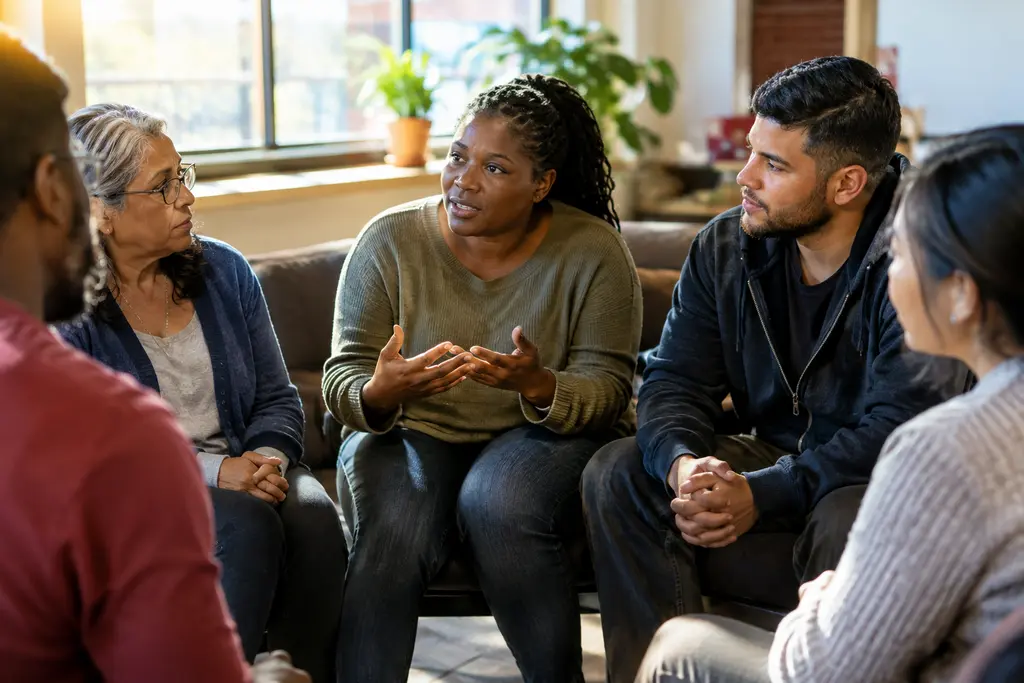
The Survivors FIRST Program is scheduled to begin accepting applicants in Wayne County on November 2, 2026, after the Wayne County Prosecutor’s Office announced the diversion effort on October 20, 2026. The program, formally named Facilitating Interventions and Resources for Survivors of Trauma, is designed for eligible people charged with certain offenses who have experienced past gender-based violence victimization, according to the Wayne County Prosecutor’s announcement.
For Detroit churches, victim-support ministries, neighborhood groups, and service providers, the change matters because it connects a criminal case process with trauma-informed support. The program does not erase accountability from the start, and Wayne County’s announcement does not describe automatic dismissal. It creates a structured 180-day period in which prosecution is put on hold while participants engage with services through First Step and avoid new charges. If those conditions are met, the pending case may be dismissed.
What The Survivors FIRST Program Changes In Wayne County
A Diversion Path With A Trauma Lens
Wayne County’s announcement presents the program as a diversion model for people whose past victimization may be tied to later criminal-legal involvement. The Prosecutor’s Office cited program literature stating that research consistently finds 75% to 90% of incarcerated women have experienced abuse, and that past abuse often contributes directly to later criminal-legal involvement. That context helps explain why the county is placing services at the center of the new process.
The county said the name is adapted from a similar effort in King County, Washington, launched in 2019 and run by the YWCA in collaboration with the King County Prosecuting Attorney. Wayne County said it received permission to use the name. That detail is useful for local readers because it shows the county is not presenting the model as an untested phrase created in isolation. The official local process, however, is Wayne County’s own program and should be followed through Wayne County channels.
Why A 180-Day Hold Matters
The 180-day hold is the central civic change. During that period, a participant’s prosecution is paused while the person engages in trauma-informed services. The Wayne County announcement says a pending case may be dismissed if the participant actively engages in services and does not receive new charges. That phrasing is important. “May be dismissed” means dismissal is possible under the program’s terms, not guaranteed at application.
For support organizations, that distinction should shape outreach. Churches, shelters, legal-aid referral partners, and family-support teams can help residents understand that the program is a formal diversion process tied to eligibility, service engagement, and case status. They should avoid promising a case result. A safer role is helping people find verified information, make referrals to qualified service providers, and protect privacy for anyone who discloses past abuse.
How Eligibility And Case Review Are Structured
Survivors FIRST Program Eligibility
Eligibility, as announced by Wayne County, includes individuals charged with misdemeanor or qualifying felony offenses in Wayne County who have no felony criminal record and have experienced past gender-based violence victimization. The county’s announcement does not state that every misdemeanor or every felony qualifies. It uses the phrase “qualifying felony offenses,” which means case review matters.
This is where practical support can help without crossing into legal advice. A community advocate can encourage a person to speak with defense counsel, the appropriate court contact, or the Prosecutor’s Office process identified by Wayne County. A ministry team can help with transportation, child-care planning, document organization, or emotional support. A nonprofit can help with warm referrals. None of those helpers should make eligibility decisions unless they are part of the official process.
What Applicants And Helpers Should Track
Because the application period is scheduled to begin on November 2, 2026, the first local need is clear communication. Organizations serving Detroit and Wayne County residents should track the start date, the eligibility factors, and the service partner. They should also prepare staff and volunteers to respond carefully when someone describes abuse. Gender-based violence disclosures can involve safety risk, housing instability, legal concerns, and family pressure.
- Confirm the case location: The announced program applies to Wayne County charges.
- Confirm the charge category: Wayne County described eligibility as misdemeanor or qualifying felony offenses.
- Confirm record limits: The county said participants must have no felony criminal record.
- Protect privacy: Community helpers should avoid public discussion of a survivor’s case or history.
- Refer safely: People should be connected with qualified legal and victim-service resources rather than informal advice.
These steps are simple, but they reduce harm. Many faith-based and neighborhood groups are trusted by families before government systems are. That trust should be used to open safe doors, not to pressure anyone into public disclosure or to make promises the program itself does not make.
Services Through First Step And Local Partners
Support Categories Named By Wayne County
Wayne County said services through First Step may include counseling, basic-needs assistance, housing help, safety planning, connections with employment assistance, legal aid, and other supports based on individual needs. For Detroit families, the Survivors FIRST Program connects court diversion with needs that often sit outside a courtroom: a safe place to stay, transportation to appointments, income stability, and help understanding legal options.
First Step’s role is significant because the organization is identified in the research record as the primary comprehensive provider for survivors of domestic and sexual violence in Southeast Michigan. A Michigan House appropriations request document also said First Step has lost more than $354,845 in grant funding since 2024, with a projected additional loss of $800,000 by fiscal year 2027, for more than $1.15 million in cuts over three years, according to the state appropriations request.
Why Service Capacity Should Be Watched
Those funding figures matter because diversion relies on real services, not just referral language. If a court process pauses prosecution for 180 days, the participant still needs appointments, safety planning, counseling access, and practical support. Service capacity can affect how quickly referrals are handled and how well survivors are supported during the diversion period. The research provided does not state how many people Wayne County expects to serve through the program, so any estimate would be unsupported.
Local civic groups can respond by strengthening referral discipline. A church office, school family-support team, or neighborhood nonprofit should keep current contact procedures for domestic and sexual violence services, legal-aid referrals, housing resources, and emergency help. They should also train volunteers to avoid unsafe questions. Asking a survivor to retell traumatic details repeatedly can cause harm. A better first response is to ask what immediate support is needed and connect the person with trained providers.
In addition to local updates, related coverage can be found in the broader network reporting at ITPR, which provides an expanded view of initiatives and services in the region.
What Detroit Support Groups Can Do Now

Build Referral Readiness Before November 2
Because the program is scheduled to begin accepting applicants on November 2, 2026, Detroit support groups have a short window to prepare clear internal procedures. The first step is to decide who will receive questions, who will verify information, and who will make referrals. In a parish, that may be a pastoral-care lead and a trained social-service volunteer. In a nonprofit, it may be a case manager or intake coordinator. In a school-linked family program, it may be the family liaison who already works with housing, safety, or attendance concerns.
Referral readiness also means creating boundaries. Staff and volunteers should not collect unnecessary personal details, store sensitive information casually, or share a person’s history in prayer chains, group texts, or public meetings. Support can be faith-filled and compassionate while still being confidential. That point is especially important for survivors of gender-based violence, who may face safety risks if personal information spreads.
Use Accurate Language In Outreach
The best public language is plain and careful. Groups can say Wayne County announced a diversion program for eligible people charged with misdemeanor or qualifying felony offenses who have no felony criminal record and have experienced past gender-based violence victimization. They can say prosecution is put on hold for 180 days while participants engage in services through First Step. They can say a case may be dismissed if the person actively engages and avoids new charges. They should not say every survivor qualifies, every charge qualifies, or every participant will receive dismissal.
That care protects both survivors and community trust. Overstated flyers can create false hope. Understated information can keep eligible people from asking questions. The middle path is clear, verified, and humane.
Detroit Support Work Around The Survivors FIRST Program
The Survivors FIRST Program gives Wayne County a new formal path for eligible survivors whose experiences of gender-based violence are connected to criminal-legal involvement. Its success will depend on official case review, participant engagement, service capacity, and careful community referral. As of October 29, 2026, the supported facts are the county’s announcement date, the November 2 application start date, the eligibility categories, the 180-day diversion structure, the First Step partnership, and the service categories named by Wayne County.
Detroit’s faith communities and support-service organizations can help by doing what they do best: meeting people with dignity, protecting confidentiality, and connecting them to qualified help. That work should be grounded in verified information and steady follow-through. For survivors, a safe referral can be more than paperwork. It can be the first step toward counseling, housing help, safety planning, employment support, legal aid, and a more stable path forward.