
The Wayne County grants announced on September 28, 2026, add state support for community violence intervention work affecting Detroit neighborhoods, including ZIP codes 48219 and 48235. According to MDHHS grant details provided for this announcement, five organizations received a combined $1.5 million for a project period running from September 1, 2026, through September 30, 2028. Each grantee received $300,000, with two recipient organizations based in Detroit: DLIVE and Detroit Peoples Community.
For families, outreach workers, schools, hospitals, block clubs, and service providers, the announcement matters because it funds direct prevention work rather than only after-incident response. MDHHS framed community violence as including homicides and nonfatal shootings, with long-term harm and trauma concentrated in racially segregated and historically disinvested neighborhoods. That public health framing places victim services, retaliation prevention, outreach, mentorship, and support services closer to the center of the response.
What The Wayne County Grants Fund
Wayne County Grants Timeline And Amounts
These Wayne County grants are part of a defined two-year funding period, not an open-ended program. MDHHS awarded the grants on September 28, 2026, and the funded work covers September 1, 2026, to September 30, 2028. The structure gives each recipient a set funding window to carry out program work, track outcomes, and report progress under state requirements.
The selection criteria required organizations to show measurable outcomes and to use programs that bring together public health and public safety frameworks. That requirement is significant for community outreach because it asks providers to show how their work reduces risk, connects people to help, and responds to harm without relying on a single public system to solve the problem alone.
Two Detroit-Based Recipients
DLIVE, short for Detroit Life is Valuable Everyday, will implement a hospital-based violence intervention program. The program focus described in the grant announcement includes post-injury recovery, retaliation prevention, risk of mortality, and victim services. Hospital-based programs can be especially important because they reach people after serious injury, when immediate safety planning, family support, and trusted follow-up may reduce the risk of further harm.
Detroit Peoples Community will deploy five evidence-based community violence intervention strategies in ZIP codes 48219 and 48235. The announcement identified those areas as historically disinvested, high-violence neighborhoods. Reported services include outreach, mentorship, credible-messenger street work, and wrap-around support. For residents, this means more structured contact with workers whose job is to interrupt cycles of violence and connect people to stabilizing help.
How Detroit Areas Are Affected
Why 48219 And 48235 Matter
The focus on 48219 and 48235 places new resources in northwest Detroit communities where prevention work depends on trust, steady presence, and coordination with schools, families, health providers, and neighborhood groups. MDHHS described community violence as tied to long-term trauma, which means the work cannot stop at a single conversation after an incident. It requires follow-up, referrals, safety planning, and services that can address both immediate danger and the conditions that make harm more likely.
For affected areas, the Wayne County grants may strengthen the connection between street outreach and service referral. A credible messenger can help calm conflict, but that worker also needs somewhere to send a young person for mentoring, employment help, counseling, housing support, or family assistance. That is where neighborhood institutions, faith communities, schools, clinics, and county service programs become part of the prevention chain.
Local service planning is especially relevant where youth supports, housing needs, and family stability overlap with violence prevention. Saint Joseph Detroit has also covered the Wayne County funding plan for youth services, which connects to the broader need for pathways that give young people safer options before crisis points develop.
What Residents Should Expect From CVI Work
Community violence intervention is not the same as a general public safety campaign. Based on the grant description, residents in affected areas should expect work that is more direct: outreach to people at elevated risk, mentoring, victim support, conflict interruption, and referrals to services. The work often depends on trained staff who understand neighborhood conditions and can build trust with people who may not respond to traditional systems.
That trust does not remove the need for accountability. Because MDHHS required measurable outcomes, residents and partner organizations should expect grantees to document activity, track service connections, and show whether program goals are being met during the grant period. Public reporting details were not included in the research provided, so residents may need to watch for future MDHHS or grantee updates on performance measures.
How Public Health And Public Safety Connect
Violence Reduction Data Already Reported
The new funding arrives alongside public reports of recent reductions in serious violence. Wayne County reported that, since 2020, homicides were down 49%, nonfatal shootings were down 62%, and carjackings in Detroit were down 64%, according to the county’s 2026 State of the County materials. Those figures do not prove that one program caused every decline, but they show the local context in which state funding is being added.
Detroit’s CVI zones have also expanded. A Wayne County Prosecutor’s Office release said Detroit CVI zones included seven ShotStoppers community organizations and covered multiple neighborhoods. The release said June 2025 expansions grew the zones from about 22 square miles to about 30 square miles, with a dedicated Ceasefire zone bringing coverage to about 36 square miles. The same release said Michigan’s 2025 Public Safety Trust Fund provided $10.6 million to Detroit for law enforcement and community violence prevention, with $2.6 million used to expand CVI zones, according to the county’s violent crime update.
Why The Public Health Frame Matters
MDHHS treated gun violence in this grant announcement as both a public health issue and a public safety concern. That matters because shootings and homicides affect more than police reports. They affect hospital systems, family income, children’s schooling, mental health, housing stability, and neighborhood trust. A public health approach asks what happens before violence, at the point of injury, and after families return home.
Hospital-based intervention, victim services, street outreach, and mentorship can each meet a different need. DLIVE’s post-injury focus fits the moment when survivors and families may need safety planning and support. Detroit Peoples Community’s neighborhood-based work fits the need for trusted relationships in places where residents may face repeated exposure to violence and trauma.
Practical Steps For Residents And Partners
How Community Groups Can Support The Work
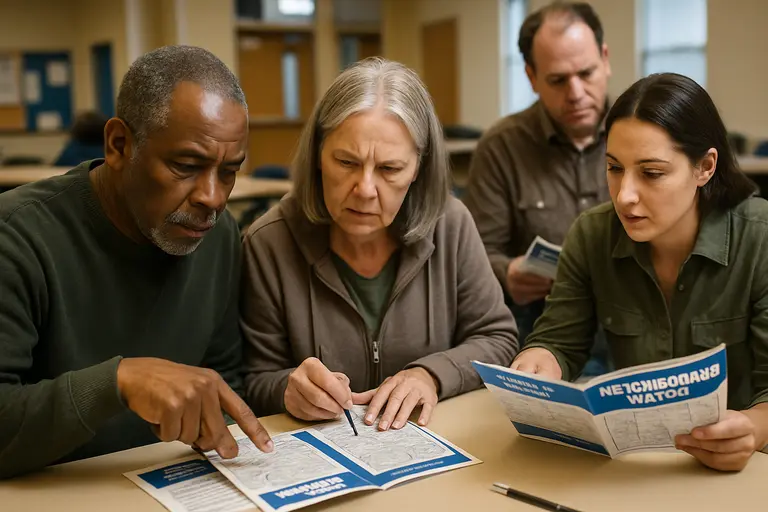
For churches, neighborhood associations, schools, and outreach teams, the grants create a chance to align services without duplicating effort. A food pantry may not run a CVI program, but it may know families facing urgent stress. A school may not provide victim services, but it may identify students who need mentoring. A block club may not manage casework, but it may know which corners, apartment buildings, or youth spaces need steady outreach.
- Confirm referral contacts: Keep updated contact information for CVI providers, youth services, victim support, and emergency resources.
- Share verified information: Use official program details and avoid spreading claims that have not been confirmed by a public agency or grantee.
- Protect privacy: Do not name survivors, families, or young people in public posts or meetings unless they have chosen to speak publicly.
- Track service gaps: Document unmet needs such as transportation, counseling, mentoring, housing support, and employment help.
- Build partner tables: Bring outreach workers, faith leaders, schools, health providers, and resident groups into regular coordination meetings.
Regional civic readers who follow community outreach efforts across Michigan can also keep themselves informed and engaged through the resources provided by One United Michigan. The practical need is the same across communities: accurate information, trusted local messengers, and service pathways that reach people before harm escalates.
Wayne County Grants And Community Follow-Through
What Should Be Watched Through 2028
The Wayne County grants give Detroit-based organizations resources for a fixed period, but funding alone does not answer every community need. The research provided points to long-running disinvestment in services, health access, public safety trust, economic opportunity, and infrastructure. CVI can address one part of that harm by reducing retaliation risk, supporting survivors, and connecting people to help, but deeper progress depends on aligned services across many sectors.
Residents and civic partners should watch three areas through September 30, 2028: whether funded groups report measurable outcomes, whether services in 48219 and 48235 are easy for residents to understand, and whether referrals connect people to real support after the first contact. If those pieces work together, the grants can help strengthen neighborhood prevention work during a period when Detroit and Wayne County are already reporting reductions in serious violence.
The most useful next civic step is coordination. Community organizations can ask how to refer residents, what services are available, how privacy is protected, and what gaps remain. Public agencies can make program information easier to find. Residents can share verified resources with neighbors and bring service concerns to trusted community meetings. That kind of follow-through will decide how much these grants help the people and places they are meant to serve.