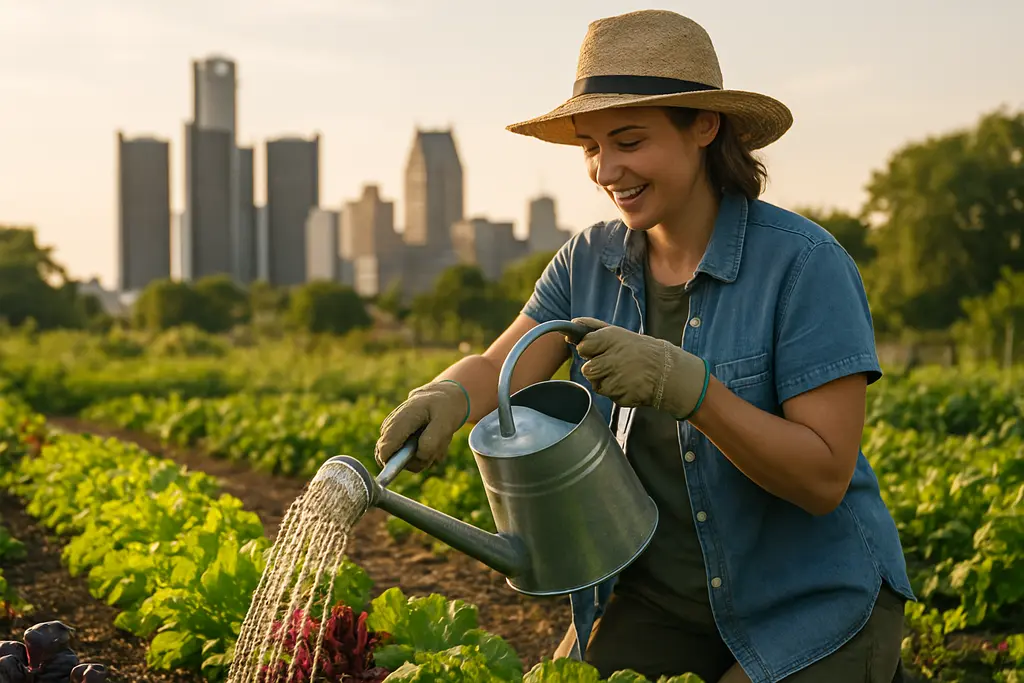
The Urban Agriculture Grant question in Detroit needs one clear starting point: the research provided does not confirm a separate, standalone $49,960 award. What it does confirm is that state and local partners had already put larger support behind Detroit food access work by September 2026, and that a $49,960 outreach amount would be modest beside those efforts. Used carefully, that scale of funding could still help with grower support, resident education, food hub logistics, composting supplies, and benefits outreach without pretending to solve food insecurity by itself.
On September 24, 2026, the Michigan Department of Agriculture and Rural Development said it had partnered with the Detroit Food Policy Council to strengthen urban agriculture and local food access through a $494,960 effort tied to food hub work, composting, and local food distribution MDARD announcement. That larger amount gives Detroit groups a useful frame for understanding what a smaller $49,960 allocation could realistically do: support targeted outreach and operating pieces, not replace citywide food policy or long-term infrastructure investment.
What The Urban Agriculture Grant Can Fund
Urban Agriculture Grant Outreach Roles
A $49,960 local award would be best treated as an outreach and coordination fund. It could help pay for community workshops, grower meetings, resident sign-up support, translation or printed materials, volunteer training, small equipment, composting bins, cold-storage planning, or short-term staffing for a food access project. Those are practical uses because they connect residents to existing programs instead of creating a new system that cannot be sustained after the grant period ends.
The Urban Agriculture Grant amount would also fit support roles that many neighborhood groups already understand: phone calls, application help, pop-up tables, supply distribution, and follow-up with families. In support services, small grants often matter most when they fill the gap between a public program and the people who need help using it. For Detroit food access, that may mean helping residents find local produce distribution points, understand benefit options, or connect with garden-based education near their block.
Why The Amount Should Stay Focused
Detroit’s food access needs are larger than one $49,960 fund. The responsible way to talk about this money is to avoid inflated promises. A grant at this level can organize people, supplies, and information. It cannot, by itself, change grocery access across the city, build a full distribution network, or meet every household food need. That is why it should be tied to an existing partner, a defined neighborhood, or a known activity such as food hub support, composting expansion, or benefit enrollment outreach.
Community organizations can also learn from related food access planning already covered by Saint Joseph Detroit, including how Detroit food access planning depends on volunteers, education, donated produce, storage, and distribution. Those same pieces would shape any smaller grant strategy.
Why Detroit’s Garden Network Matters
A Large Base Of Growers
Detroit is not starting from zero. The City of Detroit says the city had more than 2,200 gardens and farms as of mid-2026, including community, school, and market gardens. The city also says its Urban Agriculture Division was established in 2023 and works with growers on land access, city policy, water access, and sustainability City urban agriculture page. That base matters because grant dollars can be routed toward networks that already have growers, land experience, and community relationships.
The same city source says that, in 2025, the Detroit Office of Sustainability and Eastern Market provided $240,000 in grant funding across nine farming projects to advance food access, environmental education, and sustainable land use, with priority for historically underserved groups. That history shows that Detroit’s urban agriculture work has been moving through public-sector and partner support, not only informal gardening activity.
Where Small Grants Fit Into A Larger System
The Urban Agriculture Grant model should be understood as one layer in a wider food access system. Large programs may support infrastructure, policy, and citywide coordination. Smaller awards can support the street-level work that makes those larger investments useful: training volunteers, setting up distribution days, helping growers document needs, and making sure residents know where to go.
For outreach teams, the key question is not whether $49,960 is enough to address every barrier. It is whether the money is attached to a clear task. A project that says “support food access” is too broad. A project that says “host eight garden-based food access workshops, support a local produce distribution point, and train volunteers on compost collection and resident referrals” gives organizers a better way to track progress.
How Outreach Groups Can Turn Funding Into Access

Food Hubs, Composting, And Enrollment Help
The MDARD release connected its larger 2026 partnership with local food access, food hub activity, and composting. It also referenced work that could serve more than 2,500 residents annually through local food distribution. A smaller outreach amount could support the people-side of that kind of work: scheduling, resident contact, grower communication, packing-day volunteers, and education about where locally grown food is available.
Composting is another practical connection. The MDARD announcement described earlier composting work that diverted 36,000 pounds of food waste to 14 large urban farms and more than 200 home composters. A smaller grant could help buy containers, safety supplies, signage, training materials, or transportation support for a defined composting route. Those uses would need clear records, because composting work can become confusing if residents do not know what materials are accepted, where drop-off happens, or who maintains the site.
- Food Distribution: Support scheduling, outreach calls, packing supplies, and volunteer check-in at a neighborhood food hub or produce site.
- Grower Support: Help growers document water access, land needs, distribution capacity, and training requests.
- Resident Education: Fund workshops on seasonal produce, food storage, composting basics, and benefit referrals.
- Composting: Provide bins, gloves, printed rules, collection support, and training for farms or home composters.
- Data And Follow-Up: Track attendance, referrals, pounds distributed where verified, and unresolved resident needs.
Partnerships Keep The Work Accountable
Small grants work better when partners agree on who is responsible for each task. A church may have volunteers and space. A farm may have produce and soil knowledge. A neighborhood group may know which households need help. A public agency may provide policy direction or verified program information. A council, chamber, or business group may help connect donors and local employers. For readers who follow regional civic networks, the Richland Chamber exemplifies how local institutions can collaborate effectively by sharing public information with community partners.
The Urban Agriculture Grant should also include plain-language accountability. Residents should know what the money is for, who is eligible to participate, when activities happen, and how to ask questions. That is especially important in food access work, where families may already be managing tight budgets, limited transportation, or changing benefit status.
Urban Agriculture Grant Next Steps For Detroit
Practical Checks Before Spending
Before spending a $49,960 award, Detroit groups should complete a short planning check. First, identify the exact neighborhood or population served. Second, name the partner responsible for funds, scheduling, and reporting. Third, confirm whether the project supports distribution, education, composting, benefits outreach, or grower coordination. Fourth, decide what information will be tracked without overburdening residents.
The Urban Agriculture Grant should also be aligned with Detroit’s existing urban agriculture work. The city already has a division focused on grower support, land access, water access, policy, and sustainability. State partners had also supported Detroit Food Policy Council work by late September 2026. A smaller award should strengthen those channels, not create a separate process residents must learn from the beginning.
For community outreach teams, the most useful next civic step is to ask where a focused $49,960 amount removes a real barrier. If the barrier is information, fund outreach. If the barrier is composting supplies, fund equipment and training. If the barrier is distribution support, fund volunteer coordination and logistics. If the barrier is grower communication, fund meetings, recordkeeping, and shared planning time.
Detroit’s garden and farm network gives this work a strong base. The confirmed public information shows both momentum and need: thousands of gardens and farms, a city urban agriculture office, prior grant support, and a state partnership announced on September 24, 2026. A smaller Urban Agriculture Grant would matter most if it helps residents reach food, helps growers connect to systems, and helps community organizations do the steady outreach that larger programs often depend on.