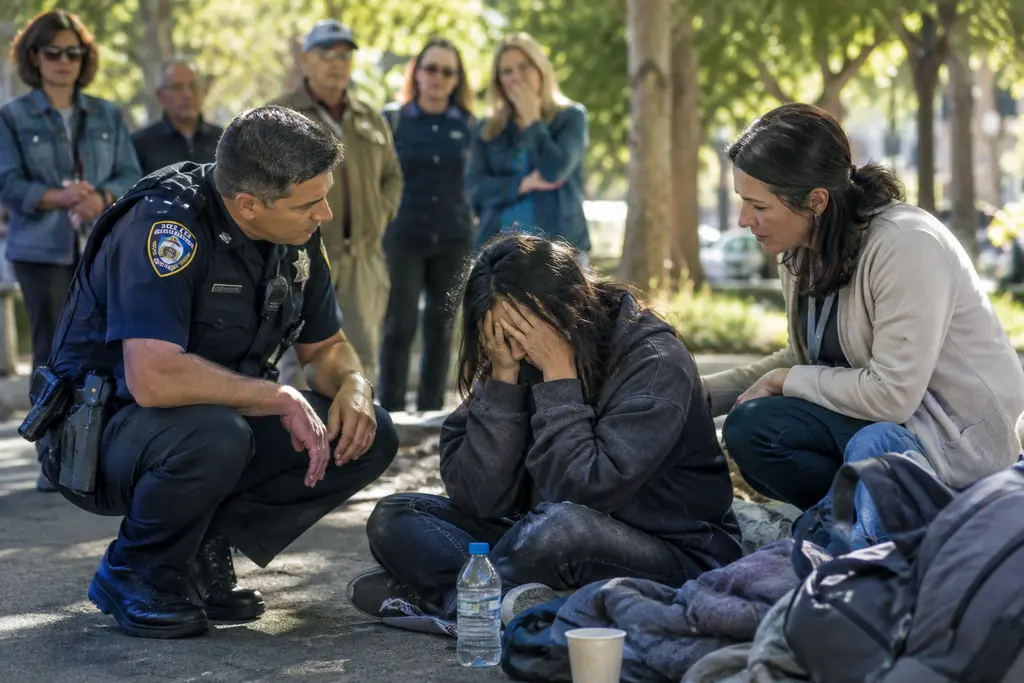
The Co-Response Program model is gaining attention because cities are testing ways to send behavioral health help, medical support, and follow-up care to nonviolent crisis calls without making police the only response. Chicago reported that its CARE program expanded citywide in May 2026 across all 77 community areas, with teams pairing behavioral health professionals and EMTs for certain nonviolent mental health crisis calls; after that expansion, CARE responses increased 51% from May through August and served more than 2,600 people, according to the city’s Chicago CARE progress report.
For Detroit churches, outreach ministries, shelter partners, food pantries, and neighborhood support teams, the civic lesson is practical. Mental health crisis response and homelessness support often meet at the same front door: a 911 call, a street outreach visit, a family shelter intake, a wellness check, or a referral from a neighbor. Detroit organizations do not need to copy another city’s model point for point, but they can use verified results from other cities to ask better local questions about safety, staffing, referrals, and follow-up.
What The Co-Response Program Data Shows
Co-Response Program Lessons From Chicago
Chicago’s CARE expansion offers one clear example of scale. The city said the program had moved from limited areas into citywide coverage in May 2026. It also reported a 51% increase in responses from May through August after the expansion. Those figures do not prove that every city will see the same outcome, but they do show that dispatch systems can send a significant number of nonviolent mental health calls to teams that include behavioral health and emergency medical staff.
That detail matters for Detroit support organizations because many community groups are not asking for less safety. They are asking for the right kind of safety. A resident in psychiatric distress may need a trained clinician. A person outside in winter may need medical screening, shelter referral, and calm engagement. A family calling for help may need de-escalation and follow-up, not a one-time visit that leaves them with no next step. When a city builds a response path for nonviolent crisis calls, faith-based and nonprofit partners can prepare to receive referrals, provide supplies, or help families connect to longer-term care.
Why The Numbers Need Careful Reading
Response counts alone cannot answer every question. A higher number of crisis responses may mean the program is easier to dispatch, better known among call takers, or operating across a wider service area. It does not automatically tell residents whether wait times improved, whether people received continuing care, or whether emergency rooms were avoided. That is why Detroit civic groups should ask for public reporting that includes both activity and outcomes if any similar model is proposed locally.
Useful public reporting could include the number of calls routed to crisis teams, call types, response times, repeat calls, referrals to clinics or shelters, and follow-up contact. Reports should also protect personal privacy. People in crisis should not become public examples. Community trust is stronger when data explains the system without exposing families.
How Evaluation Can Shape Better Crisis Care
Findings From San Mateo County
San Mateo County, California, provides another data point. A 2024–2026 evaluation of its Community Wellness and Crisis Response Team program found that clinician-and-officer co-responder teams reduced involuntary psychiatric detentions by 16.5% in participating communities and were linked with a 17% reduction in 911 calls categorized as mental health incidents over time, according to the Stanford John W. Gardner Center’s San Mateo evaluation.
The San Mateo findings are not a Detroit forecast. They are evidence that program design and evaluation can help communities see whether crisis response changes what happens after a call. Involuntary detention is a serious intervention. If trained teams can safely resolve some calls without that step, residents, families, hospitals, and first responders may all benefit. Any local discussion should still account for Michigan law, local dispatch practices, workforce availability, and the capacity of behavioral health providers.
What Detroit Partners Should Ask Before Expansion
The Co-Response Program approach should be judged by its public purpose: getting the right help to the right person at the right time. Detroit partners can ask whether a proposed crisis team would be clinician-led, EMT-supported, police-accompanied, or unarmed. They can ask what happens after midnight, on weekends, during severe weather, and when shelter beds or outpatient appointments are limited.
Support ministries and civic groups should also ask how follow-up will work. A crisis call may end in 30 minutes, but recovery and housing stability take longer. If a person is living outdoors, staying in a car, moving between relatives, or returning from an emergency department, the next step may involve shelter access, identification documents, transportation, benefits screening, medication support, or case management. Saint Joseph Detroit has covered related housing steps for families through Homeless to Housed support, which connects shelter assessment, rental help, lease steps, and case management.
Why Homelessness Support Must Be Built Into Response
From Crisis Call To Stable Referral
Mental health support and homelessness support should not be treated as separate civic conversations. A person experiencing homelessness may face untreated illness, trauma, substance-use concerns, chronic health conditions, or a loss of family support. A response team that can calm a crisis but cannot connect a person to shelter, outreach, benefits, or care coordination may leave the root need untouched.
For Detroit, a practical model would define referral pathways before calls occur. Outreach teams should know which agencies handle shelter access, which clinics accept urgent behavioral health referrals, which churches can provide warming items or meals, and which partners can help with documents. Community groups can also coordinate with civic education networks such as One United Michigan to keep residents connected to public service information and local problem-solving efforts.
Faith-Based And Neighborhood Roles
Churches and neighborhood ministries are often present before and after a formal service call. They may know which seniors need check-ins, which families lost housing, which residents avoid calling 911, and which volunteers can provide rides or meals. That local trust should support—not replace—trained crisis work.
A responsible partnership would set boundaries. Volunteers should not be asked to handle dangerous situations or clinical decisions. They can help with nonclinical tasks such as preparing hygiene kits, confirming pantry hours, offering a safe waiting space when appropriate, making follow-up calls, or helping families gather documents for housing or benefits appointments. Clear roles protect residents and volunteers.
Design Choices Detroit Should Watch

Dispatch, Staffing, And Safety
Every crisis model depends on dispatch decisions. Call takers need criteria for when a behavioral health team, EMT team, police response, or combined response is appropriate. Those criteria should be public enough for residents to understand the service, while still allowing emergency staff to make safety judgments in real time.
Staffing is another issue. A citywide idea on paper needs clinicians, peer specialists, EMTs, supervisors, data staff, transportation, and referral partners. If there are not enough behavioral health workers, programs may operate only during limited hours or cover fewer call types. That is not failure by itself, but residents should know the service limits before a crisis occurs.
- Public reporting: Release call counts, response types, referral outcomes, and service hours while protecting privacy.
- Referral agreements: Confirm shelter, clinic, outreach, and case management pathways before launch.
- Community training: Teach churches and neighborhood groups when to call 911, 988, outreach teams, or shelter access points.
- Follow-up capacity: Fund contact after the initial crisis so residents are not left without a next step.
- Volunteer boundaries: Keep clinical care with trained professionals and assign volunteers to safe support roles.
Building Trust Without Overpromising
The public should not be told that one response model will solve homelessness, end mental health emergencies, or remove every need for police. Those claims go beyond the evidence provided in the cited reports. A better promise is narrower and more honest: trained crisis teams may help some nonviolent calls receive more fitting care, and careful evaluation can show whether outcomes improve.
That honesty is especially important in communities that have seen broken service promises before. Residents deserve clear hours, phone pathways, referral rules, and complaint processes. Frontline workers deserve training and backup. Outreach partners deserve a seat at the planning table before the first call is routed.
Co-Response Program Next Steps For Detroit
A Co-Response Program cannot stand alone. Detroit’s next civic step should be a practical planning conversation among behavioral health providers, emergency medical leaders, homelessness outreach organizations, family shelter partners, faith communities, disability advocates, and residents with lived experience. The question should not be whether another city’s program can be copied. The question should be which service gaps Detroit needs to close first.
That conversation should start with a map of crisis pathways: who answers the call, who arrives, who decides whether a person needs hospital care, who offers shelter referral, who follows up the next day, and who reports results to the public. If Detroit groups can answer those questions clearly, expanded crisis response can become more than a dispatch change. It can become a safer bridge between emergency help, housing support, and steady community care.