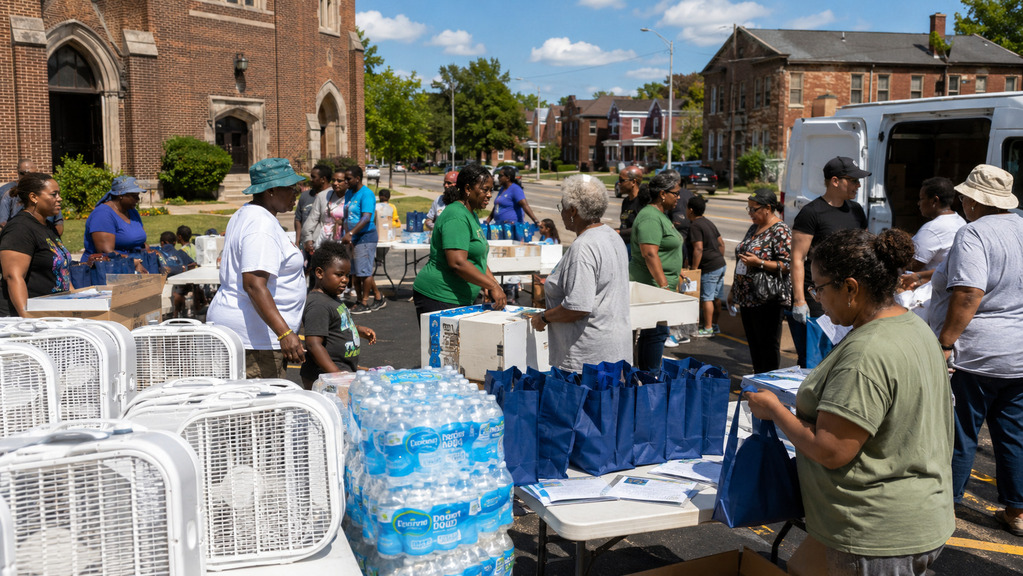
A recent Laredo summer-relief campaign offers a practical lesson for Detroit outreach groups: heat support works best when fans, cooling information, volunteers, and family referrals are organized before the hottest days arrive. In Texas, H-E-B donated 60 fans to the South Texas Food Bank, which passed them to families during a food distribution event, while H-E-B also worked with The Salvation Army to provide box fans in Rio Bravo and El Cenizo on July 2, 2026, and in Laredo on July 3, 2026, according to a July 5 community column by Peggy M. Duncan, executive director of United Way of Laredo.
For Detroit churches, neighborhood groups, and community-service teams, the point is not to copy Laredo’s program exactly. The stronger lesson is coordination. When dangerous heat is forecast, families without reliable air conditioning may need more than a list of cooling centers. They may need transportation help, fan distribution, bottled water, wellness checks, referrals to city recreation centers, and clear follow-up from trusted local groups.
Why Laredo’s Fan Campaign Is A Service Coordination Example
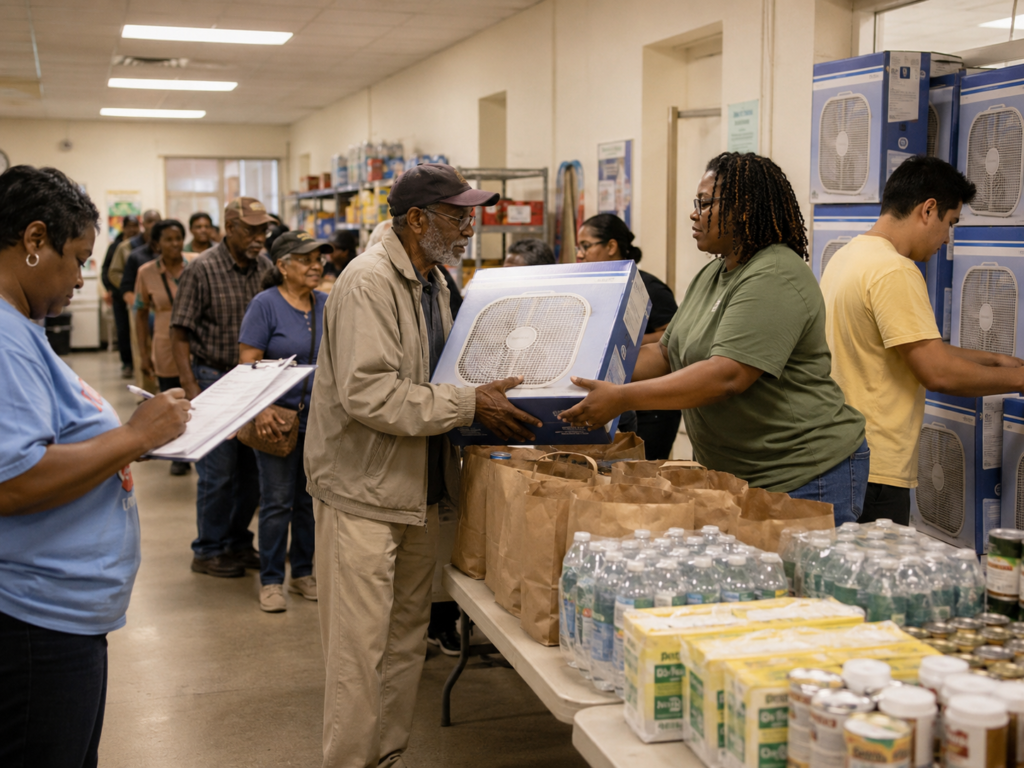
The Laredo effort worked because it connected several pieces of the local safety net. H-E-B supplied fans, the South Texas Food Bank moved them quickly to families during a food distribution event, and The Salvation Army handled additional box fan distribution in Rio Bravo, El Cenizo, and Laredo. That combination matters because heat relief often reaches people fastest when supplies are attached to places residents already use, such as food distribution sites, nonprofit offices, churches, and community events.
Detroit outreach groups can learn from that structure. A fan sitting in storage is not heat relief. A cooling center that residents do not know about is not enough. A volunteer list without an assignment plan can miss the people most at risk. A strong heat response connects donation collection, family identification, safe distribution, public cooling spaces, and follow-up.
The City of Detroit already maintains a cooling centers page that says residents can seek relief from extreme heat at recreation centers during normal operating hours and at Detroit Public Library branches during normal hours. The city also notes that when the heat index reaches a dangerous level, the Detroit Health Department works with Parks and Recreation to extend hours at certain recreation centers.
That official infrastructure gives local service groups a starting point. Detroit churches, neighborhood associations, and volunteer teams do not need to become emergency agencies. They can help residents understand where cooling spaces are, who may need a check-in, which families may need fans or water, and what city information should be shared before a heat emergency.
How Detroit’s Recent Heat Activation Shows The Need For Early Planning

Detroit’s late-June cooling center activation showed how quickly heat can become a public-service issue. On June 29, 2026, the City of Detroit announced it was preparing for extreme heat with the heat index forecast to be above 100 degrees from June 30 through July 2. The city said the Detroit Health Department and Parks and Recreation were partnering to provide safe, air-conditioned spaces during regular operating hours, with Detroit recreation centers open and Detroit Public Library locations serving as respite centers.
That announcement named specific recreation centers, including Adams Butzel Complex, Butzel Family Center, Clemente, Coleman A. Young, Community Center at A.B. Ford, Crowell, Farwell, Helen Moore Community Center, Heilmann, Kemeny, Lasky, Northwest Activities Center, and Williams. The list matters because residents need real places, not broad reminders to stay cool.
For Saint Joseph Detroit’s audience, the local outreach question is clear: how can community groups help families act on that information before the heat index rises? The answer starts with preparation. Volunteers can print or share cooling center information, identify residents who may need rides, check on older adults and people with disabilities, and coordinate with families who do not have consistent air conditioning.
This connects with Detroit’s broader health-equity work. Saint Joseph Detroit’s recent coverage of the Detroit Community Health Improvement Plan focused on how neighborhood partnerships can shape health access, outreach, and prevention. Heat relief belongs in that same local health conversation because extreme temperatures put pressure on housing, transportation, utilities, food access, and family safety.
What Fan Distribution Can And Cannot Do
A fan distribution campaign can be useful, but it should not be treated as the whole heat response. Fans can improve comfort in some homes, but they do not replace access to air-conditioned public spaces during severe heat. That is why Detroit outreach planning should pair fan access with official cooling center information, wellness checks, and transportation support.
The City of Detroit’s cooling center guidance says that when temperatures rise above 90 degrees, everyone is at risk, with older adults and very young residents especially susceptible to heat-related illness. The city lists symptoms such as headache, dizziness, nausea, heavy sweating, confusion, and pale or flushed skin, and points residents toward air-conditioned public places when home air conditioning is unavailable.
Detroit groups can use Laredo’s example as a planning model rather than a one-item donation drive. A church or nonprofit might collect fans in May or early June, but the actual plan should include who qualifies, where fans will be stored, who will deliver them, how residents will be referred, what official cooling center information will be included, and how volunteers will avoid promising support they cannot provide.

| Heat Relief Need | What Local Groups Can Prepare Early | Why It Matters For Detroit Families |
|---|---|---|
| Cooling Center Awareness | Share city recreation center and library cooling options | Helps residents find air-conditioned spaces before heat becomes dangerous |
| Fan Access | Collect or refer fans through trusted partners | Supports households without reliable cooling, especially before peak heat |
| Wellness Checks | Create call or visit lists for older adults, disabled residents, and families with young children | Helps identify urgent needs before a crisis call |
| Transportation Help | Coordinate rides, bus information, or neighbor support | Cooling centers are only useful if residents can reach them safely |
| Water And Food Referrals | Pair heat outreach with pantry, utility, and family support information | Household stress often rises across several needs at once |
The Laredo campaign shows why distribution through existing service networks can work. The South Texas Food Bank serves an eight-county area from its Laredo base, and food distribution gives families a natural point of contact for other urgent needs. Detroit groups can apply the same idea by connecting heat relief to places where residents already receive help, such as food pantries, parish aid programs, senior outreach, youth programs, and neighborhood service days. The South Texas Food Bank describes its regional service role through its food bank network.
Why Volunteers Should Be Assigned Before A Heat Emergency
Volunteer interest often rises after a heat warning is already in the news. By then, the hardest work should already be done. A useful heat-relief plan assigns roles before the emergency: who shares city updates, who calls residents, who checks cooling center hours, who organizes donated fans, who handles transportation requests, and who tracks follow-up.
Laredo’s July column also noted that The Salvation Army was coordinating a “Christmas in July Red Kettle Campaign” and looking for volunteers on Fridays and Saturdays at local stores. That detail matters because summer relief depends on volunteer capacity, not just donated items. A fan drive needs people to collect, store, sort, deliver, and document supplies. A cooling center referral effort needs people to check current hours and help residents understand options.
Detroit churches and community organizations can build a heat team before the next major warning. The team does not need to be large. It needs clear assignments and accurate information. One volunteer can monitor official city updates. Another can maintain a list of residents who have asked for check-ins. Another can coordinate donations with a pantry or neighborhood partner. Another can call the Detroit Health Department or check the city cooling center page when details change.
The most important rule is to use official information for safety details. Detroit’s cooling center page lists the Detroit Health Department phone number as (313) 876-4000 for cooling center information. The same page points residents toward Detroit Homeland Security & Emergency Management for additional severe weather safety tips.
How Detroit Outreach Groups Can Build A Stronger Heat Calendar
Heat relief should be treated as a seasonal outreach calendar, not a last-minute reaction. Detroit groups can begin planning in spring, collect supplies in early summer, confirm cooling center information before the first major heat wave, and schedule wellness checks during high-risk periods.
A practical Detroit heat calendar might include early-June fan collection, mid-June volunteer training, late-June cooling center communication, July wellness checks, and August follow-up for households that still need utility, food, housing, or health-related referrals. That timing gives residents and volunteers a clearer path before the hottest stretch of the season.
The City of Detroit’s June 29 announcement included a direct public-health message from Ali Abazeed, Detroit’s Chief Public Health Officer and Director, urging Detroiters to check on family members and neighbors, drink plenty of water, limit outdoor activity during the hottest parts of the day, and use cooling centers and public spaces to stay safe.
That message gives community groups a clear role. They can turn official advice into local action. Checking on neighbors can become a call list. Drinking water can become a hydration station at a pantry or outreach table. Limiting outdoor activity can become a reminder to reschedule volunteer work away from the hottest hours. Using cooling centers can become a printed list, a ride plan, or a phone call to confirm hours.
What Detroit Service Groups Should Watch Before The Next Heat Wave
Detroit outreach groups should watch for three signals before the next heat wave: official city cooling center updates, local weather alerts, and signs that families are facing connected needs such as utility stress, food insecurity, or housing instability. Heat rarely affects households in isolation. It can make existing challenges harder to manage.
The Laredo fan distribution campaign shows that small, practical items can matter when they are delivered through trusted networks. H-E-B’s 60-fan donation, the South Texas Food Bank’s distribution role, and The Salvation Army’s box fan outreach in Rio Bravo, El Cenizo, and Laredo all point to the same lesson: relief works faster when partners already know what they are responsible for.
For Detroit, the strongest response will combine official city resources with neighborhood-level trust. Recreation centers and libraries can provide air-conditioned spaces. The Detroit Health Department can issue safety guidance. Churches, nonprofits, block clubs, and volunteers can help residents hear the message, reach the location, receive supplies when available, and follow up after the emergency passes.
Early planning is the difference between a heat-relief idea and a heat-relief system. A fan drive can help. A cooling center list can help. A neighbor check-in can help. A clear calendar that connects all three can help Detroit families before the next extreme heat alert becomes urgent.