Category: Support Services

  • Home Repair Task Force Sets Detroit Priority

    Home Repair Task Force Sets Detroit Priority

    The Home Repair Task Force gained a clearer citywide mandate on September 8, 2026, when Mayor Mary Sheffield signed an executive directive making home repair a major administration priority and appointed Heather Zygmontowicz as Senior Advisor on Home Repair, according to the City of Detroit announcement. For Detroit homeowners, the immediate change is not a new promise of automatic repairs. It is a shift toward shared intake, coordinated referrals, longer-term reporting, fundraising strategy, and policy review across programs that have often been hard for residents to sort through.

    The directive matters because the city has publicly tied home repair to housing stability, aging in place, disability access, child safety, and neighborhood preservation. The city reported that about 37,000 Detroit households live in inadequate housing, and 43% of residents report at least one major home repair need. Those figures explain why the new structure is aimed at coordination, not only construction. Roof leaks, plumbing failures, furnace and boiler problems, electrical hazards, and accessibility barriers can push families toward unsafe living conditions even when they own their homes.

    Home Repair Task Force Sets City Priorities

    What Changed On September 8, 2026

    Mayor Sheffield’s executive directive formally elevated home repair as a major city priority. The directive also placed Zygmontowicz in a senior advisory role focused on a coordinated citywide strategy. According to the city, her work includes shared intake systems, data-sharing agreements, coordinated referrals, annual home repair census reporting for at least five years, multi-year fundraising strategy, and identifying policy changes at the local, state, and federal levels.

    That list speaks directly to one of the most common problems residents face: knowing where to start. Detroit has multiple repair programs, funding sources, nonprofit partners, eligibility rules, and application timelines. A homeowner may qualify for one program but not another, or may need documents before a short application window opens. A shared intake approach could reduce repeated paperwork and help residents reach a better-matched program, if the city and partners can align data practices and referral rules.

    Home Repair Task Force Intake Work

    For the Home Repair Task Force, intake is more than a form. It is the first point where a homeowner’s repair need, household status, property-tax position, income eligibility, disability access concern, and safety risk can be recorded. A roof leak and a broken furnace may require different funding paths. A bathroom access issue for a resident with a documented disability may need a different review than a plumbing failure. A senior homeowner may need help gathering records before a deadline.

    The city’s stated plan to improve data sharing and referrals is especially relevant for community groups, churches, block clubs, and housing counselors. These groups often hear about repair needs before city systems do. A better referral path gives outreach workers a clearer way to direct residents without making unsupported promises. Residents who track housing policy, tax relief, and county-level civic decisions may also find related local coverage through a related site in the same network known as County Watchers.

    What Homeowners Should Know After The Fall Application Period

    The September 2026 Window Has Closed

    Detroit’s fall 2026 Critical Home Repair Program application period opened at 8 a.m. on Wednesday, September 9, 2026, and closed at 5 p.m. on Tuesday, September 22, 2026, according to city application guidance cited in the research for this article. Because today is September 28, 2026, that application period has already ended. Homeowners should not treat that window as open.

    The listed eligible repair categories for that period included plumbing failures, active roof leaks, nonworking furnace or boiler systems, electrical hazards, and accessibility improvements for bathrooms or entryways. The eligibility rules in the city guidance required applicants to own and occupy a Detroit home, be current on property taxes or in a payment plan, meet household income limits, and have at least one person under 18, someone age 62 or older, or a resident with a documented disability.

    For residents who missed the September 22 deadline, the practical next step is preparation. The research supplied for this article does not identify another application window as of September 28, 2026. Homeowners can still gather proof of ownership, occupancy, income, property-tax status, disability documentation if relevant, and photos or written descriptions of repair needs. That preparation can help if the city or a partner opens another window later.

    Property Taxes And Repair Access

    Property-tax status matters because the Critical Home Repair Program eligibility rules cited in city guidance required homeowners to be current or in a payment plan. That connection can create stress for residents who need urgent repairs but also need to resolve tax issues. Local housing outreach teams should ask about tax status early, not at the end of a referral. For related context, Saint Joseph Detroit has covered how Detroit housing priorities connect repair needs, lead reduction, affordable housing, and public services.

    How Coordination Could Reduce Repair Gaps
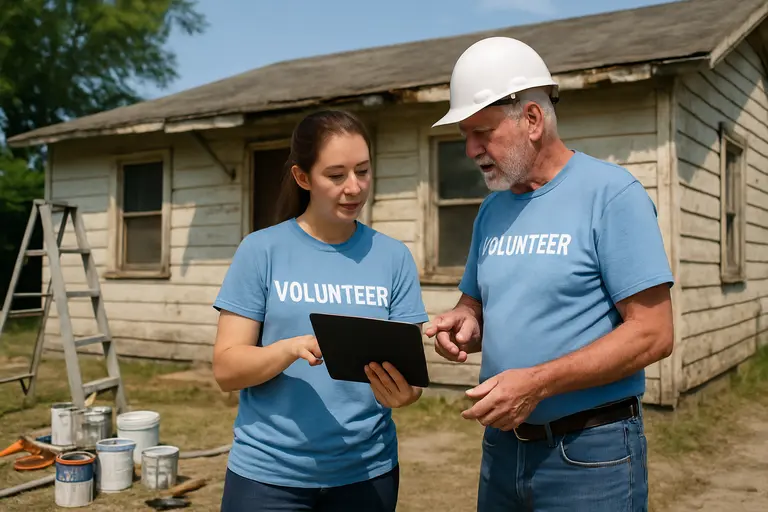
    Neighborhood outreach worker reviewing a home repair referral checklist with a resident

    What The 2024 Repair Reporting Showed

    City home repair reporting for 2024, cited in the research for this article, recorded more than 3,058 home repair interventions. Confirmed investment was reported at more than $50 million, with estimates reaching about $63 million to $63.6 million when grants and loans were included. The most common repair types were roof repairs at 28.9%, plumbing at 14.1%, and HVAC at 11.5%.

    The same reporting showed the depth of need among households served. Nearly 97% of homes in the Detroit Home Repair Fund fell short of basic livable standards before intervention. The city’s reporting also found that 46% of participating households included someone age 62 or older, and about half included someone with a disability. Those figures show why repair work is also support-service work. A repaired roof can protect health. A working furnace can prevent displacement. An accessible entryway can keep a resident connected to medical care, family, school, work, and faith life.

    Why Shared Partners Matter

    The research notes also state that more than 30 organizations were involved in repair work reaching 92% of Detroit’s population and 83% of its neighborhoods. At least 31 distinct repair programs were funded by 34 separate sources, including philanthropic, federal, state, local, and private funding. That reach is useful, but it also explains why coordination is needed. Many programs can mean more chances for help, but it can also mean more confusion for residents trying to identify the correct door.

    The Home Repair Task Force can help if it turns scattered program knowledge into usable referral paths. A homeowner should not have to understand every funding stream before asking for help with an active roof leak. A senior resident should not have to call multiple agencies to learn whether furnace repair, accessibility work, or plumbing repair is the right category. Community groups can support this work by keeping updated referral sheets, confirming deadlines before sharing flyers, and helping residents gather documents.

    • For homeowners: Keep repair photos, utility notices, tax-payment-plan records, income documents, and proof of occupancy in one folder.
    • For block clubs and churches: Track residents who ask for repair help, but protect private information and share only with consent.
    • For housing counselors: Ask early about age, disability status, children in the home, taxes, and the specific repair hazard.
    • For partner agencies: Confirm whether a referral is open before sending residents to apply.

    Detroit Home Repair Priority Next Steps

    The city’s new home repair priority does not erase the scale of need. The research notes state that current critical repair and LeadSafe efforts may serve about 350 homes per year for now, while city reports and experts estimate that the total need exceeds $1 billion to address all dilapidated housing and large-scale repair needs citywide. That gap shows why annual reporting, fundraising strategy, and policy review are central parts of the directive.

    The Home Repair Task Force is not a single repair crew, and it should not be described as an immediate fix for every unsafe housing condition. Its value will be measured by whether residents can find programs more easily, whether partners share information responsibly, whether public reporting stays clear, and whether funding decisions match the repair needs documented across neighborhoods.

    For homeowners, the best action after the closed September 2026 application period is to stay document-ready and seek verified guidance from city or trusted housing partners before the next opportunity appears. For community outreach teams, the next civic task is practical: help residents understand eligibility, prepare records, avoid missed deadlines, and connect urgent repair needs to the correct program without guessing. Detroit has now named home repair as a city priority; the measure of progress will be whether that priority reaches the households living with leaks, heat failures, unsafe wiring, and access barriers.


  • PAYS tax relief returns for Detroit homes

    PAYS tax relief returns for Detroit homes

    The return of PAYS tax relief gives Detroit homeowners with delinquent property taxes a renewed path to keep their homes, but the first step remains tied to the city’s Homeowners Property Exemption, known as HOPE. On August 21, 2026, Detroit’s Pay As You Stay program was officially reinstated after state action restored permanent authority for county treasurers to offer this kind of property tax relief. For families already under strain from illness, income loss, or other hardship, the program matters because it can remove penalties, interest, and fees from delinquent tax bills after HOPE approval.

    For churches, neighborhood groups, housing counselors, and support-service teams, the civic task is clear: help residents understand the deadline, gather documents, and avoid waiting until tax foreclosure pressure becomes harder to manage. Detroit’s official notice says homeowners must apply for HOPE by November 6, 2026, to determine eligibility for current-year relief and to qualify for Pay As You Stay consideration through the Wayne County Treasurer’s process City of Detroit HOPE and PAYS notice.

    How PAYS tax relief Returned In Detroit

    What Senate Bill 423 Changed

    Michigan Governor Gretchen Whitmer signed Senate Bill 423 on July 27, 2026. According to the Governor’s office, the legislation made permanent the state authority for county treasurers to offer programs such as Pay As You Stay, which had direct importance for Detroit homeowners facing delinquent property tax balances Governor’s bill signing release.

    That state action mattered because the program had expired before being restored. Detroit homeowners who were behind on taxes needed a lawful path for the Wayne County Treasurer to reduce eligible delinquent balances under the Pay As You Stay structure. The reinstatement did not erase the need to apply for HOPE. It restored the link that lets HOPE-approved homeowners move into the county review process for delinquent tax relief.

    From a community support point of view, this is a practical housing-stability issue. Property tax foreclosure can remove families from homes they may have owned for years. It can also disrupt children, older adults, caregivers, and neighbors who rely on stable households. The program’s renewal gives local organizations a clear reason to restart outreach before the November deadline.

    Why The Timing Matters

    The deadline is close enough that churches and neighborhood groups should treat outreach as a near-term service project. A flyer alone is not enough for many households. Some residents may need help understanding HOPE, finding paperwork, reviewing tax notices, or knowing that city approval starts the next step with Wayne County. Support teams can make a real difference by helping residents act early instead of waiting until they receive a foreclosure warning.

    What HOPE Approval Means For Homeowners

    PAYS tax relief And HOPE Eligibility

    HOPE is the gateway. Detroit’s HOPE program reduces or eliminates current-year property taxes for income-qualified homeowners. Once a homeowner is approved for HOPE, the city sends a list of approved homeowners to the Wayne County Treasurer, who then determines Pay As You Stay eligibility and the amount of any delinquent balance reduction. That sequence is central: homeowners do not skip HOPE and move straight into the county relief process.

    For PAYS tax relief, the benefit focuses on delinquent property taxes. Approved homeowners may have penalties, interest, and fees removed from eligible delinquent taxes. If the base tax debt without penalties and fees is more than 10% of the property’s taxable value, the reduced balance is capped at that 10% figure, based on the program rules described in city materials. If the base debt is not above that threshold, the program removes interest, fees, and penalties.

    This structure helps explain why homeowners should not assume they know the outcome before applying. One household may receive a major reduction because penalties and interest have grown over time. Another may still owe a reduced balance but gain access to a payment option that is easier to manage than the prior delinquent amount. The key is that eligibility and reduction amounts are determined through the official process, not by guesswork.

    How Support Organizations Can Help

    Faith-Based And Neighborhood Outreach Roles

    Detroit’s faith community has long served as a trusted bridge between public programs and residents who may be cautious, overwhelmed, or unsure where to begin. In support services, trust often decides whether a family asks for help early or waits until the situation becomes urgent. Congregations, block clubs, senior ministries, housing nonprofits, and neighborhood offices can help by keeping the message plain: apply for HOPE by November 6, 2026, because HOPE approval is the route into Pay As You Stay review.

    Outreach should stay factual and respectful. No group should promise approval, quote a specific reduced balance, or say that every tax debt will be erased. What groups can do is help homeowners read city guidance, collect documents, and connect with the right public offices or housing-assistance partners. Local support teams can also remind homeowners to keep copies of applications, notices, and payment-plan documents.

    Organizations that already support housing stability may also want to connect residents with related local coverage on restored PAYS rules, especially when homeowners need a plain-language reminder of the HOPE deadline and payment choices. The Richland Chamber website, Richland Chamber, also offers regional community information that may be useful for readers interested in broader civic and business-community updates across Michigan.

    Practical Outreach Checklist

    Groups that want to help should build their work around simple, verifiable steps. The following actions keep the focus on resident support without replacing official review by the city or county:

    • Identify homeowners who may need information: Focus on residents who mention delinquent property taxes, foreclosure notices, or difficulty paying current-year taxes.
    • Share the HOPE deadline: Use the explicit date, November 6, 2026, and avoid vague reminders that can be missed.
    • Encourage document gathering: Help residents prepare for application requirements without guessing eligibility.
    • Refer to official city guidance: Use City of Detroit materials for program rules, deadlines, and process updates.
    • Protect privacy: Do not discuss a homeowner’s tax debt, health condition, or financial hardship in public settings.

    Payment Choices After Approval

    Calculator and property tax documents arranged on a desk

    Reduced Balance Options

    After approval through the required process, homeowners may have two main choices for the reduced delinquent balance. They may pay the reduced balance in full and receive an extra 10% reduction, or they may enter a three-year, zero-interest payment plan for the reduced amount. Those options are significant because some residents can solve the matter quickly with family help, savings, or a support fund, while others need a longer payment period to avoid foreclosure risk.

    The Detroit Tax Relief Fund is also part of the support picture described in city program materials. The fund, backed by the Gilbert Family Foundation and Rocket Community Fund, works with HOPE and Pay As You Stay to eliminate remaining delinquent property tax balances for qualifying homeowners who have HOPE and Pay As You Stay approval. Homeowners should still follow the official approval process, because outside support depends on meeting program requirements.

    For PAYS tax relief to function as a real prevention tool, residents need help before the last minute. Payment plans require attention. Full-payment discounts require clear numbers. Fund assistance requires approved status. This is where local support organizations can provide steady help by checking whether a resident has applied, whether mail has been opened, and whether any follow-up action is required.

    Detroit Homeowners And PAYS tax relief Next Steps

    What Residents Should Do Now

    The next civic step is direct and time-sensitive: Detroit homeowners who are behind on property taxes, or who cannot afford current-year property taxes, should review HOPE eligibility and apply before November 6, 2026. HOPE approval can reduce or eliminate current-year taxes and can start the review path for Pay As You Stay consideration with Wayne County.

    Homeowners should not assume that old penalties or fees make the problem impossible to solve. They also should not assume that reinstatement means relief happens automatically without HOPE approval. The safest course is to apply, keep records, and respond quickly to any city or county request for information.

    For Detroit’s churches and neighborhood support teams, the return of PAYS tax relief is a call to organized service: share the deadline, help with paperwork access, refer to official sources, protect resident privacy, and follow up with households that may be at risk. The program is not just a tax tool. Used correctly, it is a foreclosure-prevention path that can help homeowners remain rooted in their homes and neighborhoods.

  • Medical Debt Relief Expands In Wayne County

    Medical Debt Relief Expands In Wayne County

    Medical Debt Relief in Wayne County has moved from a county launch in March 2024 to confirmed debt cancellation for tens of thousands of residents. According to the Wayne County Health, Human & Veterans Services agenda package dated March 10, 2026, the program had abolished about $56.5 million in medical debt for more than 82,000 county residents as of January 2026, after passing $42 million for roughly 71,000 people by mid-December 2025 according to county records.

    For Detroit and Wayne County families, the key civic change is practical: the county says residents do not apply for this program. Eligible debts are identified through a partnership with the nonprofit Undue Medical Debt, formerly RIP Medical Debt, after medical debt portfolios are bought or donated by providers that take part in the effort. That structure makes public communication especially important, because many residents may not know they were helped until they receive a notice.

    How Medical Debt Relief Works In Wayne County

    Wayne County describes the program as a partnership with Undue Medical Debt, with a long-term goal of eliminating up to $700 million in outstanding medical debt for up to 300,000 county residents. The county says it committed $5 million from the indigent health fund and American Rescue Plan Act pandemic relief dollars to support the debt-buying and forgiveness work. The county’s program page says eligible residents must either earn at or below 400% of the Federal Poverty Level or have medical debt equal to at least 5% of annual household income as detailed by Wayne County.

    Medical Debt Relief Eligibility And Notices

    The county’s description is clear that no resident application is required. Undue Medical Debt identifies qualifying debt through portfolios from participating providers, then cancels eligible debt automatically. Residents whose debts are erased are sent a letter in a white envelope branded by Undue Medical Debt confirming which medical debt was cancelled.

    Because Medical Debt Relief depends on portfolio participation, residents should avoid assuming that every bill from every provider will be included. The supported facts show a program that has already cancelled a large amount of debt, while the larger target remains a long-term county goal. That distinction matters for families trying to understand whether a bill may still be active.

    What The Numbers Say So Far

    The reported January 2026 total of about $56.5 million shows measurable progress, but it is still far below the stated goal of up to $700 million. That gap should not be read as failure or completion without further verified county updates. It is better understood as a public benchmark: Wayne County has reported confirmed relief for more than 82,000 residents, while the county’s stated maximum goal remains much larger.

    For local service providers, the most useful response is to repeat the confirmed process, not to promise results. A church office, school family-support desk, clinic waiting room, or neighborhood nonprofit can tell residents that the county program is automatic, that notices come by mail from Undue Medical Debt, and that eligibility is tied to income or debt burden as described by the county.

    Why The Program Matters For Support Services

    Medical debt can affect household decisions even when a family has already received care. The county’s program does not erase the need for insurance guidance, charity-care screening, financial counseling, or help understanding bills, but it does create a county-backed debt cancellation path for eligible residents whose accounts are included through participating providers.

    Faith-based and community groups can support residents by focusing on accurate referral habits. That means helping people keep mail from Undue Medical Debt, avoid paying a cancelled bill by mistake, and ask providers or collectors for written account information if a debt appears unclear. Community helpers should not tell residents that they qualify unless a notice confirms cancellation or the county releases more specific information.

    How Churches And Nonprofits Can Help Without Overpromising

    Trusted local groups can make the program easier to understand by sharing only verified details. A parish bulletin, food pantry table, family resource night, or health ministry meeting can explain that the county launched the effort in March 2024, that Undue Medical Debt handles the cancellation process, and that residents do not submit an application.

    That kind of communication is especially useful for older adults, families with limited internet access, and residents who may overlook a mailed notice. The county says the notice is sent in a white envelope branded by Undue Medical Debt. Volunteers can remind residents to open official-looking mail carefully while also warning them not to share personal financial details with unknown callers.

    • Share the automatic process: residents do not need to apply through a local office or volunteer group.
    • Point to the notice: cancellation is confirmed by a letter from Undue Medical Debt.
    • Avoid guarantees: eligibility rules do not mean every medical bill will be cancelled.
    • Keep records: residents should save any cancellation letter with household financial papers.

    What Residents Should Check Before Taking Action

    Resident comparing a mailed notice with household financial papers

    Residents who receive a cancellation notice should read it carefully and keep it. If a separate bill or collection notice arrives for what appears to be the same debt, the resident can compare account information before responding. If the accounts do not match, that may mean one debt was cancelled while another remains active.

    Residents who have not received a letter should not assume they were excluded forever. The county’s program depends on medical debt portfolios from providers that take part, so cancellation can occur only through that process as described by Wayne County. At the same time, people should continue opening bills, keeping records, and asking providers about available financial assistance if they face current medical charges.

    How This Fits With County Service Planning

    The debt program is one part of a wider county support picture that includes health, youth, housing, and family assistance decisions. Readers following county service investments may also want to review local reporting on the Wayne County funding plan for youth services, since both issues show how public dollars can be directed toward household stability.

    For regional civic readers, related county-level service coverage is also available through County Watchers, a site within the same network. Local residents, churches, and nonprofit staff benefit when public programs are explained in plain language and tied to verified county sources.

    Medical Debt Relief And Local Support

    The county’s Medical Debt Relief effort gives Wayne County residents a real support channel, but the most helpful community response is careful communication. The confirmed facts are strong enough to share: the program launched in March 2024, Wayne County partnered with Undue Medical Debt, the county committed $5 million, no application is required, and the program had erased about $56.5 million for more than 82,000 residents as of January 2026.

    The next civic step is not for residents to flood county offices with applications, because the county says the program does not work that way. The better step is for support organizations to post accurate information, help residents recognize the mailed notice, and direct people with active medical bills to existing provider assistance channels while watching for verified county updates.

    For families under pressure, a cancelled debt can bring relief. For local service providers, the responsibility is to pair compassion with accuracy. That is where community support, faith-based outreach, and county information can work together without creating false expectations.

  • New Public-Charge Rule Could Discourage Detroit Immigrant Families From Seeking Help

    New Public-Charge Rule Could Discourage Detroit Immigrant Families From Seeking Help

    The 2026 public charge rule creates a difficult question for some Detroit immigrant families: could accepting help with food, healthcare, or housing affect a future immigration decision? The answer depends on the person, the benefit, the immigration process, and when an application was submitted—not on a simple list circulating online.

    That uncertainty is the immediate concern. Families may withdraw from programs they are legally eligible to use, including assistance received by U.S.-citizen children, before determining whether the rule applies to them at all. Detroit organizations already working through broader service-access barriers now face another challenge: replacing fear and rumor with careful, case-specific guidance.

    What the 2026 Public Charge Rule Changes

    The rule took effect September 18, 2026. It applies to applications for admission made on or after that date and adjustment-of-status applications postmarked or electronically submitted on or after that date.

    Rather than establishing one automatic penalty for receiving assistance, the rule rescinds the narrower federal framework adopted in 2022. It restores broader discretion for immigration officers to evaluate whether certain applicants are likely to become primarily dependent on government support.

    The immigration statute requires officers to consider factors including age, health, family status, financial resources, education, and skills. An affidavit of support may also play a significant role in family-based cases.

    The published final federal rule removes regulatory definitions and restrictions that previously limited what officers could consider. It also states that receipt of means-tested benefits before September 18 will be evaluated under the 2022 framework.

    That distinction makes filing dates and benefit dates especially important. Timing can change the analysis, which is one reason general social-media advice cannot replace a review of an individual case.

    Who May Face a Public-Charge Review

    Public charge is a ground of inadmissibility. It most commonly matters when a person seeks admission to the United States or applies to adjust status to lawful permanent residence.

    It does not apply identically to every immigrant, every visa holder, or every immigration filing. Federal law provides exemptions for various humanitarian categories, while waivers may be available in some other circumstances. A lawful permanent resident renewing a green card is not in the same position as someone applying for permanent residence for the first time.

    Families should also separate the applicant from other household members. A benefit received by a child, spouse, or other relative should not automatically be assumed to have the same immigration consequence for everyone in the home.

    This overview shows where confusion is most likely to arise:

    Family situationMain question to clarifySensible next step
    Adjustment application filed on or after September 18Whether the new framework appliesHave the filing and household facts reviewed
    Application submitted before September 18Which rules govern the caseConfirm the submission date and current case status
    U.S.-citizen child receives assistanceWhose benefit use may be consideredDo not cancel benefits without qualified advice
    Applicant has humanitarian statusWhether a statutory exemption appliesVerify the exact immigration category
    Household uses several programsWhether each program affects the analysisReview benefits individually rather than collectively

    The table is a starting point, not an eligibility decision. Immigration categories matter, and two families using the same program can have different legal circumstances.

    Why Michigan Joined the Legal Challenge

    Michigan joined a multistate lawsuit seeking to block the rule shortly before it took effect. The coalition argues that the federal policy gives immigration officers excessive discretion without providing sufficiently clear standards for applicants, state agencies, or organizations helping families.

    The states also contend that uncertainty will discourage eligible residents from using health, nutrition, and housing programs. That response is often described as a chilling effect: people avoid assistance because they fear a possible consequence, even when the policy may not apply to their immigration category or the benefit received by a relative.

    For Michigan, the dispute extends beyond immigration processing. When families delay preventive healthcare, lose food support, or allow housing problems to become emergencies, costs may shift to hospitals, shelters, schools, local governments, and charitable organizations.

    The federal government presents the rule differently. Its stated position is that immigration officers need broader authority to determine whether applicants are likely to rely on government support and that federal policy should promote self-sufficiency.

    Those competing views will now be tested in court. Until a court changes the rule or federal agencies issue more detailed implementation guidance, families should treat the policy as an active legal concern rather than assuming the lawsuit has resolved it.

    Fear Can Affect More People Than the Rule

    The largest community effect may come from decisions made before anyone speaks with a lawyer. A parent might stop a child’s nutrition assistance, postpone medical care, or avoid asking a housing counselor for help because the household believes all public benefits now threaten immigration status.

    That assumption is too broad. Public charge is not a universal test applied to every immigrant whenever assistance is requested. Some people are exempt, some immigration processes do not involve the determination, and the legal relevance of a benefit may depend on who received it and when.

    Detroit schools, clinics, food programs, congregations, and housing organizations should avoid offering blanket assurances or warnings. Staff members can explain that rules have changed, protect personal information, and refer immigration questions to qualified professionals.

    Clear referrals are more useful than asking families to disclose sensitive details to volunteers who cannot evaluate them. Benefits decisions deserve individual review, especially when healthcare, nutrition, or housing stability is at stake.

    public-charge rule fear

    Where Detroit Families Can Find Reliable Guidance

    Anyone concerned about the rule should gather immigration notices, filing receipts, benefit records, and information showing which household member receives each benefit. These records can help an attorney determine what is relevant without forcing the family to reconstruct dates from memory.

    Detroit residents can contact the Michigan Immigrant Rights Center for immigration legal services. Its Detroit office is located at 7700 Second Avenue, Suite 603, and the organization lists 734-239-6863 for assistance. Families may also seek help from another qualified nonprofit immigration provider or a licensed immigration attorney.

    People should be cautious with notarios, unlicensed consultants, forwarded messages, and videos promising one answer for every household. A person offering immigration advice should be able to explain their credentials, the applicant’s category, and how the effective date affects the case.

    Community organizations can help by maintaining updated referral lists, arranging interpretation, and giving families private spaces to make calls. They should not advise residents to abandon benefits solely because someone in the household is an immigrant.

    The 2026 public charge rule matters because uncertainty can interrupt essential support long before an immigration officer reviews a case. Detroit families need accurate, confidential guidance that protects both their legal options and their immediate health, food, and housing needs while Michigan’s court challenge moves forward.

    Frequently asked questions

    Does the public-charge rule apply to every immigrant?

    No. Its application depends on the person’s immigration category and the benefit or immigration process being requested. Several humanitarian categories are exempt, so individual legal guidance is essential.

    Should parents cancel benefits received by U.S.-citizen children?

    Not without qualified advice. A child’s citizenship, the identity of the benefit recipient, the program involved, and the parent’s immigration process can all affect the analysis.

    Does Michigan’s lawsuit stop the rule from applying?

    Filing a lawsuit does not automatically remove a federal rule. Families should check for current court orders and agency guidance while obtaining advice based on their specific filing date and status.

  • Detroit Child Care Tool Helps Parents Find Options

    Detroit Child Care Tool Helps Parents Find Options

    Detroit Child Care access has a practical new starting point for parents: Connect4Care Kids, the centralized online tool launched in August 2021 by United Way for Southeastern Michigan and the City of Detroit. CBS Detroit reported at launch that the free tool was built to help families with children ages 0–5 search for care near home, check eligibility for support programs, and connect with providers that fit family needs through a single resource CBS Detroit.

    For Detroit parents, the need remains larger than one website can solve. Research notes from IFF’s 2024 Wayne County Child Care Plan reported that Detroit had an estimated 27,627 more children ages 0–5 than formal child care slots in licensed centers and homes as of 2023. The same research described the largest shortfall for infants and toddlers, with about 18,616 missing slots for ages 0–2 and about 9,011 missing slots for ages 3–5. Those figures help explain why a search tool matters, but they also show why providers, city agencies, schools, employers, and neighborhood organizations still have work to do.

    How Detroit Child Care Search Support Works

    Why Detroit Child Care Needs A Single Starting Point

    Connect4Care Kids was created to reduce one common barrier: parents often have to call many providers, ask about openings, check program types, and sort through subsidy rules while also managing work, transportation, and family schedules. The tool gives families a more organized way to begin that search. According to the research provided, Connect4Care Kids serves Detroit and the wider region, including Wayne, Macomb, Oakland, and Washtenaw counties. It allows families to search for care options, review possible eligibility for aid, and see provider availability.

    That is especially useful for parents who work nontraditional hours, rely on relatives for transportation, or need care close to a bus line, school, medical appointment, or workplace. A parent may still need to call a provider, confirm details, and complete enrollment steps, but a centralized search can reduce the number of disconnected calls made at the start.

    What Families Can Check Before Calling Providers

    Families using Connect4Care Kids can review which child care assistance programs may apply to their situation, according to the research notes. Those programs include Head Start, Early Head Start, and state MDHHS child care subsidies. The research also notes that some providers accept subsidies or offer wrap-around hours for working parents.

    Parents should still confirm three details directly with a provider before relying on an opening: the child’s age group, the daily schedule, and payment or subsidy rules. For infants and toddlers, available slots can be limited because staffing and licensing needs differ from older preschool classrooms. For parents working early shifts, evening shifts, or variable schedules, hours may be just as important as location.

    • Location: Is the provider close to home, work, school, or a regular transit route?
    • Age fit: Does the provider serve infants, toddlers, preschoolers, or mixed ages?
    • Cost support: Does the provider accept the subsidy or program support the family may qualify for?
    • Schedule: Are start times, pickup times, and wrap-around options realistic for the household?
    • Quality information: Has the family reviewed licensing and quality indicators before enrolling?

    Quality And Eligibility Checks For Families

    Using State Quality Information With Search Results

    A child care opening is only one part of the decision. Michigan’s Great Start to Quality program is a free state resource for families with children ages 0–12 that helps parents review licensed child care and preschool programs using quality factors such as safety, learning environment, and staff training, according to the state’s Great Start to Quality program page.

    Families can use Great Start to Quality alongside Connect4Care Kids. One tool can help identify possible care options, while the state quality resource can help parents ask better questions. For example, a parent can ask about daily learning routines, staff experience, outdoor time, family communication, meals, and emergency procedures. These questions are not about judging providers unfairly. They are about helping families understand whether a setting matches a child’s needs.

    Why Assistance Programs Matter For Access

    Cost is a major access issue for many households, and the research notes show that Connect4Care Kids helps families check whether they may qualify for Head Start, Early Head Start, or state child care subsidy support. That eligibility screening can save time for parents who may not know which program fits their child’s age, income situation, or schedule.

    Support programs also matter for providers. If more families can use public assistance to pay for care, enrollment can become more stable for programs that accept those supports. That does not erase the shortage, but it can help existing seats serve families who might otherwise be priced out.

    Where The Access Gap Still Pressures Families

    What The 2023 Supply Figures Show

    The research notes show different but consistent measures of shortage in Detroit’s early childhood system. IFF’s 2024 Wayne County Child Care Plan estimated a gap of 27,627 slots for children ages 0–5. Separate 2023 figures from Detroit’s Office of Early Learning, cited in the research notes, estimated about 37,000 young children ages 0–5 in Detroit needed child care, while about 21,500 licensed or registered slots existed in home day cares or licensed centers. That estimate left more than 15,500 seats missing.

    Those numbers should be read as planning indicators, not as a promise that every available slot will meet every family’s schedule, age group, transportation need, or subsidy status. A seat across town may not be practical for a parent without reliable transportation. A preschool opening may not help a family looking for infant care. A provider with a standard daytime schedule may not fit a caregiver working early morning or late evening hours.

    Access IssueWhat Research ShowsPractical Effect For Families
    Infant and toddler careIFF reported the largest shortage for ages 0–2.Parents may face longer searches and fewer nearby openings.
    Preschool accessIFF reported a separate shortfall for ages 3–5.Families may need help comparing public, nonprofit, home-based, and center options.
    Licensed supplyDetroit demand estimates exceeded formal slots in 2023.Search tools help, but new seats and provider support are still needed.

    Why Home-Based Providers Are Part Of The Answer

    The research notes say Detroit saw growth in home-based care and small group home care slots between 2015 and 2023, especially for children ages 0–2. They also note that overall supply still fell short of demand and that center-based preschool slots for ages 3–5 decreased slightly over that period.

    Home-based providers can be especially important in neighborhoods where large centers are not close by or where parents need smaller settings. Still, families need clear information about licensing, quality, schedules, and payment options. That is where public tools, provider outreach, and neighborhood referral support can work together.

    Community Partners Can Reduce Search Barriers

    Community volunteer helping a parent complete child care search paperwork

    How Schools, Employers, And Service Groups Can Help

    Detroit parents should not have to solve the care search alone. Schools, churches, clinics, libraries, workforce programs, and neighborhood groups can help families use search tools, gather documents, and compare options. Employers can help by sharing verified resources with workers who are parents. Regional business networks, including Trinity Chamber, can also encourage employers to understand child care as a workforce stability issue without replacing public agencies or providers.

    Family support does not stop when a child enters kindergarten. For households with children in different age groups, before-school and after-school schedules can affect whether a parent can accept or keep work. Saint Joseph Detroit has also covered Wayne County before-care, an adjacent issue for families trying to match school schedules with work hours.

    What Local Organizations Should Do Next

    Community organizations can take several practical steps without creating a new program from scratch. They can train front-desk staff and volunteers to refer parents to Connect4Care Kids and Great Start to Quality. They can host child care search help sessions at trusted neighborhood sites. They can keep printed reminders available for parents who do not have steady internet access. They can also ask families what barriers remain after they use the tools, such as missing documents, no openings for infants, transportation limits, or confusion about subsidy rules.

    Detroit Child Care access improves when families receive clear steps instead of scattered instructions. A parent should know where to search, how to check quality, which support programs may apply, and whom to contact if the first option is full. That type of assistance is a service coordination task, and it fits naturally within community outreach work.

    Detroit Child Care Access Needs Continued Coordination

    Connect4Care Kids gave Detroit families a better starting point after its August 2021 launch, but the supply gap documented in the research notes shows that search support and seat creation must move together. Parents need help finding available care now, while city and regional partners continue work on provider capacity, home-based care support, subsidy access, preschool enrollment, and stronger early childhood governance.

    The most useful local response is practical and steady: connect families to verified tools, help them compare quality, support providers who serve young children, and keep attention on neighborhoods where demand exceeds supply. Detroit Child Care access is not solved by one platform, but a shared tool can help parents, providers, and outreach teams work from the same information.

  • Ride to Rise Expands Free DDOT Student Access

    Ride to Rise Expands Free DDOT Student Access

    The Ride to Rise program changed student transportation in Detroit on April 1, 2026, when the City of Detroit and the Detroit Department of Transportation began a pilot that let K-12 students ages 5 to 18 ride any DDOT city bus for free by showing a school-issued ID. The City of Detroit said the pilot was approved by Detroit City Council and was designed to remove a transportation cost barrier for students across public, charter, and private schools, with no special application or separate bus pass required through the City of Detroit launch notice.

    Because the April 1 start date has already passed as of September 17, 2026, families, schools, churches, and youth-serving groups should treat the program as an active support tool rather than a future announcement. The civic question now is practical: how can trusted community partners help students understand the ID requirement, plan safe routes, and connect the free transit option with attendance, tutoring, after-school, faith-based mentoring, and family support services?

    How Ride to Rise Changed Student Transit Access

    What Ride to Rise Asked Students To Show

    The City of Detroit said eligible students can board DDOT buses by presenting a valid school-issued ID or accepted student ID. The same city information said the program applies across Detroit school types, including public, charter, and private schools. That matters for local service providers because families do not need to sort through different rules based on school governance before seeking bus access.

    The program also operates beyond the school bell. According to the city’s launch information, free student rides are available 365 days per year, seven days a week, whenever DDOT buses are operating. For a student, that can support travel to class, tutoring, internships, library time, sports, choir practice, youth group, counseling appointments, or family responsibilities. For a parent or guardian, it can reduce one recurring cost tied to school attendance and youth participation.

    Why A School ID Became The Main Access Point

    Using a school ID keeps the process simple at the bus door. Students do not need a separate application, and schools do not need to distribute a unique DDOT pass for each eligible rider under the city’s program description. That simplicity helps, but it also creates a clear task for schools and community groups: students need current IDs, and families need to know what counts before the morning commute.

    Faith-based outreach teams, school liaisons, and neighborhood service groups can help by reminding families to keep student IDs accessible, not packed away in backpacks where they are hard to find at boarding. They can also use parent meetings, youth nights, and attendance calls to repeat the basic rule: show a valid student ID when boarding a DDOT bus.

    Attendance, Support Services, And Daily Routines

    Reducing One Barrier Without Claiming It Solves Every Barrier

    The city identified transportation access as one way to address chronic absenteeism. That claim should be understood in a careful way. Free bus rides can remove a cost and access barrier, but attendance can also be affected by health, housing, caregiving, safety concerns, schedule conflicts, school climate, and family stress. A transit program can help most when paired with school-based and community-based follow-up.

    That is where local service delivery matters. A church mentor who calls a family after repeated absences can ask whether the student has an ID and knows the bus route. A school attendance team can check whether a missed day came from transportation cost, route confusion, or another concern. A youth program can coordinate pickup times around DDOT schedules rather than assuming every student has a ride from an adult.

    For families working on school-day routines, the program fits with broader attendance strategies. Saint Joseph Detroit has also covered middle school attendance support, including how families and schools can reduce barriers before missed days become patterns.

    After-School Programs And Faith-Based Support

    The free DDOT access may be most useful when adults connect it to specific destinations. A student may know the ride is free but still need help identifying the best route to a tutoring site, parish youth group, recreation center, clinic, library, or after-school program. Schools and community partners can prepare simple route conversations without replacing official DDOT trip planning.

    Faith communities can offer steady help here. They can set aside time after worship services, parent nights, or youth gatherings to ask families whether transit is still a barrier. They can make sure volunteers do not promise service details beyond what DDOT provides, while still helping families think through schedules, safe waiting practices, and backup plans if a student forgets an ID.

    City Planning Behind The Free Fare Pilot

    The Six-Month Pilot Framework

    The City of Detroit described the April 1 program as a six-month pilot meant to build infrastructure and legal frameworks for permanent fare-free student transit. That detail shows the launch was not only a fare change. It was also a test of operations, policy, ridership demand, and coordination among DDOT, City Council, schools, and city leadership.

    At launch, the city said DDOT was receiving 49 new buses and preparing to graduate more than 50 new bus drivers. The same city notice also described a proposed $30 million budget increase intended to support operations, maintenance, and staffing. Those facts matter because free access depends on the transit system’s capacity to carry riders, keep buses maintained, and staff routes.

    Public Communication After Launch

    The city continued to frame student mobility as part of its public service agenda after the launch. In an official bulletin titled “5 things to know from Mayor Sheffield’s first State of the City,” Detroit included the student ride effort among city updates in the State of the City update. For families and service groups, official communication is useful because it reduces confusion about who qualifies and what students must show.

    Local organizations should rely on official city and DDOT information when explaining the program. A flyer or social post should not add extra requirements that the city has not listed. It also should not promise service conditions beyond DDOT’s published operations. Clear civic communication protects students from bad information and protects organizations from spreading mistakes.

    How Community Partners Can Help Families Use The Program

    Volunteers helping families review student transportation information

    Practical Steps For Schools And Youth Programs

    Schools and youth-serving organizations can turn the free fare policy into daily support by focusing on a few grounded steps. The work does not need to be large to be useful. It should be clear, repeatable, and tied to official program rules.

    • Confirm student IDs: Remind families that students need a valid school-issued ID or accepted student ID to board free.
    • Link transit to attendance: Ask whether transportation cost or route confusion is affecting missed school days.
    • Coordinate program schedules: Plan tutoring, mentoring, and youth activities with bus operating times in mind.
    • Use official information: Share city and DDOT guidance rather than informal claims about eligibility or service.
    • Train front-desk volunteers: Make sure reception teams, ministry leaders, and school office staff know the basic rule.

    Community institutions can also share civic service lessons across regions. A related local network like Richland Chamber can demonstrate how business, nonprofit, and public-service collaborations effectively guide residents to verified community resources.

    A Service Delivery Checklist For Congregations

    Congregations that support students can use the program without turning themselves into a transit agency. A youth minister can ask whether students have IDs. A parish school liaison can keep DDOT and city links ready for parents. A volunteer coordinator can build ride-planning conversations into mentoring sessions. A food pantry intake team can ask whether students in the household know about free DDOT rides, especially if transportation cost affects school attendance or after-school participation.

    This kind of support respects both roles. DDOT operates the buses. The city sets the program policy. Schools issue IDs. Community partners help families connect the public service to real routines. That is a strong model for faith-based service: practical help, accurate information, and care for the whole student.

    Ride to Rise And Detroit Student Support

    Ride to Rise gave Detroit a citywide tool for student mobility on April 1, 2026. The core rule is direct: eligible K-12 students ages 5 to 18 can ride DDOT city buses for free by showing a school-issued ID, with access available on operating buses throughout the year. The most useful next step is not another announcement. It is local follow-through.

    Schools can make sure IDs are current. Families can talk with students about keeping IDs ready. Churches, mentoring groups, and neighborhood nonprofits can connect free rides with attendance calls, after-school programs, and supportive adult relationships. City agencies and DDOT can continue providing official guidance so residents do not have to rely on rumor.

    For Detroit, the free fare program is a civic service that works best when public systems and trusted community partners stay aligned. Transportation alone does not meet every student need, but it can remove a daily obstacle. When paired with education support, family communication, and faith-based care, it gives more students a practical way to reach school and the places that help them grow.

  • Wayne County Funding Plan For Youth Services

    Wayne County Funding Plan For Youth Services

    Wayne County Funding for the 2026 program year placed housing, public services, homelessness response, job training, youth pathways, and small-business support into one local civic conversation. As of September 16, 2026, the public comment windows described in Wayne County’s notice had already closed, so residents and service partners should treat the plan as a recently reviewed county process rather than an open comment period.

    Wayne County Funding And The 2026 Plan

    How Wayne County Funding Was Framed

    Wayne County said it anticipated approximately $5,503,030 in Community Development Block Grant funds, $2,485,509 in HOME funds, and $482,736 in Emergency Solutions Grant funds for the 2026 program year, according to the county’s official public notice. The same notice said the county had $10,288,475 in HOME-ARP funds, tied to the American Rescue Plan Act of 2021, set aside for housing, services, and shelter for people experiencing homelessness and other vulnerable populations.

    That mix matters for Detroit families, Downriver communities, western Wayne County suburbs, faith-based outreach teams, school partners, and nonprofit providers. CDBG, HOME, ESG, and HOME-ARP dollars each carry different program purposes, but they often touch the same households. A young person looking for work may also be part of a family dealing with housing instability. A parent seeking shelter support may also need transportation, job readiness help, food referrals, or after-school support for children. The plan’s practical value is in how local agencies connect those needs without making residents repeat the same story at every office door.

    For churches and community groups, the key question is not only how much money was named. The service question is whether residents can find the right entry point. A county plan can set priorities, but implementation depends on public agencies, nonprofit partners, municipal staff, and trusted neighborhood messengers sharing accurate details.

    Why The Plan Matters To Local Support Services

    The Wayne County notice connected federal community-development funding with housing, homelessness response, and services for vulnerable residents. Those categories often become visible first in emergency rooms, school offices, food pantries, parish outreach ministries, and family-service agencies. When local staff and volunteers understand the funding lanes, they can point families toward the correct resource rather than offering a general referral with no clear next step.

    This is where community-centered communication can prevent waste and frustration. A youth worker should know whether a young adult needs employment support, housing help, behavioral health services, or a mix of all three. A pantry volunteer may not administer county funds, but that volunteer can still help a family preserve a phone number, application deadline, or agency contact. Readers following related civic support coverage may also stay informed on broader community initiatives via One United Michigan, which offers updates within the network.

    Public Comment Dates And Civic Follow-Up

    The Review Period Has Passed

    Wayne County’s notice said the public review and comment period for the draft 2026–2030 Consolidated Plan and 2026 Annual Action Plan ran from July 7, 2026, through August 7, 2026. The notice also said the HOME-ARP Allocation Plan Substantial Amendment comment period ran from July 7, 2026, through July 22, 2026. Because both periods ended before September 16, 2026, residents should not rely on old outreach posts that described the process as open.

    That timing is still useful. Service providers can review what was proposed, compare it with the needs they see in intake rooms, and prepare better comments for future county hearings, municipal meetings, and grant cycles. Faith communities can also gather service observations without identifying private residents. For example, a church may track how many families ask about rent help, how often young adults request job leads, or how many seniors need referrals. Those patterns can help future public comments stay factual and respectful.

    How Residents Can Stay Ready For The Next Step

    Civic follow-up does not end when a comment window closes. Residents can still ask local officials how funds are being administered, which programs will be open to eligible households, and how nonprofit partners will be selected or informed. The most useful questions are specific: What service is funded? Who is eligible? Which agency handles intake? What documents are needed? How will residents without reliable internet receive information?

    Detroit’s own housing and service planning raises similar questions about home repair, affordable housing, lead reduction, and public services, as noted in local coverage of the Detroit Annual Action Plan. Wayne County communities face different municipal boundaries, but residents still need plain-language answers about housing, jobs, and services.

    Workforce Pathways Named In County Updates

    WayneLINC And Barriers To Employment

    The county’s 2026 State of the County materials said Wayne County announced a $20 million investment in WayneLINC to connect residents, especially veterans and people facing barriers to employment, with training and jobs through the county’s State of the County update. That workforce announcement sits alongside the Annual Action Plan conversation because family stability is rarely only a housing issue or only a job issue.

    For young adults, a job pathway can affect rent stability, transportation choices, food security, and long-term educational planning. For veterans and other residents facing employment barriers, a training connection may require case management, documentation help, child care planning, or reliable transit information. Service groups should avoid treating workforce announcements as separate from daily support needs. The families asking for help at church offices and community centers often need several supports lined up in the right order.

    Small Business And Aviation Career Links

    The same State of the County update named Elevate Wayne as a small-business hub offering planning, legal support, financial assistance, and access to capital for entrepreneurs across Wayne County communities. It also said a new Aviation & Aeronautics Career Program was being developed in partnership with Wayne RESA, and that eleven Wayne County school districts offered an Aviation Technician Pathway. The update stated that Michigan projected a need for approximately 250 new aircraft mechanics by 2032.

    Those details are important for schools, youth mentors, and family-service providers. A student who is not sure about college may still be interested in a technical career pathway. A parent running a small business from home may need legal or capital guidance. A young adult leaving school may need a first job, a credential, or a mentor who can explain training steps. Wayne County Funding should be read alongside these workforce efforts because housing stability and employment access often rise or fall together.

    Community Service Providers And Practical Coordination

    Volunteers organizing referral papers and resource folders for families

    What Local Organizations Can Do Now

    Local organizations do not have to wait for a new comment period to improve service coordination. They can use the county’s published funding categories and workforce priorities to update referral sheets, train front-desk volunteers, and build relationships with agencies likely to touch housing, homelessness response, employment, and youth services. The work is practical, not theoretical.

    • Update referral lists: Keep housing, shelter, youth employment, workforce, and small-business contacts in one shared place.
    • Track repeat needs: Record common requests without exposing private family details.
    • Prepare youth referrals: Help young adults keep school records, identification, transportation options, and contact information ready.
    • Connect ministries and agencies: Pair faith-based outreach with public programs so residents hear consistent information.
    • Use plain language: Translate funding terms into resident questions such as “Where do I apply?” and “What do I bring?”

    These steps help small teams serve residents with care. They also make future civic feedback stronger because service providers can speak from verified patterns rather than isolated impressions.

    What Wayne County Funding Means For Youth Support

    Wayne County Funding can support better youth outcomes when employment pathways, housing assistance, public services, and education partners are aligned. The official materials cited in the research do not provide a city-by-city breakdown for youth employment dollars inside the Annual Action Plan itself, so local readers should be careful not to assume that every municipality or organization will receive a specific amount. What is supported by the county materials is the broader direction: federal community-development resources were tied to housing and services, while county workforce updates named job training, veterans, employment barriers, small business, and aviation career development.

    For youth-serving organizations, that means the next step is to prepare families for opportunity. A young person may need help with a resume, identification, work permit questions, transportation, interview clothing, or a stable address. A school counselor may need updated referral partners. A church youth leader may need to know which public program handles intake instead of trying to solve every need alone.

    Wayne County Funding Next Steps For Service Partners

    Wayne County Funding should now be watched through implementation, public updates, and local service coordination. The comment periods named in the county notice have passed, but the needs remain active across households that depend on housing help, shelter response, training access, youth employment pathways, and reliable community services.

    The best response from Detroit and Wayne County service partners is steady and local. Agencies can share verified updates. Congregations can connect residents with intake points. Schools can help young people understand career paths. Community groups can document service gaps without publicizing private hardship. Countywide plans are strongest when residents can see how a funding notice connects to a working phone number, a real appointment, and a next step they can take.

  • Parkside redevelopment Needs Resident Input

    Parkside redevelopment Needs Resident Input

    The Parkside redevelopment is a major Detroit Housing Commission plan for The Villages at Parkside, a 52-acre public housing site on Detroit’s east side near East Warren Avenue and Conner Street, across from Chandler Park. The Detroit Housing Commission is working with Ginosko Development Company to replace aging public housing with a mixed-income residential community, according to the City of Detroit’s official announcement on the Villages of Parkside plan. For residents, service providers, and neighborhood groups, the central civic question is direct: how can the people most affected stay informed and be heard as future phases move through financing, relocation, demolition, and construction decisions?

    The answer starts with plain information. Parkside was built in the 1930s and includes 274 townhome-style units across 42 buildings, according to the City of Detroit. The same city announcement said deterioration left only about 125 units occupied at the time of the announcement. The full plan described by the city spans six phases, with about $73 million for Phases 1 and 2 to deliver 214 new units through midrise apartments and townhomes. Later phases are planned to add 266 more units, bringing the total to about 480 units and nearly quadrupling the available housing counted in the city’s announcement.

    That scale makes resident engagement more than a meeting requirement. It is a support-service issue. Families need understandable updates, relocation information, accessibility planning, safety commitments, and a way to ask questions before decisions become hard to change. Community groups following civic and business outreach models across the same network can also find insight into regional engagement strategies through Richland Chamber.

    What Parkside redevelopment Changes On Detroit’s East Side

    The redevelopment affects an established public housing community, not an empty parcel. City materials describe a plan to rebuild the 52-acre site into a larger mixed-income community. DHC project materials cited in the research notes state that the agency is converting funding from Section 9 public housing to Section 8 through the U.S. Department of Housing and Urban Development’s Rental Assistance Demonstration program. That shift matters for residents because housing subsidy structure, relocation planning, lease protections, and return options must be explained in clear language.

    Parkside redevelopment Timeline And Open Questions

    The research materials include several timing points that residents and advocates should track carefully. DHC project materials listed architectural and engineering design and environmental investigations beginning in 2024, followed by a development agreement process, a Q4 2025 ribbon cutting and construction start, construction completion and move-in preparation in July 2026, and resident relocations and demolitions beginning in Q4 2026. The City of Detroit announcement also said Phases 1 and 2 were announced to begin in fall 2025 and be completed within two years, which points toward fall 2027 for that two-year construction window.

    As of September 10, 2026, the research provided for this article does not confirm whether the July 2026 move-in preparation milestone occurred. Because the public materials described more than one timing marker, residents should ask DHC and its development partner to identify the active schedule, the next relocation notices, the buildings affected first, and the expected date for each resident meeting. Clear scheduling helps families plan around work, school, medical care, transportation, and caregiving.

    Why Unit Mix And Phasing Matter

    The city’s announced plan describes 214 new units in Phases 1 and 2, with later phases expected to add 266 more. That phasing means some households may experience construction nearby before all planned housing is complete. It also means residents need information at each stage, not only at the start. For outreach teams, Parkside redevelopment meetings should separate what is funded, what is designed, what is awaiting approval, and what is still subject to change.

    Resident Engagement In Parkside redevelopment

    Resident engagement has been part of the process since at least October 2022, according to DHC materials cited in the research notes. Those materials said 10 residents and one non-resident attended an October 15, 2022 engagement event and shared ideas about developer expectations and project commitments. While that turnout was small compared with the size of the site, it produced priorities that DHC incorporated into developer requirements.

    How Parkside redevelopment Input Has Been Organized

    The resident priorities recorded in the research notes were practical and direct: strong and transparent communication, developers with experience serving public housing or low-income residents, safety features such as bright lighting and security staffing, more accessible units, and recreation or multipurpose spaces. Those points reflect daily living needs, not abstract design preferences. A parent waiting for a bus, an older adult entering a building after dark, or a resident using a mobility device all experience redevelopment through those details.

    DHC materials cited in the research notes also describe a Resident Liaison Leadership Team formed to serve as peer communicators among residents. That structure can help only if residents know who the liaisons are, what information they can share, and how questions move from residents to DHC and the development team. Because Parkside redevelopment decisions affect families over several years, the liaison team should be paired with written updates, meeting summaries, and clear contact points for residents who cannot attend meetings.

    The research notes also state that DHC opened an on-site Resident Services satellite office at the Parkside Community Center starting June 17, 2024. That office was described as a drop-in space for Resident Representatives and Community Advocates. For support-service organizations, this is a key access point. Printed notices, relocation referrals, disability accommodation questions, and meeting reminders are easier to manage when residents have a site on the property where they can ask for help.

    Funding, Affordability, And Phase IV

    Funding is one reason residents need phase-by-phase updates. The State of Michigan announced on July 10, 2025, that Phase IV received 9% Low-Income Housing Tax Credits through the Michigan State Housing Development Authority. The state said that phase had an estimated total development cost of about $21,031,305 and would include 54 new units: 10 one-bedroom, 23 two-bedroom, 16 three-bedroom, and five four-bedroom homes. The same state release said all units would target households earning between 40% and 60% of Area Median Income, with 25 units supported by project-based vouchers and an estimated 117 temporary jobs tied to the project, according to the governor’s office release on affordable rental homes funding.

    Those details give residents and advocates several concrete questions. Which households will qualify for the new Phase IV units? How will the 25 project-based voucher units be assigned? How will larger families be informed about three- and four-bedroom availability? What will happen if a resident’s income changes during relocation or construction? These are service questions as much as housing finance questions.

    The research notes also say DHC’s 2026 Public Housing Authority Plan identified Villages II and IV as 29 acres with 276 units, of which 140 were occupied, and described possible Section 18 demolition/disposition or a RAD/Section 18 blend. The same notes state that redevelopment would focus on families with incomes at or below 30% of Area Median Income. Residents should receive a plain-language explanation of how that plan fits with units financed for households at 40% to 60% of Area Median Income in Phase IV. If multiple affordability layers apply, families need to know which rule applies to their housing options.

    Support Services Residents Need During Redevelopment

    Community advocate helping a resident review housing notices at a table

    Large housing redevelopments can strain residents even when the long-term goal is better housing. Service providers should prepare for questions about relocation notices, school stability, transportation, rent calculations, accessibility accommodations, utility changes, mail delivery, and how to document communication with DHC or the developer. Groups working on broader housing needs may also want to compare this project with the citywide targets described in Detroit housing plans, since neighborhood redevelopment fits into a larger local housing discussion.

    A useful resident-support plan should be simple enough to use at a community room table. It should help residents save notices, write down questions before meetings, identify whether they need translation or disability accommodations, and confirm who to contact about relocation or return rights. DHC materials cited in the research notes state that existing residents in good standing will have the option to stay in the new housing once built. Residents should receive that commitment in writing with eligibility standards, deadlines, appeal steps, and the name of the office responsible for answering questions.

    • For residents: keep copies of every notice, ask for written answers, and confirm meeting dates through DHC or the on-site Resident Services office.
    • For community advocates: help residents prepare questions, track repeated concerns, and refer legal or benefits questions to qualified providers.
    • For service organizations: coordinate transportation, childcare support for meetings, accessibility requests, and follow-up calls for residents who miss updates.
    • For DHC and the developer: publish phase-specific updates that explain schedule changes, relocation steps, unit eligibility, and resident return options.

    Good engagement is not measured only by how many meetings are held. It is measured by whether residents understand what is happening, whether their questions receive answers, and whether project decisions reflect the needs recorded during outreach. The October 2022 priorities show residents already named communication, safety, accessibility, and shared space as priorities. Future phases should report back on each of those points.

    Detroit Housing Commission Parkside Redevelopment

    The next civic step is steady, verifiable communication. As of September 10, 2026, the research notes point to Q4 2026 as the period when resident relocations and demolitions were scheduled to begin, while other materials described a two-year construction period for early phases from fall 2025. Residents should not have to reconcile those dates on their own. DHC, Ginosko Development Company, resident liaisons, and support-service partners should use public meetings and the on-site office to state the active schedule in plain terms.

    The Parkside redevelopment can expand affordable housing on a long-standing east side site, but the process will be judged by how residents are treated while the work moves forward. The strongest path is direct: publish dates, explain funding rules, protect return options, answer accessibility questions, and keep resident priorities visible in every phase. That is how a construction plan becomes a community-centered housing response.

  • Detroit PRO Housing Grant: $4.2M For Policy Fixes

    Detroit PRO Housing Grant: $4.2M For Policy Fixes

    The Detroit PRO Housing grant gives the City of Detroit new federal support to address barriers that slow affordable housing production and preservation. The City’s Housing and Revitalization Department says HUD awarded Detroit a $4.3 million Pathways to Removing Obstacles to Housing grant, a program aimed at helping local governments remove regulatory and procedural barriers to affordable housing through local planning, policy, and development tools on the City PRO Housing page. HUD’s FY24 award overview lists Detroit’s grant at about $4.2 million, which explains the slightly different public figure used in some references to the same award in the HUD award overview.

    For residents, block clubs, faith groups, housing nonprofits, and small property owners, the practical issue is not only the grant amount. The civic question is how Detroit uses these funds to make affordable housing easier to preserve, finance, permit, and build. The City identified four main uses: zoning updates, a small buildings funding notice, pre-development support, and pre-permitted plans for infill housing on publicly owned land. Each part addresses a different point where affordable projects can stall before families see a new or preserved home.

    What The Detroit PRO Housing Grant Funds

    Detroit PRO Housing Amount And Purpose

    The grant’s formal name, Pathways to Removing Obstacles to Housing, is direct: it focuses on removing obstacles rather than paying only for construction. That matters because affordable housing can be blocked by zoning limits, unclear local procedures, slow approvals, early planning costs, and site-readiness gaps. Detroit’s posted plan places the grant inside city work led by the Housing and Revitalization Department, with related roles for planning and zoning offices named in the research materials.

    The Detroit PRO Housing work should be read as a support-service tool as much as a development tool. Families who are rent-burdened need units they can afford, but those units often depend on public systems that operate long before a lease is signed. A zoning change, a clearer permit path, or a pre-development award can affect whether a project reaches financing, whether a vacant parcel becomes a home site, and whether a small building owner can keep rents affordable after repairs.

    Four Work Areas Identified By The City

    The City identified four main grant activities. Taken together, they show a policy-first approach: fix rules, prepare sites, help smaller owners, and reduce repeat design and review steps for infill housing.

    • Zoning Ordinance updates: Detroit plans to update zoning rules to better accommodate and encourage affordable housing production and preservation.
    • Small Buildings NOFA: The City plans a Notice of Funding Availability meant to encourage owners of 2–7 unit buildings to produce affordable housing.
    • Pre-Development NOFA expansion: Detroit plans to expand support that can help projects become more site-ready before full development financing is secured.
    • Infill housing tools: The City plans to use pre-permitted residential housing plans and expedited site plan review and permitting for publicly owned land.

    Those categories are useful for community groups because they separate large policy questions from direct project readiness. A neighborhood organization tracking a vacant public parcel may focus on infill plans. A housing nonprofit planning a larger affordable development may watch the pre-development funding process. A small landlord with a duplex, fourplex, or six-unit building may need to follow the small buildings funding notice when it is issued.

    Why The Grant Matters For Renters And Small Owners

    Housing Cost Pressure In Detroit

    The research materials tied to Detroit’s PRO Housing plan report that housing cost burden is high in the city: as of mid-2025, 59% of households paid more than 30% of income toward housing, and 21% paid more than 50%. The same research notes report that from 2019 to 2021, Detroit experienced an average annual rent increase of 4.5%, compared with 4.0% for the broader Detroit metropolitan area.

    Those numbers help explain why policy changes matter. A household spending more than 30% of income on housing has less room for food, transportation, child care, utilities, health needs, and emergency savings. A household spending more than half of income on housing faces even less room to absorb a job loss, rent increase, car repair, or medical bill. More affordable units are one answer, but keeping existing affordable apartments in service is also part of the response.

    Detroit has already reported major affordable housing activity in recent years. The research materials state that between 2018 and 2024, the city saw more than $1 billion in combined public and private affordable housing investment, including about $87.5 million from direct city financing programs, connected to preservation or development of 4,646 affordable housing units. The PRO Housing grant does not replace that larger housing finance work. It is intended to make the local system work better so future public and private investments can move through clearer rules.

    Small Buildings And Neighborhood Stability

    The planned Small Buildings NOFA is especially relevant in Detroit neighborhoods where 2–7 unit buildings can provide naturally smaller-scale rental options. These properties may not look like large apartment developments, but they can affect housing stability on a block-by-block basis. If funding helps owners preserve affordability while making needed improvements, the public benefit can reach residents in smaller buildings that are often overlooked in large development discussions.

    Small building support also fits with wider city housing planning. Saint Joseph Detroit has previously covered how local housing priorities connect repair, affordable housing, lead reduction, and public services in the Detroit Annual Action Plan. The PRO Housing award adds another tool focused on the systems that shape whether affordable projects can move from idea to permit to financing. For readers following civic problem-solving across community networks, Houston LWS Forum offers a related example of local-information sharing within the same broader network.

    How Residents And Community Groups Can Track The Work

    Neighbors seated in a community meeting room with printed housing materials

    Public Process And Department Roles

    Residents should treat the grant as a public-process item, not a one-time announcement. The Housing and Revitalization Department is central to the award, while the City Planning Commission and Planning and Development Department are identified in research materials as key partners in implementation. Because zoning, permitting, public land, and funding notices affect many neighborhoods, residents and local groups can watch city meeting agendas, department updates, and formal notices for the next steps.

    As of September 8, 2026, the research provided for this article does not verify completed zoning revisions, final Small Buildings NOFA awards, or specific infill projects funded under this grant. That means residents should avoid assuming that a parcel, building, or development has already been approved under PRO Housing unless the City has posted a formal record. The safest civic step is to check City of Detroit department pages, public meeting materials, and procurement or funding notices before sharing claims in neighborhood meetings or online groups.

    Detroit PRO Housing Questions For Local Meetings

    Community groups can make the grant more understandable by asking practical questions tied to each work area. These questions can help residents focus on the public decisions that affect housing access without turning meetings into rumor exchanges.

    • Zoning: Which zoning changes are being considered, and how will residents be able to review them before adoption?
    • Small buildings: When will the 2–7 unit building funding notice be released, and what affordability terms will be required?
    • Pre-development: What types of site-readiness costs may be eligible, and how will awards be reported publicly?
    • Public land: Which publicly owned parcels may use pre-permitted plans, and how will nearby residents receive notice?
    • Accountability: What public records will show spending, project selection, permitting progress, and affordability commitments?

    Clear questions are a service to the neighborhood. They help residents understand what the City has approved, what is still under review, and where public input belongs. They also help nonprofit partners, churches, and outreach teams explain housing policy in plain terms for residents who may not attend zoning or planning meetings. For readers following civic problem-solving across community networks, Houston LWS Forum offers a related example of local-information sharing within the same broader network.

    Detroit PRO Housing Grant Implementation

    What A Careful Local Response Looks Like

    The Detroit PRO Housing grant is best understood as an implementation test. The award gives the City money to address barriers, but the community benefit will depend on how clearly Detroit explains the rules, how quickly eligible funding notices are released, how fairly projects are reviewed, and how well residents can see results. Policy work can feel distant from daily housing stress, yet zoning language, permit steps, and site-preparation costs can decide whether affordable homes move forward.

    For support-service organizations, the next civic role is education and referral. Staff and volunteers can help residents understand that the grant is not direct rental assistance, not a homeowner repair check, and not an automatic approval for any specific project. It is a federal housing-policy grant meant to remove barriers that affect future affordable housing production and preservation. That distinction can reduce confusion for families seeking immediate help while still showing why the policy work matters.

    Detroit residents who want to track the work should watch for City notices tied to zoning revisions, the Small Buildings NOFA, the Pre-Development NOFA, and infill housing plans on publicly owned land. Neighborhood groups can ask for plain-language timelines, public reporting, and clear affordability terms. If those pieces are posted and updated, the grant can become more than a funding announcement. It can become a practical tool for making affordable housing work easier to plan, easier to review, and easier for residents to understand.