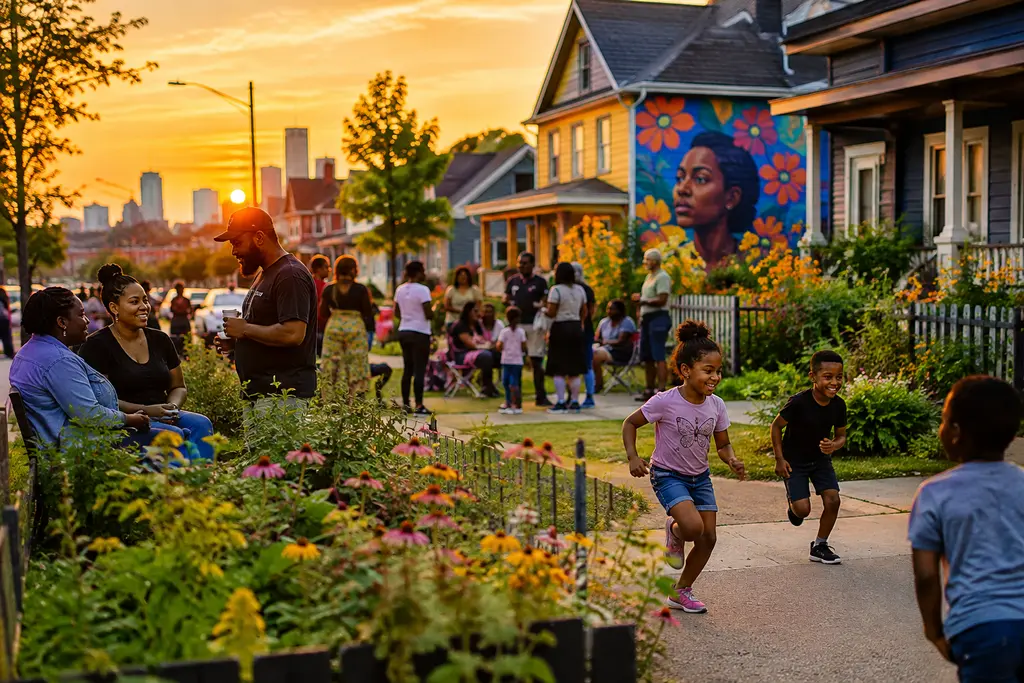
The Detroit Neighborhood Investment announced by Fifth Third Bank on October 6, 2026, committed $20 million over five years to northeast Detroit, with a focus on the Gratiot & Seven Mile area, known as G7, and Denby/Whittier. Axios reported that the bank framed the commitment as a response to historic disinvestment in those neighborhoods and tied the work to housing, small business, financial access, and local economic mobility Axios Detroit report.
For residents, block clubs, churches, schools, service providers, and small businesses, the main civic question is not only how much money was pledged. The practical question is how priorities will be set, how residents will be heard, and how public-facing results will be checked over the five-year period. The research available for this article points to a place-based model shaped around local needs rather than a single one-time grant.
What Changed In Northeast Detroit
The October 6 Commitment
Fifth Third’s announcement placed two northeast Detroit areas at the center of the plan: G7 and Denby/Whittier. The commitment was described as a five-year effort, which matters because housing repair, commercial corridor support, financial counseling, and small business capital rarely produce useful neighborhood results in a single funding cycle. A longer timeline gives residents and partner organizations more room to identify gaps, match services to demand, and check whether resources are reaching the households and businesses most affected by disinvestment.
The stated priorities in the research include expanding access to affordable housing, supporting small business growth, fostering sustainable communities, and improving financial inclusion and economic mobility. Those categories cover both visible neighborhood conditions, such as commercial areas and housing stability, and less visible needs, such as credit access, banking relationships, and technical help for local entrepreneurs.
How Detroit Neighborhood Investment Built On G7 Work
Fifth Third’s neighborhood program did not begin with the October 2026 announcement. In a filing with the U.S. Securities and Exchange Commission, the bank said the program debuted in 2019 with a $5 million investment in the G7 area under Detroit’s Strategic Neighborhood Fund, supporting work connected to parks, streetscapes, commercial corridors, housing, and affordable housing. The same filing said the program expanded in 2021 and had reached 10 cities, delivering more than $270 million in local investments and helping attract an added $200 million from public and private partners SEC filing.
That history gives the new commitment a local reference point. Residents in G7 have already seen an earlier version of the model. Denby/Whittier residents are now part of the expanded geography. The useful civic test will be whether lessons from the earlier G7 work shape clearer resident outreach, better access to small business support, and stronger reporting on what changes over time.
Resident Leadership In Detroit Neighborhood Investment
Why Local Priorities Matter
For Detroit Neighborhood Investment to work as a community outreach effort, residents need more than announcements after decisions are made. They need clear meeting points, plain-language updates, ways to identify missing services, and feedback loops that show how comments change program choices. The research identifies resident priorities and neighborhood leadership as central to the plan. That means the process should make room for renters, homeowners, business owners, youth-serving groups, older adults, and residents who may not attend formal meetings but still experience the effects of housing and commercial corridor decisions.
Resident involvement can also reduce mismatches between funding and need. A grant program may sound useful but fail if application steps are unclear. A loan product may not reach entrepreneurs who need bookkeeping help first. A housing effort may miss families if outreach does not include trusted neighborhood sites. Community outreach should start with those barriers, then connect residents to specific services that fit their situation.
How Partners Can Keep Access Practical
The research points to community partners helping set local priorities, engage residents, and connect people to resources. The strongest use of those partners would be practical and direct: intake sessions, referral help, business support clinics, housing resource navigation, and regular public updates. For readers tracking how resident input can shape spending decisions, Saint Joseph Detroit has related coverage on community design in Fifth Third’s plan.
Access should also include careful communication. Residents should know who is eligible for a program, what documents may be needed, whether support is a grant or a loan, and where to ask questions. Outreach that uses trusted sites can help prevent missed opportunities. Churches, neighborhood associations, small business groups, schools, and service providers can all help share verified details, but they need timely information from program leads.
Housing, Small Business, And Financial Access
Small Business Support
The small business portion of the plan is especially important for commercial corridors in G7 and Denby/Whittier. The research notes that businesses may be able to access capital and support through the Fifth Third Small Business Catalyst Fund, including grants, low-interest loans, and technical resources. For small businesses, technical help can be as important as money. Owners may need support with cash-flow planning, licensing, marketing, storefront improvements, payroll, or preparing documents before they can responsibly take on financing.
A useful small business support model should also recognize neighborhood scale. Some businesses may need a small grant to stabilize operations. Others may need a loan only after bookkeeping or business planning support. Newer entrepreneurs may need help deciding whether a storefront is realistic. The plan’s results should be measured not just by dollars offered, but by how many businesses can stay open, grow responsibly, hire, or serve nearby residents.
Housing And Stability Measures
Housing support is another core part of the commitment. The research identifies affordable housing and neighborhood stabilization as priorities. In practical terms, residents will need to know whether support is focused on homeownership, rental stability, repairs, development, counseling, or a mix of services. Each path affects a different group of people. Home repair can help existing owners stay in place. Affordable rental options can support families who are not ready or able to buy. Homeownership assistance can help residents build long-term stability if costs are realistic.
The risk in any neighborhood investment is that improvement can raise pressure on residents if affordability is not protected. The available research does not provide detailed program rules for housing assistance, so residents should watch for future public details on eligibility, timelines, partner roles, and reporting. Clear rules will help community groups explain the opportunity accurately and avoid spreading incomplete information.
Accountability For A Five-Year Plan

Measures Residents Can Track
A five-year Detroit Neighborhood Investment needs public measures that residents can understand. The research says accountability is expected to include tangible results such as homeownership rates, small business development, jobs created, and neighborhood stabilization. Those measures are useful because they move the discussion beyond the size of the pledge. They ask whether families are more stable, whether entrepreneurs are gaining ground, and whether the neighborhood is seeing durable benefits.
Residents and civic groups can track several questions over the next five years:
- Housing: How many residents receive housing support, and what type of support is provided?
- Business: How many local businesses receive grants, loans, or technical help?
- Jobs: Are jobs created or retained in ways that benefit neighborhood residents?
- Access: Are application steps clear, and are outreach events held in places residents use?
- Reporting: Are results shared in plain language at regular points during the five-year period?
These questions can help residents turn a large pledge into a shared civic checklist. They can also help partner organizations identify gaps early, before a program reaches the end of its funding window.
Public Agencies And Civic Coordination
Axios reported that Detroit Mayor Mary Sheffield said the investment aligned with her push for more investment beyond downtown areas. Axios also reported on October 6, 2026, that the city planned to launch added neighborhood investment efforts in the same area later in October. The research provided for this article does not include verified details on the outcome of that planned city launch, so this article does not treat it as completed.
That uncertainty points to a basic civic need: residents should be able to see how bank-led investments, city efforts, nonprofit services, and neighborhood plans fit together. If programs overlap without coordination, residents may face confusion. If programs are aligned, a household or business can move from outreach to intake to service more easily. Regional business and civic readers can discover additional economic development activities through the Richland Chamber network.
Northeast Detroit Investment Next Steps
The Detroit Neighborhood Investment now depends on implementation. The October 2026 announcement set the dollar amount, geography, and broad priorities. The next useful steps are more specific: public timelines, resident meeting formats, partner contact points, small business application details, housing program rules, and regular outcome reporting.
Community groups in G7 and Denby/Whittier can prepare by gathering questions from residents before meetings, identifying business owners who may need technical help, helping older adults and renters understand housing information, and directing people only to verified program contacts. Outreach teams should avoid making promises that program materials do not support. Clear referral pathways will protect residents from confusion and help partner organizations use time well.
The commitment also gives residents a chance to define success in local terms. A stronger corridor, a repaired home, a business that hires nearby workers, a family that gains fair banking access, or a block that sees steady reinvestment can all matter. The public value of the five-year effort will rest on whether those outcomes are documented and whether residents can see their priorities reflected in the work.