
Northern Michigan’s July 26, 2026 free backpack giveaway gives Detroit outreach groups a timely reminder: school-supply support works best when churches, nonprofits, block clubs, and family-service groups begin planning weeks before August pressure hits. The 14th annual School Rocks Backpack Giveaway, organized by Round Room LLC through participating TCC and Wireless Zone stores, is set to distribute backpacks nationwide, including at Verizon locations in Benzonia, Manistee, and Traverse City. The program is expected to reach more than 140,000 students and families across the United States this year and provide more than $3 million worth of backpacks, according to a July 20 report on the Northern Michigan backpack giveaway.
For Detroit families, the lesson is not that every outreach group needs a national retail partner. The stronger lesson is timing. A backpack drive held near the end of July gives families a chance to plan before school begins, rather than waiting until the first week of classes exposes what students still lack. For churches and community groups serving Detroit children, school-readiness outreach should begin with a calendar, a supply list, a volunteer plan, and a referral table that connects families to food, clothing, transportation, mental-health, and housing resources when deeper needs appear.
Why A July Backpack Giveaway Matters For Family Planning
Back-to-school pressure does not begin on the first day of school. It starts when families begin adding up backpacks, notebooks, uniforms, shoes, haircuts, lunch items, hygiene supplies, transportation costs, registration tasks, and activity fees. A free backpack can reduce one line item, but the larger value is that it gives families one more point of stability before the school year begins.
The Northern Michigan event is scheduled for 1 p.m. Sunday, July 26, at participating TCC and Wireless Zone locations, with one backpack available per child present while supplies last. Reported locations include 1505 Benzie Highway in Benzonia, 85 Cypress Street in Manistee, and 2770 Silver Lake Road, Suite 3 in Traverse City. Those details matter because a giveaway is only useful when families know the exact time, location, eligibility rule, and supply limit.
Detroit outreach groups can take the same practical approach. A church or neighborhood organization planning a school-supply event should not wait until donations are fully collected before communicating basic details. Families need to know whether children must be present, whether registration is required, whether supplies are first-come, first-served, whether backpacks are grade-specific, and whether other services will be available onsite.
That early communication connects with the family-support concerns Saint Joseph Detroit has raised in coverage of youth mental health and trauma support. School readiness is not only about pencils and folders. It is tied to stress, household stability, parent confidence, transportation, and whether students feel prepared rather than embarrassed when they walk into class.
How Detroit Outreach Groups Can Move From Donations To Coordination
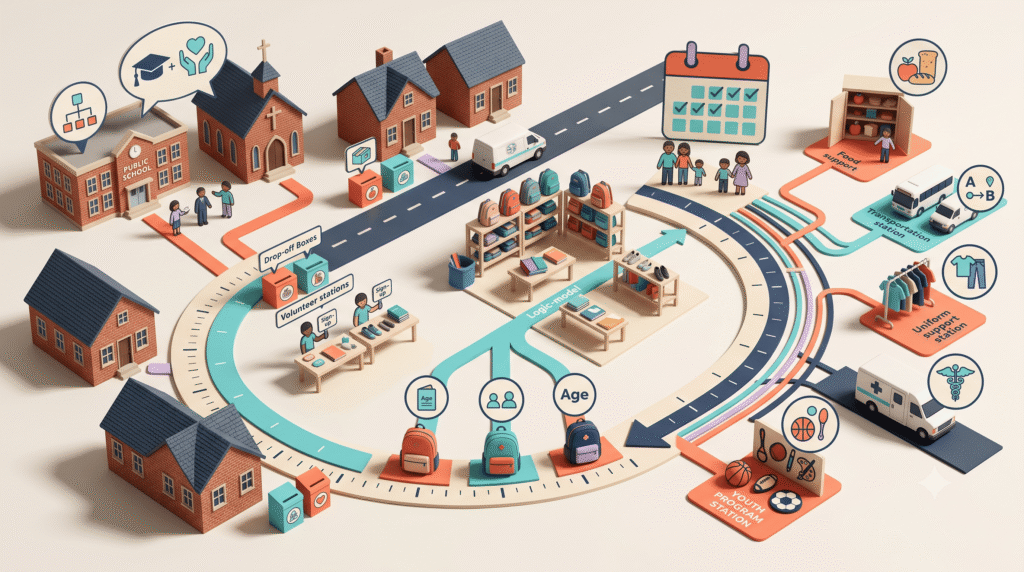
A school-supply drive can look simple from the outside: collect backpacks, fill them, distribute them. The real work is coordination. Organizers need to decide which grades they are serving, which supplies are most urgent, how families will be notified, how volunteers will be trained, how leftover items will be handled, and which partners should be present if families ask for more help.
The Round Room effort shows what scale looks like when a program is planned as a repeatable annual campaign. The Manistee report says the School Rocks Backpack Giveaway has provided more than 1.6 million backpacks since it began and that Round Room has donated more than $11 million through its community grant program, benefiting more than 2,000 local nonprofits. For Detroit groups, those numbers show the value of building a predictable yearly rhythm rather than starting from scratch each summer.
A local version can be smaller and still effective. A parish group might adopt one school, one grade band, or one neighborhood corridor. A block club might collect backpacks and hygiene kits. A nonprofit might pair school supplies with resource navigation. A workplace team might sponsor uniforms or shoes instead of buying duplicate notebooks. The key is to match the drive to a real family need, not just to what donors find easiest to purchase.
Detroit organizers should also coordinate with schools when possible. Teachers and family-engagement staff often know which supplies are required, which families are likely to need extra help, and which items are overdonated. A better drive may mean fewer random supplies and more targeted items: sturdy backpacks, headphones, folders, binders, pencils, crayons, calculators, reusable water bottles, hygiene kits, socks, or uniform pieces.
What Other July Back-To-School Events Show About Bundled Support
Recent back-to-school events in other U.S. communities show why supply drives can be stronger when they include family services. In Laredo, Texas, the Sames Auto Arena hosted back-to-school support events in mid-July, including a giveaway where the first 2,000 students could receive school supplies and polo shirts packed in clear backpacks. The same event also included free haircuts, sports physicals, glucose testing, immunizations, and vision exams for children who were present, according to local coverage of back-to-school supply events.
That model matters for Detroit because families rarely need only one item. A student may receive a backpack but still need a haircut, immunization record, sports physical, uniform shirt, lunch support, or help understanding school enrollment. A parent may come for supplies and quietly need food assistance, utility help, or a referral for counseling. A well-planned event can create a respectful entry point for several kinds of support without turning the day into a confusing crowd.
Detroit outreach groups should consider whether a school-supply event can include a small resource table rather than only a handout line. That table could share information about food pantries, youth programs, school enrollment, after-school care, transportation options, utility assistance, mental-health support, and city or district resources. The goal is not to overwhelm families. It is to make sure the event can answer the next question after the backpack is received.
A simple structure can help local organizers plan:
| Planning Area | Why It Matters | Detroit Outreach Question |
|---|---|---|
| Timing | Families need help before the school year starts | Can the event happen in late July or early August? |
| Supply Target | Donations should match real student needs | Which grades, schools, or neighborhoods are being served? |
| Volunteer Roles | Crowds move better when volunteers know assignments | Who handles check-in, supply tables, family questions, and cleanup? |
| Family Resources | School costs often connect to food, health, and housing needs | Which partner can answer support-service questions onsite? |
| Follow-Up | Some needs will surface after the event | How will families receive contact information or next steps? |
Why Cost Pressure Makes Earlier Planning More Useful
The timing of school-supply help matters because family budgets are stretched before the school year begins. The Northern Michigan report cited a $922 average expected back-to-school household spend from a PwC report referenced in the giveaway announcement. It also noted that nearly half of parents expected to spend more than the previous year. For Detroit families already balancing rent, food, utilities, transportation, and childcare, even a smaller-than-average school list can create pressure.
That is why outreach groups should avoid treating supply drives as a one-day charity event. A backpack drive can become part of a broader summer support calendar. In June, organizers can ask schools and families what items are most needed. In early July, they can recruit donors and volunteers. In late July, they can distribute supplies. In August, they can follow up with families who still need uniforms, shoes, transportation help, or after-school program information.
Retailers and national campaigns may move early because they understand the back-to-school season begins long before September. Community organizations should do the same. If supplies are distributed after school starts, families may already have gone into debt, skipped other essentials, or sent children to class without what they need. Earlier planning helps prevent that.
Detroit groups can also reduce waste by coordinating with each other. If three groups in the same area all collect backpacks but no one collects headphones or uniform shirts, families may receive duplicate items while still lacking essentials. A shared planning calendar can help churches, nonprofits, schools, and neighborhood groups divide the work more effectively.
How School Supplies Connect To Confidence And Attendance
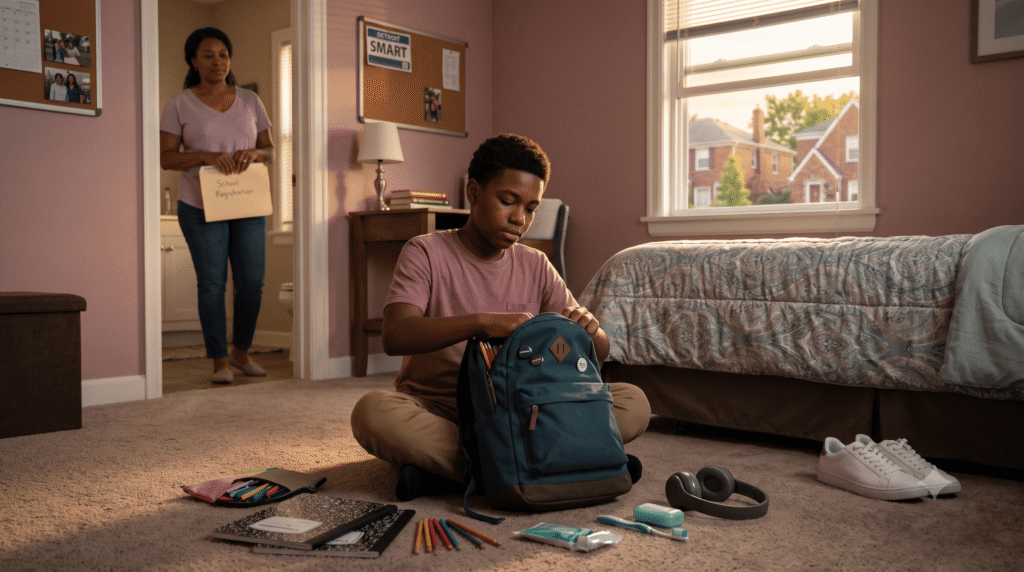
A backpack is a practical item, but it also carries social meaning. Students notice when they are missing basic supplies. Younger children may feel anxious when they do not have the same materials as classmates. Older students may hide needs rather than ask for help. Parents may feel stress when they cannot meet a supply list on time.
That is why school-supply support should be treated as part of student well-being. A child who starts the year with a backpack, notebooks, pencils, and basic hygiene items may feel more prepared. A parent who receives supplies early may have more time to handle registration, transportation, school meals, uniforms, or appointments. A teacher may spend less personal money filling gaps in the first week.
For Detroit outreach groups, the lesson is to plan with dignity. Families should not have to prove hardship publicly. Students should not be singled out. Distribution should be organized, calm, and respectful. A child should be able to choose a backpack when possible. Parents should receive clear information without being rushed through a line.
This is where trusted local groups can make the biggest difference. A school-supply table inside a church hall, community center, or neighborhood event can feel less transactional when volunteers know the families and understand the community. The supplies matter, but the tone matters too.
What Detroit Volunteers Should Prepare Before A Giveaway
Volunteers are often the difference between an event that feels supportive and one that feels chaotic. Before a school-supply giveaway, Detroit organizers should assign roles clearly. One group can manage family check-in. Another can restock tables. Another can help children choose age-appropriate items. Another can answer parent questions. Another can connect families with partner resources.
Preparation should include privacy and sensitivity. Volunteers should know not to ask families personal questions in public lines. They should avoid making assumptions about why a family needs help. They should know where to send questions about housing, food, mental health, or school enrollment instead of guessing.
Supply sorting should happen before the event. Backpacks can be grouped by grade range. Hygiene kits can be separated from school supplies. Shoes, uniforms, and clothing should be organized by size if included. Resource flyers should be current and easy to read. If families must bring children to receive supplies, that rule should be stated early.
Detroit groups can also plan for leftover supplies. Remaining backpacks could be delivered to a school counselor, family-engagement office, youth program, shelter partner, or pantry that serves families. Leftovers should not sit unused in storage while students still need help.
Why Earlier School-Supply Planning Helps The Whole Support Network

The Northern Michigan giveaway is a useful signal for Detroit because it shows that large back-to-school support efforts are already active in July. When national and regional programs move early, local outreach groups should treat that as a planning cue. Late July is not too soon for backpacks, supply lists, volunteer assignments, and family-resource coordination.
For Saint Joseph Detroit’s audience, the central issue is service readiness. A backpack giveaway can help one student for one school year. A coordinated outreach plan can help a family connect with school support, food resources, health needs, youth programming, and trusted local volunteers. That wider approach gives Detroit groups a stronger role than simply handing out supplies.
The best back-to-school outreach is specific. It names the date, location, supply rules, partner organizations, volunteer roles, and follow-up plan. It starts early enough for families to use the help before pressure peaks. It respects dignity. It connects school readiness with household stability.
Northern Michigan’s July 26 giveaway shows what early timing can do. Detroit outreach groups can take that lesson and adapt it to local neighborhoods, schools, churches, and community centers before August arrives.