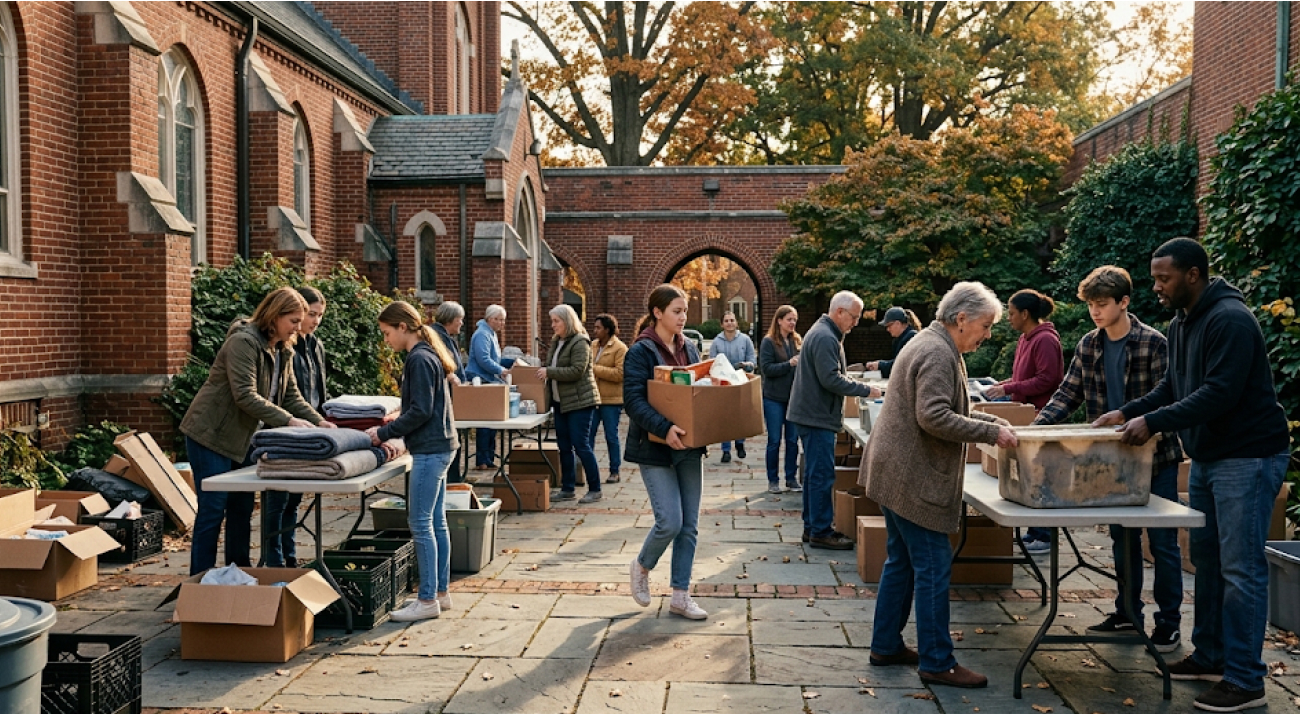
From preparing meals for people experiencing homelessness to collecting essential supplies and building beds for children, Catholics across southeast Michigan are demonstrating how faith can become practical service to their neighbors.
On October 17, 2026, Catholic parishes across southeast Michigan marked the 10th annual Mercy in Action Day of Service, turning a shared commitment to Christian charity into hands-on work for local communities. Organized by Catholic Charities of Southeast Michigan, the initiative brought parishes, schools, ministries, and volunteers together across the six counties of the Archdiocese of Detroit.
The projects were practical and varied: parishioners prepared sandwiches for emergency shelter guests, sorted food and toiletries for families in need, made sleeping mats for people without stable housing, and cleaned church grounds. These were not simply acts of volunteerism. They were expressions of a Catholic understanding of mercy that connects prayer and worship with concrete responsibility for others.
For Detroit-area Catholic communities, Mercy in Action Day offers a compelling example of how faith can strengthen neighborhoods, support people facing hardship, and create opportunities for people of different ages to serve together.
Ten Years of Mercy in Action Across Southeast Michigan
The 2026 event marked a decade of regional service organized around the Christian call to care for people in need. Catholic Charities of Southeast Michigan invited parishes, schools, ministries, fraternal organizations, and community groups to participate in projects across Wayne, Oakland, Macomb, Monroe, St. Clair, and Lapeer counties.
The initiative draws inspiration from the Corporal Works of Mercy, which include feeding the hungry, giving drink to the thirsty, clothing those in need, sheltering the homeless, visiting the sick and imprisoned, and burying the dead. These traditions give volunteers a common spiritual framework while allowing individual parishes to respond to the specific needs around them.
Deacon Fred Billotto, mission integration and evangelical charity manager at Catholic Charities of Southeast Michigan, explained the connection between service and evangelization in an interview with Detroit Catholic published October 19, 2026.
Billotto pointed to Matthew 25, in which Jesus identifies care for people who are hungry, thirsty, without clothing, or otherwise vulnerable as service rendered to him. He described Mercy in Action as an opportunity to meet community needs while making Christian faith visible through action.
That approach makes the event adaptable. One parish may focus on food insecurity, another on winter supplies, and another on maintaining the grounds of a church or helping a neighbor who cannot manage outdoor work alone. Each project offers a different response to the same underlying call to love one’s neighbor.
St. Vincent Ferrer Parish Prepares Hundreds of Sandwiches
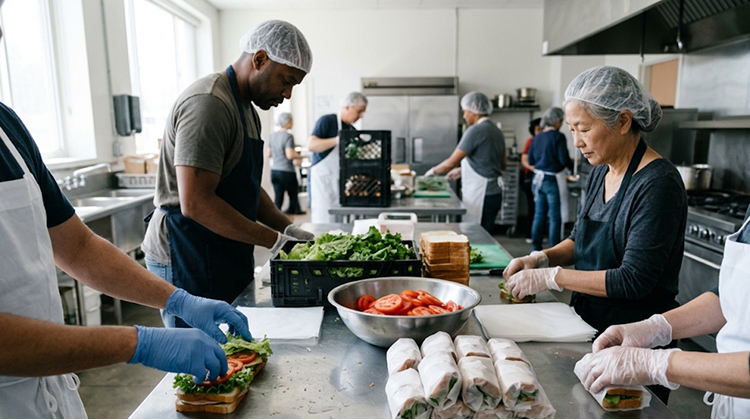
At St. Vincent Ferrer Parish in Madison Heights, volunteers spent October 17 preparing food for people experiencing housing insecurity.
The parish organized 25 volunteers who prepared more than 300 sandwiches for Macomb’s Answer to Temporary Shelter, known as MATTS, an emergency shelter program sponsored by The Salvation Army. The project was part of the parish’s broader monthlong focus on Christian service.
Angela Maynard, parish nurse and member of St. Vincent Ferrer’s Evangelical Outreach Committee, said the parish wanted to support people experiencing homelessness, particularly those in its own community. The effort also included collections of pet food and supplies, Halloween candy, toiletries, socks, and underwear for nearby shelters.
The project demonstrates how a relatively small group can make a tangible contribution. Preparing 300 sandwiches requires coordination, supplies, volunteers, and a partner able to distribute the food. The work is straightforward, but it responds to an immediate human need.
It also illustrates an important principle of parish service: effective outreach often depends on existing relationships with local organizations. By partnering with a shelter, volunteers can direct their time and donations toward people who need them rather than attempting to build a separate distribution system.
St. Peter Parish Connects Donations With Local Shelter Needs
In Mount Clemens, St. Peter Parish organized a food and toiletries drive, bringing community donations to the parish for sorting and distribution.
Seventy-five volunteers helped organize food for the Society of St. Vincent de Paul and other local needs. The parish also operates a warming center from January through April, making the collection particularly relevant as colder weather approaches.
Kathy Rodgers, St. Peter’s St. Vincent de Paul coordinator, praised the parish community’s willingness to share food, time, and other resources. Anna Dove, the parish’s Christian service coordinator, said 50 bags of toiletries were designated for MCREST, a nearby shelter, with the remaining supplies intended for the parish’s warming center.
This local approach connects charitable giving with practical planning. Toiletries and food are most useful when they reach organizations serving people who need them. Sorting donations by type and destination helps ensure that contributions are distributed effectively.
The warming center also shows how a one-day service initiative can complement ongoing parish ministries. Mercy in Action creates a concentrated opportunity to gather resources, but the need for shelter and essential supplies continues long after the event ends.
St. Michael Parish Turns Recycled Materials Into Warmth
At St. Michael Catholic Community in Sterling Heights, volunteers continued a project that has become a regular part of parish outreach: making “mercy mats” and pillows for people experiencing homelessness.
The process involves turning discarded plastic grocery bags into plastic yarn, often called plarn, which volunteers weave into mats and other items. According to Detroit Catholic, the parish has donated at least 80 blankets and 20 pillows over the years to St. Aloysius Parish in Detroit, The Motor City Mitten Mission, and other charitable organizations in the greater Detroit area.
Michelle Hayes, St. Michael’s Christian service coordinator, explained that the parish makes these items not only for Mercy in Action Day but during three additional sessions throughout the year.
The project combines material reuse with direct service. Volunteers transform an everyday waste product into something useful while creating an opportunity for parishioners to work together. Its continuing schedule also makes participation possible beyond the annual event.
St. Michael’s October 17 activities included a cleanup of parish grounds, with volunteers tending shrubs, pulling weeds, and gathering leaves. The parish’s Knights of Columbus council also built new benches with plaques honoring deceased members. Tom Nevedal, a former Grand Knight of Council 13799, described the benches as a way to remember members who had died.
Together, these activities connect care for neighbors with stewardship of shared spaces and remembrance of the parish community’s own members.
More Than 150 Volunteers Build 57 Beds for Children
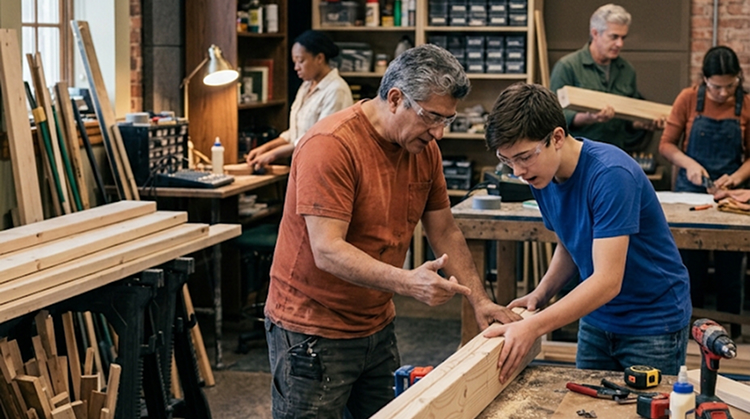
The spirit of Mercy in Action extended beyond October 17. On October 10, 2026, Catholic Charities of Southeast Michigan partnered with Sleep in Heavenly Peace for a bed-building project supporting children who lack a proper place to sleep.
More than 150 volunteers from organizations including Better Way Detroit, Firm Foundations of Hope, the Knights of Columbus, St. Joseph’s Helpers, and area schools and parishes helped build 57 beds for children across Detroit. The beds were intended for children sleeping on floors, couches, or air mattresses.
The project demonstrates the value of partnerships across organizations. A bed build requires tools, materials, coordination, volunteers, and a plan for delivering completed beds to families. Bringing those resources together allows a community to respond to a need that an individual parish might find difficult to address alone.
It also highlights the broad meaning of Catholic charitable work. Service is not limited to distributing food or making cash donations. It can involve building furniture, transporting supplies, organizing volunteers, and helping children have a more stable home environment.
For participating volunteers, the result is visible and concrete: 57 beds prepared for delivery. For the children receiving them, the project is intended to provide a basic item that supports everyday comfort and dignity.
Why Catholic Community Service Matters Beyond One Day
Mercy in Action Day is designed to focus attention on service, but its broader significance lies in the relationships and habits it can help build.
Parish projects often bring together people who might not otherwise work side by side: students, families, older adults, parish staff, members of fraternal organizations, and volunteers from partner charities. Shared work gives participants a practical way to build connections while addressing needs in their communities.
The projects also illustrate how local churches can identify needs and respond through existing networks. A parish may already know a nearby shelter, food pantry, warming center, or family in need of help. Mercy in Action provides a common occasion to mobilize volunteers and resources around those relationships.
For Catholic communities, this is an important connection between faith and daily life. Prayer and the sacraments form the spiritual center of parish life, while charitable service gives visible expression to the belief that every person deserves dignity and care.
That does not mean a single day can resolve homelessness, hunger, or poverty. These challenges require sustained work by charities, public agencies, faith communities, and neighbors. But focused service days can help gather resources, raise awareness, and encourage volunteers to remain involved throughout the year.
The projects in Madison Heights, Mount Clemens, and Sterling Heights show how a shared mission can produce different forms of local support while retaining a common purpose.
How Detroit-Area Catholics Can Get Involved
People who want to participate in future Mercy in Action projects can start by contacting their parish’s Christian service coordinator or parish office. Opportunities may include preparing meals, collecting toiletries, sorting food, making sleeping mats, helping with seasonal cleanup, or assisting established local charities.
Catholic Charities of Southeast Michigan also provides information about volunteering, services, and community initiatives on its official website. Its Mercy in Action Day page explains the initiative’s purpose and identifies Deacon Fred Billotto as a contact for questions about the program.
Because the 2026 service day took place on October 17, readers should check the official site or their local parish for future dates and current opportunities rather than assuming that registration for this year’s event remains open.
People who cannot volunteer in person may still be able to contribute food, hygiene products, winter supplies, or financial support to organizations serving their neighborhoods. The most useful contribution depends on the organization’s current needs, so contacting it before donating can help ensure that resources are put to good use.
Putting Faith Into Practice in Detroit
The 10th annual Mercy in Action Day showed how Catholic faith can become a practical response to local needs. Twenty-five volunteers preparing more than 300 sandwiches, 75 people sorting donated supplies, parishioners making mats and pillows, and more than 150 volunteers building 57 beds are different expressions of the same commitment: to recognize the needs of neighbors and respond with care.
For Saint Joseph Detroit and the wider Catholic community, the lesson is not that service must be large to matter. It is that consistent, organized acts of mercy can strengthen the connection between faith and community life.
When parishes work with local shelters, charities, schools, and volunteers, they help create a network of support that reaches beyond church walls. Mercy in Action Day makes that network visible—and invites Catholics to keep serving long after the annual event has ended.