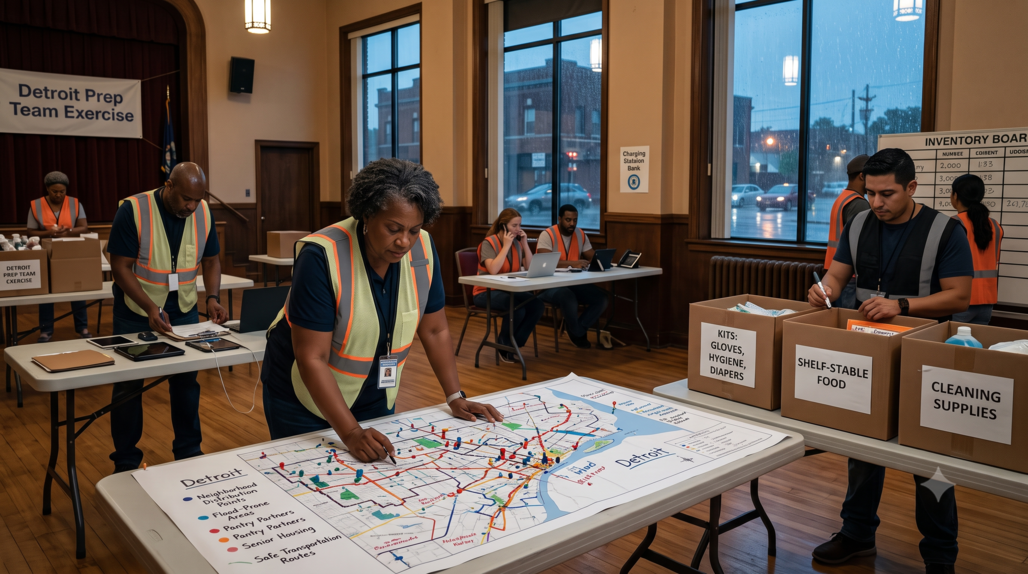
The South Texas Food Bank flood response gives Detroit churches, food pantries, neighborhood groups, and community outreach teams a clear warning: emergency aid depends on volunteer systems built before roads close, families lose food, and supply requests start moving faster than local groups can organize. In July 2026, the food bank said flooding had affected 75% of the communities in its service area, including Val Verde, Kinney, Dimmit, Maverick, Webb, and Zapata counties, with relief needs centered on food, bottled water, cleaning supplies, safe distribution, donations, and volunteers. The food bank’s official South Texas flood response page frames the situation as a regional emergency across a wide service territory.
For Detroit aid groups, the local lesson is not limited to Texas flooding. Severe weather, basement flooding, sewer backups, extended power outages, heat waves, food-benefit disruptions, and neighborhood-level emergencies can all create sudden demand for food boxes, water, cleaning kits, wellness checks, phone calls, transportation, and verified public information. A disaster-ready volunteer system gives local groups a safer way to respond without turning good intentions into crowded donation rooms, outdated flyers, or unsafe travel.
Why A Six-County Flood Response Matters For Detroit Aid Planning
The South Texas Food Bank serves a large region that includes Webb, Zapata, Jim Hogg, Starr, Maverick, Dimmit, Kinney, and Val Verde counties through partner agencies and direct-service programs. When flooding reached six of those counties, the problem was not just supply volume. It became a coordination test across rural roads, damaged communities, public agencies, local partners, and families needing immediate help. Reporting from late July said the food bank’s Disaster Relief Team had reached 6,972 neighbors in three hard-hit counties, with Val Verde County totals still being finalized after access barriers required support to move through trusted local partners. The report described food, clean water, and essential supplies moving through affected communities as the response continued.
That kind of emergency reveals a planning truth Detroit groups should take seriously. Food relief is not only about collecting cans. Disaster response needs trained volunteers, staging areas, safe routes, donation instructions, supply tracking, public-agency awareness, and trusted local contact points. A church basement, pantry storage room, parish hall, or community center can help during an emergency only if organizers already know who has keys, who can sort supplies, who can answer phones, who can check on older adults, and who should wait for official direction.
Saint Joseph Detroit’s recent food-access coverage has already raised the need for stronger planning around local distribution, volunteer coordination, and family support. That same issue appears in Detroit food access planning, where fresh-food work depends on partners, storage, volunteers, education, and reliable delivery. Disaster relief is faster and higher pressure, yet it relies on the same foundation: people, places, supplies, and communication.
How Flood Relief Turns Volunteers Into A Logistics Network
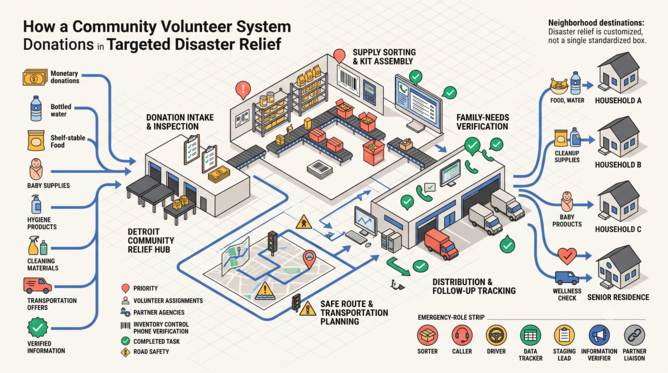
The South Texas Food Bank’s disaster updates asked supporters to help through donations, volunteer work, and sharing accurate information about flood relief, food distributions, volunteer opportunities, and donation drives. The official page lists non-perishable food, bottled water, cleaning supplies, baby supplies, personal hygiene items, and monetary gifts as practical support paths, with updates tied to community needs.
That mix matters for Detroit. After a flood, families may lose refrigerated food, need bottled water, face cleanup costs, or need gloves, trash bags, disinfecting supplies, diapers, wipes, formula, and hygiene items. A pantry that prepares only for shelf-stable food may miss urgent cleanup needs. A neighborhood group that collects cleaning supplies may miss families who need food after power loss. A church that wants to deliver supplies may need to wait until roads, basements, and buildings are safe.
A useful disaster volunteer system separates roles before the emergency. Some volunteers can sort donations. Others can pack food boxes. Others can call families, confirm hours, share official updates, or help with transportation once conditions are safe. Some volunteers may have medical, CERT, logistics, language, or data-entry skills. Others may be best suited for pantry work, check-in tables, cleanup kit assembly, or follow-up calls.
| Volunteer System Need | Emergency Role | Detroit Planning Question |
|---|---|---|
| Role Assignments | Keeps volunteers from crowding the same task | Who sorts, calls, drives, tracks, stages, and cleans? |
| Safe Deployment Rules | Prevents travel into flooded or unsafe areas | Who decides when volunteers can leave the site? |
| Supply Staging | Turns donations into usable food, water, and cleanup kits | Where will items be sorted before distribution? |
| Partner Contacts | Connects churches, pantries, city agencies, and local nonprofits | Which trusted sites can receive or move supplies? |
| Follow-Up Tracking | Records needs that remain after first contact | Who checks whether families still need help two days later? |
Detroit groups can build this table into a simple emergency worksheet. The goal is not bureaucracy. The goal is to prevent confusion when residents are already under stress.
Why Detroit Groups Need Training Before The Emergency
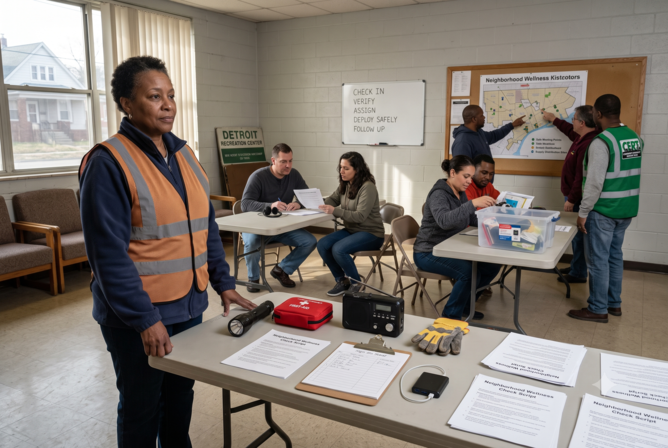
Detroit has public preparedness resources that community groups can use before disaster demand grows. The City of Detroit’s Emergency Management and Homeland Security training page points residents toward disaster preparedness resources for professional and volunteer emergency management communities, including training designed to improve public awareness and preparation. The city’s emergency volunteer training page gives outreach groups a stronger starting point than informal guessing.
The city also lists Community Emergency Response Team, or CERT, volunteering as a way for residents to learn disaster preparedness. CERT is useful because it creates a bridge between official emergency management and residents who want to help their neighborhoods more safely. Detroit groups do not need every volunteer to complete formal training, but each group should know which volunteers are trained, which are able to handle logistics, and which should be assigned lower-risk support roles.
Michigan’s disaster volunteer needs are not theoretical. In April 2026, the American Red Cross in Michigan said it had an urgent need for volunteers to support disaster relief operations across more than 50 communities affected by flooding and storms, including work connected to damage assessment and relief-supply distribution. The Red Cross Michigan disaster volunteers notice shows how quickly a statewide storm response can require trained people, not just donated items.
Detroit churches and neighborhood organizations can use that lesson by creating tiers of volunteers. A first tier may include people with CERT, Red Cross, medical, logistics, or emergency-management experience. A second tier may include food pantry, supply sorting, transportation, and phone-bank volunteers. A third tier may include communications, prayer-line, resident check-in, childcare-area, and follow-up helpers. During a crisis, coordinators can activate the correct tier instead of asking every willing person to show up at once.
How Food, Water, Cleaning Supplies, And Information Work Together
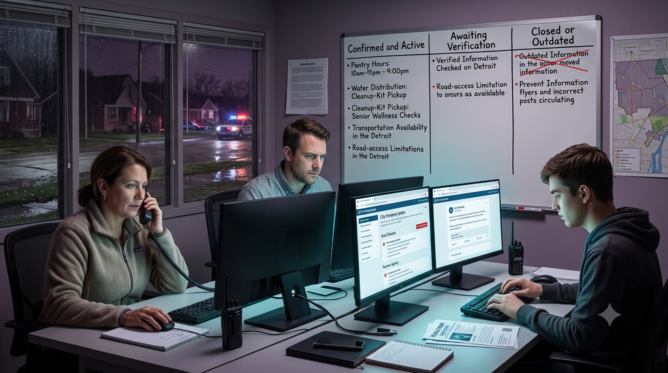
Flood relief usually does not move in one straight line. A family may need bottled water on day one, food on day two, cleaning supplies after the water recedes, help documenting damage, and referrals for housing, insurance, utility, or public-assistance questions later. The South Texas Food Bank’s official disaster page tells residents to follow local emergency management officials, local news, and trusted community sources for safety, road, and resource updates.
Detroit aid groups should make verified information part of relief planning. A volunteer who shares the wrong pantry hours can send a family across town for nothing. A donation flyer that stays online after a site closes can overwhelm the wrong location. A rumor about supplies can create lines at a place with no capacity. In an emergency, information control is a service.
Each outreach group should assign one person to verify details before public posts go out. That person can check city updates, pantry hours, partner requests, drop-off rules, and volunteer assignments. No group should share road, safety, shelter, or emergency claims from rumor channels when official sources are available.
Detroit’s own experience with flooding and sewer backups makes that discipline valuable. The Detroit Area Disaster Recovery Group describes itself as a volunteer-based, community-led organization formed around flooding and sewer backups, with work tied to groundwater flooding, sewer backup, toxic mold, and frequent power outages. Its Detroit disaster recovery focus shows why local groups need disaster systems before damage affects families at the block or basement level.
Why Regional Food Networks Need Local Partners
Large food banks can move huge volumes of supplies, but local partners often decide whether families receive help quickly. During the South Texas response, access challenges meant some deliveries had to move through trusted local partners rather than a direct route from the food bank to every affected household. That same pattern can apply in Detroit after flooding, outages, or food-benefit interruptions.
Forgotten Harvest’s food-finder page lists more than 200 agencies across Metro Detroit offering emergency food assistance through mobile pantries, brick-and-mortar pantries, shelters, and soup kitchens. The organization asks residents to call ahead to confirm hours and requirements, which is especially relevant during emergencies when service times can change. The Metro Detroit food assistance network shows how many local doors may be involved when families need urgent help.
That network is an asset, but only if community groups know how to use it responsibly. A church should know which nearby pantry is open on which day. A neighborhood group should know which food bank partners require appointments, ID, residency details, or pantry cards. A volunteer team should know whether a site accepts walk-ins or only scheduled clients. A social-media post should direct residents to confirmed information, not stale assumptions.
For Detroit aid groups, disaster planning should include a partner map. The map does not need to be public. It can be a shared worksheet listing pantries, churches, community centers, city resources, senior sites, youth programs, transportation helpers, supply-storage rooms, and trained volunteer leads. When a crisis arrives, that list can save hours.
What A Disaster-Ready Detroit Volunteer Calendar Could Include
A disaster-ready system should be built across the year. Winter may focus on warming resources, utility help, and senior check-ins. Spring and summer may focus on flooding, heat relief, food access, and cleaning-supply readiness. Fall can be used to update contact lists, train new volunteers, and review what worked during the summer.
Detroit groups can create a simple annual rhythm:
- January To March: Update emergency contacts, identify seniors and families needing check-ins, review warming and utility resources.
- April To June: Train volunteers, inspect storage areas, prepare flood and cleanup kit plans, confirm pantry partners.
- July To September: Monitor heat and storm updates, review transportation options, keep bottled water and hygiene referrals current.
- October To December: Review lessons, restock supplies, recruit volunteers, update communication templates.
That kind of calendar helps small organizations stay ready without waiting for a public emergency. It also helps donors understand what is useful before a disaster. Instead of asking for random items after a storm, groups can ask for specific supplies by season.
Why Money Can Be More Useful Than Random Supplies
One lesson from regional flood relief is that cash donations can be more flexible than unplanned supply drives. The South Texas Food Bank’s disaster page directs supporters to make monetary donations for emergency relief and lists several needed categories, including food, water, cleaning supplies, baby supplies, and hygiene items.
Detroit groups should explain this clearly to supporters. Donated goods can help when they match real needs and can be sorted safely. Random donations can create extra labor, storage pressure, and waste. Money can allow an organization to buy what families need most that week, such as bottled water, gloves, bleach, diapers, shelf-stable food, gas cards, or cleanup supplies.
A good emergency donation message should answer four questions: what is needed, where it should go, when it is accepted, and whether cash is preferred. It should also say what is not needed. That prevents a pantry or church hall from being filled with unusable items.
What Detroit Aid Groups Should Build Before The Next Emergency
The South Texas Food Bank’s six-county flood relief push shows that disaster response is a system, not a spontaneous act. Food, water, supplies, money, volunteers, local partners, official information, and safe transportation all need to work together. When they do, families can receive help faster. When they do not, volunteers can become overwhelmed and residents can receive mixed messages.
Detroit aid groups can start small. They can list volunteer roles, identify trained helpers, confirm local pantry partners, prepare supply-staging space, assign one information verifier, create a phone-check team, and save official city emergency links. They can ask which families may need home check-ins, which volunteers have vehicles, and which sites can safely host distribution if a storm or outage disrupts normal routines.
The goal is not to replace emergency management or large food banks. The goal is to make local groups more useful inside the wider response. Churches, block clubs, food pantries, and neighborhood nonprofits have trust that larger systems may not always have. That trust becomes stronger when it is paired with preparation.
South Texas’ flood response is a reminder that emergencies move quickly across counties, roads, homes, and supply networks. Detroit outreach groups should use that lesson now, before the next heavy rain, outage, heat wave, or food-disruption alert turns planning into triage.