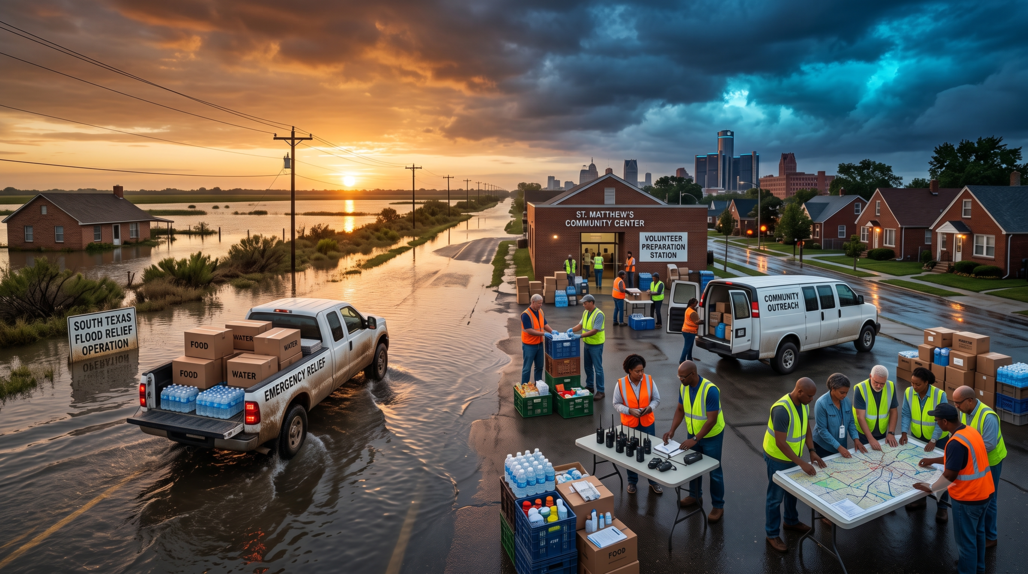
The South Texas Food Bank’s summer flood response shows why Detroit churches, food pantries, neighborhood groups, and local aid programs need volunteer systems ready before the next emergency. On July 19, 2026, the food bank said flooding had affected six of the eight counties it serves — Val Verde, Maverick, Kinney, Dimmit, Webb, and Zapata — marking the first time flood impacts had reached more than half of its service area at once. The organization began sending emergency food boxes, water, and cleaning supplies to affected communities while road closures and hazardous travel made some rural deliveries harder to complete.
For Detroit outreach groups, the lesson is not limited to Texas. Flooding, sewer backups, power outages, heat waves, and food disruptions can create sudden demand for meals, cleaning supplies, transportation help, wellness checks, and accurate local information. A disaster-ready volunteer system gives local groups a way to move from concern to organized action without overwhelming public agencies or putting volunteers in unsafe conditions.
Why South Texas’ Six-County Flood Response Matters For Detroit
The South Texas Food Bank response became a regional coordination challenge. The food bank said it was working with local and state emergency management officials, law enforcement, Feeding America, Feeding Texas, partner food banks, and community organizations to assess needs and move resources safely. CEO Alma Boubel said the scale of the flooding was unlike anything the organization had experienced across its service area and stressed that staff, volunteers, partner agencies, and residents had to remain safe as relief expanded.
That safety-first message matters for Detroit. Local aid groups often want to respond quickly when a storm damages homes, a power outage affects seniors, or a flood leaves families with spoiled food and cleanup needs. Speed helps, but uncoordinated help can create problems. Volunteers may drive into unsafe streets, duplicate another group’s work, deliver the wrong supplies, or create crowds at locations that are not prepared.
A strong volunteer system begins before the emergency. It identifies who can sort food, who can deliver supplies, who can answer phones, who can check on older adults, who can track requests, and who should wait for official instructions. That kind of structure allows churches and neighborhood organizations to support families while still respecting the role of emergency management, public safety, and established food networks.
Saint Joseph Detroit’s recent coverage of Detroit food access planning raised a similar point from a non-disaster angle: food support depends on distribution systems, volunteers, storage, education, and trusted partners. Disaster relief adds urgency, but it does not change the basic truth. Supplies help only when they can reach families safely and consistently.
How Nearly 7,000 Neighbors Received Aid Across The Hardest-Hit Counties
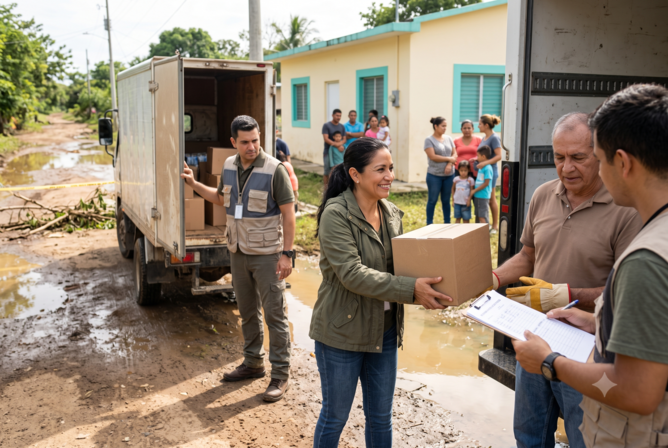
By late July, the South Texas Food Bank said its Disaster Relief Team had traveled through Maverick, Kinney, and Dimmit counties, delivering food, clean water, and essential supplies directly to families. The organization reported serving 6,972 neighbors across three of the hardest-hit counties, with Val Verde County totals still being finalized after access challenges required truckloads of food and supplies to be routed through trusted local partners.
Those details show why local partners are not optional during a disaster. When roads are closed or conditions change, a regional food bank may need county officials, local churches, first responders, and community-based organizations to identify safe delivery points. In some places, the best route is not direct distribution from a central warehouse. It is movement through trusted local partners who know the roads, families, and facilities.
Detroit has its own version of that challenge. Forgotten Harvest’s food-finder page lists more than 200 agencies distributing emergency food assistance across Metro Detroit, including mobile pantries, brick-and-mortar sites, shelters, and soup kitchens. The organization tells residents to call ahead to confirm hours and requirements, since details can change. That warning becomes even more important during a disaster, when sites may lose power, change hours, run out of supplies, or need volunteers for different tasks.
Detroit aid groups can learn from the South Texas approach by mapping their own trusted partners before a crisis. Which church has a large parking lot? Which pantry has refrigeration? Which community center can host a supply table? Which volunteers have trucks? Which residents may need home delivery rather than pickup? Those answers should be written down before heavy rain, flooding, or power loss creates an urgent demand.
What A Disaster-Ready Volunteer System Needs
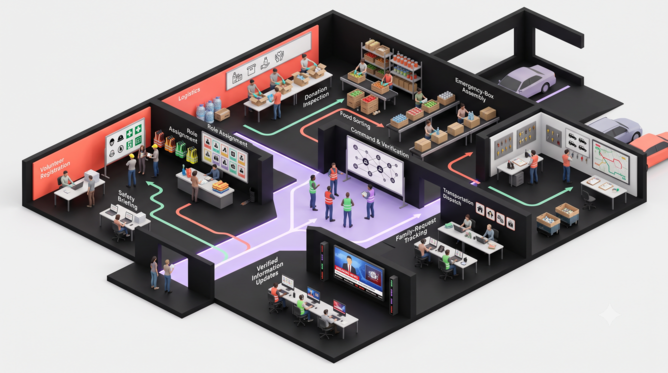
A disaster-ready volunteer system is more than a list of people willing to help. It is a practical workflow that assigns people to safe, useful roles. South Texas Food Bank told supporters that volunteers would be needed to inspect donations, sort food, assemble disaster relief boxes, and prepare shipments for affected communities. It also said financial contributions could help purchase food, bottled water, cleaning supplies, hygiene products, and cover fuel and transportation costs tied to rural delivery.
Detroit groups can use the same role-based thinking. A person who wants to help may not be ready to enter an affected area. That person may still be useful sorting donations, making calls, confirming pantry hours, assembling hygiene kits, tracking requests, or sharing official updates. A volunteer with a truck may help transport supplies once routes are safe. A volunteer with administrative skills may help document requests, contact partner agencies, or keep a sign-in sheet accurate.
| Volunteer System Need | What It Does During A Disaster | Detroit Planning Question |
|---|---|---|
| Role Assignments | Prevents every volunteer from showing up for the same task | Who sorts, calls, drives, tracks, cleans, and shares updates? |
| Safety Rules | Keeps helpers away from flooded roads or unsafe buildings | Who decides when and where volunteers can deploy? |
| Supply Sorting | Turns donations into usable emergency boxes | Where will food, water, cleaning supplies, and hygiene items be staged? |
| Partner Map | Connects groups with trusted local distribution points | Which churches, pantries, and centers can receive or move supplies? |
| Follow-Up Tracking | Helps families after the first delivery | Who records needs that remain after the emergency box is delivered? |
The strongest system gives people assignments before emotions take over. A volunteer should know whether to report to a pantry, wait for a call, check on neighbors, prepare boxes, or stay home until roads are safe. That clarity protects everyone involved.
Why Detroit Groups Should Train Before The Emergency

Detroit already has public preparedness resources that local groups can use. The City of Detroit’s Emergency Management and Homeland Security training page points to disaster preparedness and training resources for both professional and volunteer emergency management communities. Its Community Emergency Response Team program trains residents in disaster preparedness and basic response skills, including fire safety, light search and rescue, team organization, and disaster medical operations.
That does not mean every church volunteer must become a CERT member. It means outreach groups should know where training exists and which volunteers are suited for which roles. Some people may want formal emergency training. Others may be best suited for food sorting, phone banking, translation, child-friendly waiting areas, supply intake, or transportation coordination.
The American Red Cross in Michigan has also highlighted the need for disaster volunteers. In April 2026, the organization said it had an urgent need for volunteers to support disaster relief operations covering more than 50 communities affected by flooding and storms across the state, with roles connected to damage assessment and relief supply distribution. That Michigan context makes the South Texas lesson more relevant for Detroit. Disaster-related volunteer demand is not theoretical.
Local groups should create a tiered volunteer list. Tier one can include trained responders or people who understand official emergency protocols. Tier two can include pantry, donation, and logistics volunteers. Tier three can include phone-check volunteers, communications helpers, and people able to support families after the immediate event. When a crisis hits, coordinators can activate the right tier instead of sending every willing person into the same space.
How Food, Water, Cleaning Supplies, And Transportation Fit Together
The South Texas Food Bank’s disaster page says recent flooding affected 75% of the communities within its service area, including the six named counties. It lists flooding, damaged infrastructure, and road closures as ongoing challenges, while urging residents to follow local emergency management officials, local news, and trusted community sources for safety, road, and resource updates.
That guidance should shape Detroit planning. After flooding or sewer backup, families may need food and water first, then cleaning supplies, hygiene items, safe storage, transportation, and help finding official recovery information. A pantry that only prepares shelf-stable food may miss the need for bleach, gloves, masks, trash bags, diapers, formula, or transportation to a distribution site. A church that only collects cleaning supplies may miss families who lost refrigerated food.
Detroit also has organizations already focused on disaster recovery. The Detroit Area Disaster Recovery Group describes itself as a volunteer-based, community-led organization formed around flooding and sewer backups, with a focus on groundwater flooding, sewer backup, toxic mold, and frequent power outages. That local work shows why aid groups should not wait for a rare event to think about disaster response. Flood-related needs have already shaped parts of Detroit’s community-service landscape.
A disaster-ready system should connect food relief with cleanup support and follow-up. A family may receive an emergency food box on day one and still need mold guidance, utility help, document replacement, transportation, or housing support days later. Volunteers should know how to refer those needs rather than trying to solve every problem at the doorstep.
Why Money, Volunteers, And Accurate Information All Matter
South Texas Food Bank’s public call identified three support paths: non-perishable food donations, volunteer help, and monetary donations. It said financial contributions provide flexibility to buy and distribute needed resources quickly. That matters in a disaster, where the most useful item can change from water to cleaning supplies to fuel to hygiene products within days.
Detroit aid groups should make the same distinction when asking for help. A general “donate now” message may bring a mix of items that volunteers must sort, store, or discard. A sharper message can tell residents what is needed today, what is not needed, where items should go, and whether money is more useful than supplies. Accuracy reduces waste and keeps volunteer teams focused.
Information is part of relief. The South Texas Food Bank specifically encouraged people to share accurate information about flood relief efforts, food distributions, volunteer opportunities, and donation drives. In Detroit, that could mean sharing only verified pantry hours, official city emergency notices, confirmed road or facility updates, and current volunteer needs. A well-meaning, outdated flyer can send families to a closed site or overload a partner that no longer has supplies.
Local groups should assign one person to information control during a crisis. That person checks official updates, confirms partner details, removes expired posts, and makes sure volunteers do not share rumors. Good information is not a side task. It is part of keeping families safe.
What Detroit Aid Groups Should Build Before The Next Emergency
The South Texas Food Bank’s six-county response shows that disaster relief does not begin when supplies leave a warehouse. It begins with relationships, volunteer assignments, safe routes, partner sites, funding flexibility, and accurate information. When those pieces are missing, generosity can still fall short. When they are ready, local groups can help families faster and with less confusion.
Detroit churches, pantries, and outreach teams can begin with a simple preparedness review. They can list volunteers by role, identify safe storage space, confirm pantry and mobile distribution partners, gather emergency contact numbers, review city training resources, and decide how they will communicate during an outage or flood. They can ask which families may need check-ins, which volunteers have vehicles, and which supplies are hardest to obtain quickly.
The South Texas Food Bank’s response is a reminder that emergency food systems are community systems. They rely on donors, trained staff, safe volunteers, public agencies, local leaders, and trusted distribution points. Detroit aid groups do not need to duplicate a regional food bank. They need to know where they fit before a disaster puts families under pressure.
A disaster-ready volunteer system gives local outreach a stronger foundation. It keeps helpers safer, protects families from confusion, and helps supplies reach the places where they are needed most. For Detroit, that preparation should start before the next flood warning, outage, or emergency food request arrives