Author: Liam Cornwell

  • Youth Voices Shape 375 Project Corridor Plans

    Youth Voices Shape 375 Project Corridor Plans

    The 375 Project Corridor redesign has moved beyond engineering drawings into a public discussion about memory, land use, safety, and who gets to help shape downtown Detroit’s next major infrastructure change. Between January and March 2026, project partners ran a Youth Engagement Focus Group Series for Detroiters ages 14 to 24, according to project engagement materials cited in the planning record. Those sessions asked young residents to help identify how arts, history, and culture should be represented as the former I-375 freeway area is redesigned.

    The youth work followed years of public discussion over a project with deep local meaning. The Michigan Department of Transportation states that the I-375 Reconnecting Communities Project is intended to replace the existing freeway with an at-grade boulevard and recognizes that the original freeway construction removed the Black Bottom and Paradise Valley neighborhoods, two historically significant Black communities in Detroit MDOT project page. That history makes youth engagement more than a design exercise. It gives younger Detroiters a structured way to respond to past harm while asking what a safer, more connected corridor should provide next.

    What Changed In The 375 Project Corridor Process

    Why 375 Project Corridor Youth Input Matters

    The youth focus group took place after the project had already faced questions about cost, scale, and design direction. As of December 2025, project materials said MDOT had paused design work on the I-75 and I-375 interchange because of cost increases, community pushback, and concern over the project’s scale. Since today is September 9, 2026, that pause and the early 2026 youth sessions should be understood as past steps in a longer public process, not as events still to come.

    For the 375 Project Corridor, youth engagement has centered on themes that many residents raised across public meetings: history, arts, culture, urban design, safe crossings, walkability, bicycle access, land use, and public spaces that do not feel separated from surrounding neighborhoods. The 14-to-24 age range matters because these Detroiters may live with the results for decades. Their feedback can also bring practical daily-use questions into the discussion, including whether a boulevard feels safe to cross, whether public space welcomes residents, and whether new land serves community needs instead of only high-cost development.

    The April 30, 2026 open house, identified in project materials as the 13th community meeting since the project resumed in November 2025, continued public discussion around history, arts, culture, urban design, and community-driven strategies. Youth input was part of the framing for those conversations. The value of that approach is direct: young people were not only asked whether they supported a road design. They were asked what stories, spaces, and connections should be visible in the corridor.

    How History Became A Design Question

    The project is tied to one of Detroit’s most painful urban-planning legacies. MDOT’s project description acknowledges that I-375 construction contributed to the demolition of Black Bottom and Paradise Valley. The redesign process has included a Community Enhancements Plan, a Land Use Framework, and a Local Advisory Committee with community members and historically affected groups, according to the project information summarized by MDOT.

    That structure gives youth a civic opening. A young participant’s view on public art, interpretive space, or gathering areas may reflect family memory, school learning, neighborhood experience, or a desire for a more honest public account of what was lost. In outreach work, that type of input should be treated as practical planning data. If a corridor is meant to reconnect communities, its design needs to consider whether people can recognize the history being named and whether daily users feel the space belongs to them.

    Land Use, Safety, And Public Space Priorities

    375 Project Corridor Questions For Land Use

    The City of Detroit’s Planning and Development Department held Community Meeting #3 on June 26, 2025, for the Zoning and Land-Use Draft Plan: Emerging Ideas. The city says the work is tied to the I-375 Reconnecting Communities zoning and land-use study, which considers future land use, zoning, public space, and how parcels created by the redesign could connect with nearby neighborhoods City planning study. That meeting took place before the 2026 youth focus group series but set up questions that youth and residents continued to raise: what uses belong on public land, how new parcels should meet neighborhood needs, and how the boulevard should work for people outside cars.

    Project feedback cited in the research record included concern about designs that feel too car-centered. Residents and youth raised priorities around shorter pedestrian crossings, fewer vehicle lanes, bike infrastructure, green space, affordable housing, inclusive development, and community business opportunities. Those concerns are civic and practical. A wide crossing can determine whether an older adult, a student, or a parent with a stroller feels safe moving between downtown and nearby blocks. A land-use plan can determine whether new parcels support public benefit or become places many residents cannot access.

    Peer review work published on November 13, 2024 by Downtown Detroit Partnership, with support from the Kresge Foundation, reported that community feedback had influenced recommendations such as fewer vehicle lanes, shorter pedestrian crossing distances, more restored street grid connections, and parcels better suited for redevelopment, gathering, and restorative land use. While that report was not one of the official source links used here, those themes align with the community concerns reflected in city and MDOT planning materials.

    Where Outreach Can Help Residents Respond

    Community outreach organizations can help make the next phase more useful by translating planning terms into everyday questions. Instead of asking residents to react only to technical drawings, groups can ask: Can a child safely cross here? Where would a small local business fit? Would this public space welcome families? How should Black Bottom and Paradise Valley be remembered? What would make the corridor useful in winter, after dark, or during large downtown events?

    That style of engagement is especially useful for young people who may be new to public meetings. Youth may need clear timelines, plain-language maps, transportation support, meeting reminders, and a trusted setting where questions are not dismissed as too basic. Related local coverage of Detroit youth safe spaces shows how structured outreach can help young residents take part in neighborhood-focused work. For broader civic coverage across the same network, readers can check out ITPR at ITPR.

    What Civic Groups Can Do With Youth Feedback

    Organizer writing youth comments on a board during a community workshop

    Turn Meeting Comments Into Trackable Requests

    The most useful youth feedback is specific enough to be tracked. If young residents say the corridor should be safer for walking, outreach teams can ask which intersections, crossings, signal timing, lighting, or sidewalk connections worry them. If youth call for public art, organizers can ask whether they mean murals, sculpture, performance space, historical markers, seating areas, or artist opportunities. If they call for affordable and inclusive development, facilitators can ask what services, price points, business types, or public uses would make that promise real.

    Community groups can then send comments to the proper public process with clear categories. That reduces the risk that youth input is praised at a meeting but lost before decisions are made. It also helps public agencies see patterns across age groups, neighborhoods, and lived experience.

    • Safety: crossings, signal timing, sidewalks, bike routes, lighting, and access for people with disabilities.
    • History: recognition of Black Bottom and Paradise Valley through public space, art, education, and naming.
    • Land use: green space, affordable housing, local business opportunities, and community gathering areas.
    • Accountability: clear updates showing which public comments changed plans and which did not.

    Keep The Timeline Clear

    Earlier project materials listed an estimated construction cost of about $300 million and described a schedule with pre-construction in the fourth quarter of 2025 and heavy construction from 2026 through 2028. Because those materials were issued before September 9, 2026 and the project also experienced a design pause, residents and outreach teams should rely on MDOT and City of Detroit updates for the latest schedule before making claims about present construction status.

    Clear timing protects trust. If a meeting already happened, outreach messages should say what was discussed and what comes next. If a design milestone is delayed, residents should be told that plainly. If a new comment period opens, youth-serving groups should share dates, formats, and submission steps early enough for schools, churches, recreation programs, and neighborhood groups to participate.

    375 Project Corridor Youth Engagement

    The 375 Project Corridor process shows why youth engagement should be built into major civic decisions before designs are settled. Detroiters ages 14 to 24 were invited into conversations about culture, history, public space, and urban design during the January to March 2026 focus group series. Their involvement was not separate from the technical issues. It helped connect lane counts, crossings, parcels, and public space to the lived needs of people who will inherit the results.

    The next civic task is follow-through. Public agencies should continue showing how comments from youth, residents, historically affected groups, and local businesses are reflected in design choices. Community organizations can support that work by helping young Detroiters read plans, attend meetings, submit comments, and compare public promises with final decisions. If the project is meant to reconnect communities, youth voices should remain visible from planning through construction and into the public spaces that follow.

  • Detroit PRO Housing Grant: $4.2M For Policy Fixes

    Detroit PRO Housing Grant: $4.2M For Policy Fixes

    The Detroit PRO Housing grant gives the City of Detroit new federal support to address barriers that slow affordable housing production and preservation. The City’s Housing and Revitalization Department says HUD awarded Detroit a $4.3 million Pathways to Removing Obstacles to Housing grant, a program aimed at helping local governments remove regulatory and procedural barriers to affordable housing through local planning, policy, and development tools on the City PRO Housing page. HUD’s FY24 award overview lists Detroit’s grant at about $4.2 million, which explains the slightly different public figure used in some references to the same award in the HUD award overview.

    For residents, block clubs, faith groups, housing nonprofits, and small property owners, the practical issue is not only the grant amount. The civic question is how Detroit uses these funds to make affordable housing easier to preserve, finance, permit, and build. The City identified four main uses: zoning updates, a small buildings funding notice, pre-development support, and pre-permitted plans for infill housing on publicly owned land. Each part addresses a different point where affordable projects can stall before families see a new or preserved home.

    What The Detroit PRO Housing Grant Funds

    Detroit PRO Housing Amount And Purpose

    The grant’s formal name, Pathways to Removing Obstacles to Housing, is direct: it focuses on removing obstacles rather than paying only for construction. That matters because affordable housing can be blocked by zoning limits, unclear local procedures, slow approvals, early planning costs, and site-readiness gaps. Detroit’s posted plan places the grant inside city work led by the Housing and Revitalization Department, with related roles for planning and zoning offices named in the research materials.

    The Detroit PRO Housing work should be read as a support-service tool as much as a development tool. Families who are rent-burdened need units they can afford, but those units often depend on public systems that operate long before a lease is signed. A zoning change, a clearer permit path, or a pre-development award can affect whether a project reaches financing, whether a vacant parcel becomes a home site, and whether a small building owner can keep rents affordable after repairs.

    Four Work Areas Identified By The City

    The City identified four main grant activities. Taken together, they show a policy-first approach: fix rules, prepare sites, help smaller owners, and reduce repeat design and review steps for infill housing.

    • Zoning Ordinance updates: Detroit plans to update zoning rules to better accommodate and encourage affordable housing production and preservation.
    • Small Buildings NOFA: The City plans a Notice of Funding Availability meant to encourage owners of 2–7 unit buildings to produce affordable housing.
    • Pre-Development NOFA expansion: Detroit plans to expand support that can help projects become more site-ready before full development financing is secured.
    • Infill housing tools: The City plans to use pre-permitted residential housing plans and expedited site plan review and permitting for publicly owned land.

    Those categories are useful for community groups because they separate large policy questions from direct project readiness. A neighborhood organization tracking a vacant public parcel may focus on infill plans. A housing nonprofit planning a larger affordable development may watch the pre-development funding process. A small landlord with a duplex, fourplex, or six-unit building may need to follow the small buildings funding notice when it is issued.

    Why The Grant Matters For Renters And Small Owners

    Housing Cost Pressure In Detroit

    The research materials tied to Detroit’s PRO Housing plan report that housing cost burden is high in the city: as of mid-2025, 59% of households paid more than 30% of income toward housing, and 21% paid more than 50%. The same research notes report that from 2019 to 2021, Detroit experienced an average annual rent increase of 4.5%, compared with 4.0% for the broader Detroit metropolitan area.

    Those numbers help explain why policy changes matter. A household spending more than 30% of income on housing has less room for food, transportation, child care, utilities, health needs, and emergency savings. A household spending more than half of income on housing faces even less room to absorb a job loss, rent increase, car repair, or medical bill. More affordable units are one answer, but keeping existing affordable apartments in service is also part of the response.

    Detroit has already reported major affordable housing activity in recent years. The research materials state that between 2018 and 2024, the city saw more than $1 billion in combined public and private affordable housing investment, including about $87.5 million from direct city financing programs, connected to preservation or development of 4,646 affordable housing units. The PRO Housing grant does not replace that larger housing finance work. It is intended to make the local system work better so future public and private investments can move through clearer rules.

    Small Buildings And Neighborhood Stability

    The planned Small Buildings NOFA is especially relevant in Detroit neighborhoods where 2–7 unit buildings can provide naturally smaller-scale rental options. These properties may not look like large apartment developments, but they can affect housing stability on a block-by-block basis. If funding helps owners preserve affordability while making needed improvements, the public benefit can reach residents in smaller buildings that are often overlooked in large development discussions.

    Small building support also fits with wider city housing planning. Saint Joseph Detroit has previously covered how local housing priorities connect repair, affordable housing, lead reduction, and public services in the Detroit Annual Action Plan. The PRO Housing award adds another tool focused on the systems that shape whether affordable projects can move from idea to permit to financing. For readers following civic problem-solving across community networks, Houston LWS Forum offers a related example of local-information sharing within the same broader network.

    How Residents And Community Groups Can Track The Work

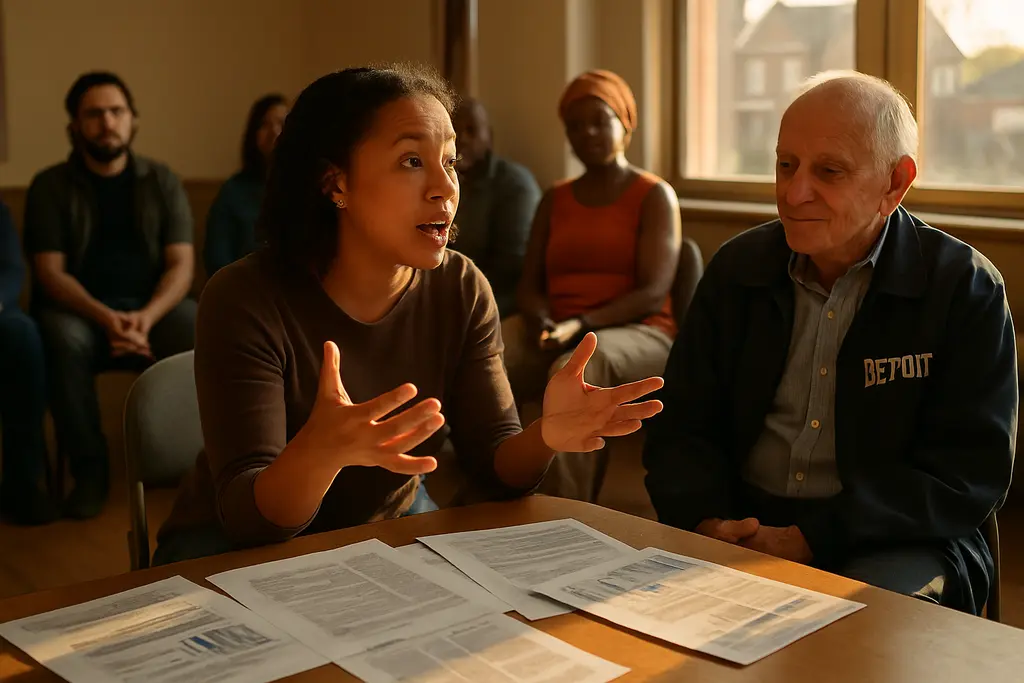
    Neighbors seated in a community meeting room with printed housing materials

    Public Process And Department Roles

    Residents should treat the grant as a public-process item, not a one-time announcement. The Housing and Revitalization Department is central to the award, while the City Planning Commission and Planning and Development Department are identified in research materials as key partners in implementation. Because zoning, permitting, public land, and funding notices affect many neighborhoods, residents and local groups can watch city meeting agendas, department updates, and formal notices for the next steps.

    As of September 8, 2026, the research provided for this article does not verify completed zoning revisions, final Small Buildings NOFA awards, or specific infill projects funded under this grant. That means residents should avoid assuming that a parcel, building, or development has already been approved under PRO Housing unless the City has posted a formal record. The safest civic step is to check City of Detroit department pages, public meeting materials, and procurement or funding notices before sharing claims in neighborhood meetings or online groups.

    Detroit PRO Housing Questions For Local Meetings

    Community groups can make the grant more understandable by asking practical questions tied to each work area. These questions can help residents focus on the public decisions that affect housing access without turning meetings into rumor exchanges.

    • Zoning: Which zoning changes are being considered, and how will residents be able to review them before adoption?
    • Small buildings: When will the 2–7 unit building funding notice be released, and what affordability terms will be required?
    • Pre-development: What types of site-readiness costs may be eligible, and how will awards be reported publicly?
    • Public land: Which publicly owned parcels may use pre-permitted plans, and how will nearby residents receive notice?
    • Accountability: What public records will show spending, project selection, permitting progress, and affordability commitments?

    Clear questions are a service to the neighborhood. They help residents understand what the City has approved, what is still under review, and where public input belongs. They also help nonprofit partners, churches, and outreach teams explain housing policy in plain terms for residents who may not attend zoning or planning meetings. For readers following civic problem-solving across community networks, Houston LWS Forum offers a related example of local-information sharing within the same broader network.

    Detroit PRO Housing Grant Implementation

    What A Careful Local Response Looks Like

    The Detroit PRO Housing grant is best understood as an implementation test. The award gives the City money to address barriers, but the community benefit will depend on how clearly Detroit explains the rules, how quickly eligible funding notices are released, how fairly projects are reviewed, and how well residents can see results. Policy work can feel distant from daily housing stress, yet zoning language, permit steps, and site-preparation costs can decide whether affordable homes move forward.

    For support-service organizations, the next civic role is education and referral. Staff and volunteers can help residents understand that the grant is not direct rental assistance, not a homeowner repair check, and not an automatic approval for any specific project. It is a federal housing-policy grant meant to remove barriers that affect future affordable housing production and preservation. That distinction can reduce confusion for families seeking immediate help while still showing why the policy work matters.

    Detroit residents who want to track the work should watch for City notices tied to zoning revisions, the Small Buildings NOFA, the Pre-Development NOFA, and infill housing plans on publicly owned land. Neighborhood groups can ask for plain-language timelines, public reporting, and clear affordability terms. If those pieces are posted and updated, the grant can become more than a funding announcement. It can become a practical tool for making affordable housing work easier to plan, easier to review, and easier for residents to understand.

  • DPSCD Security Screening: Family Visitor Guide

    DPSCD Security Screening: Family Visitor Guide

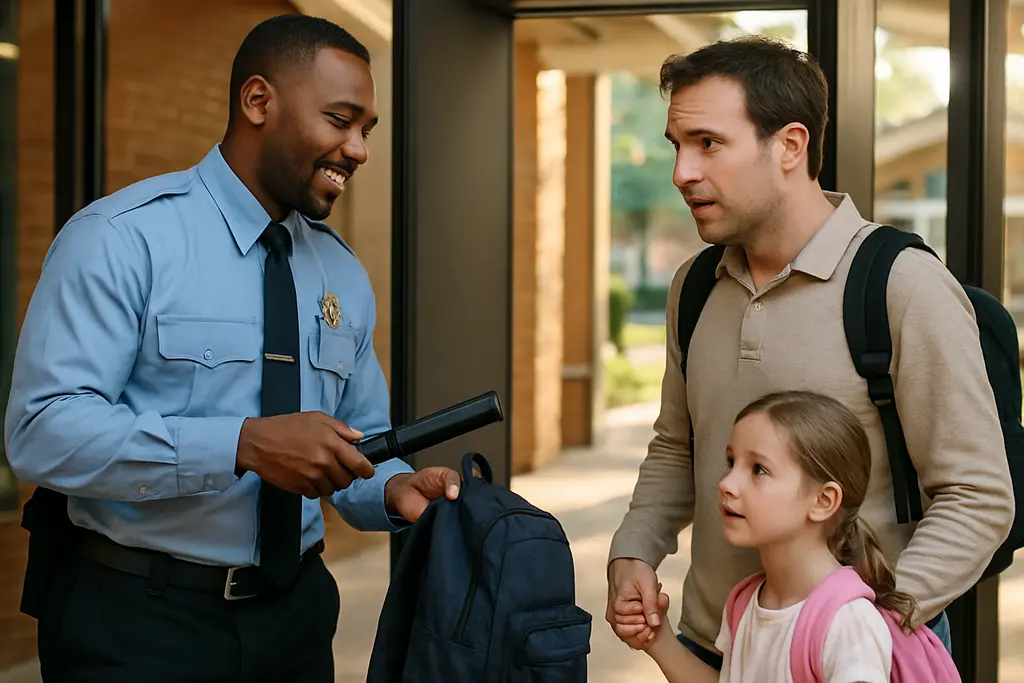
    The DPSCD Security Screening policy announced on September 1, 2026, affects every Detroit Public Schools Community District family that enters a school building, including students, parents, legal guardians, volunteers, vendors, and other visitors. DPSCD said all students and visitors entering school buildings are subject to screening, which may include metal detection, bag inspection, and other safety procedures set by each school DPSCD screening notice.

    For families, the change is practical as much as procedural. A parent dropping off paperwork, attending a meeting, volunteering at a classroom event, or responding to a call from school should expect a more formal entry process. The same is true for faith partners, mentors, after-school program staff, and community groups that work with students inside school buildings. The district’s stated safety procedures mean the front door is now a shared point of responsibility, not only a reception desk.

    What DPSCD Security Screening Changed For Families

    DPSCD Security Screening At The Door

    The September 1, 2026, district notice says all students and visitors entering school buildings may be screened. It also says all bags are subject to inspection. For students, that may mean the school day begins with a visible safety step before class. For visitors, that means entry is no longer limited to signing in or stating the purpose of a visit.

    The district described screening methods that may include metal detection and bag inspection. The notice also says procedures may be determined by each school. That point matters for families with children in more than one DPSCD building. A parent may experience one routine at an elementary school and a different routine at a high school, depending on the safety procedures assigned at each site.

    How Bag Inspections Are Described

    DPSCD’s September 1 message describes bag inspection as a visual review of compartments, movement of items, and inspection of containers. The district also named prohibited items that will be documented and reported, including weapons, firearms, knives, ammunition, and explosive devices. The same notice says certain personal items are not subject to inspection, including diaries, personal electronics content, identification documents, hygiene items, and medical items.

    That distinction gives families a clearer way to prepare students. Backpacks, purses, athletic bags, instrument cases, lunch bags, and other carried items should be organized enough for school staff to inspect without confusion. Families should also remind students not to carry items that could raise safety concerns, even if those items were not brought to school with harmful intent.

    How Visitor Check-In Affects Parents And Guardians

    Photo ID And Badge Requirements

    DPSCD put a districtwide visitor check-in process in place beginning February 11, 2026. Under that process, visitors, including parents and legal guardians, must bring photo identification; a photo is taken, and a visitor badge is issued DPSCD visitor process. The district also said that, for a temporary period, visitors without photo identification would still receive a photo and temporary badge after completing more paperwork.

    Families should treat photo identification as part of the school visit routine. That applies to planned meetings, early pickups, document drop-offs, field trip support, parent-teacher conferences, and school events held during the day. A visitor who forgets identification may still be able to enter under the temporary process described by the district, but the visit can take longer because staff must complete the extra steps.

    Planning For Arrival Time

    The check-in process and screening expectation can add steps at the entrance. A visitor may need to wait for a badge, have a photo taken, present identification, explain the purpose of the visit, and pass through screening procedures. For a parent with a scheduled meeting, that means arriving shortly before the appointment time may not be enough.

    Families can reduce stress by building in extra arrival time and keeping identification easy to reach. Students can also benefit from predictable routines. Younger students may need a calm explanation that screening is a school safety procedure. Older students may need direct reminders about what not to pack and how to move through the line respectfully.

    Community Responses That Keep Schools Welcoming

    Community volunteers meeting at a table before visiting a school

    Faith And Outreach Partners

    Detroit churches, neighborhood organizations, mentoring groups, and education partners often support students through tutoring, food assistance, parent outreach, after-school activities, and family events. These groups should update their volunteer instructions so every adult assigned to a school site knows to bring photo identification, allow time for check-in, and follow the building’s screening process.

    This is a practical service issue. A volunteer who arrives without identification or with unclear instructions may slow down the front office and delay services for students. A community partner that prepares its team before the visit helps the school keep the entry process orderly. Community-facing organizations can also follow related regional civic updates through Trinity Chamber to stay informed about local efforts.

    Families concerned about how safety procedures connect with student support can also read related local coverage on DPSCD mental health supports, especially if a child is anxious about new school routines.

    Questions Families Can Ask

    Because DPSCD said procedures may be determined by each school, families should ask building-level questions in advance. Useful questions include where visitors should enter, whether screening is used every day or during certain events, how early parents should arrive for meetings, and what students should do if they bring a medical or hygiene item that needs privacy.

    Parents and guardians should also ask how the school communicates entry procedures for assemblies, performances, athletic events, conferences, and emergency pickups. Clear instructions reduce confusion at the door and help staff focus on student safety rather than repeating basic steps to each visitor.

    DPSCD Security Screening Next Steps For Families

    A Practical Family Checklist

    The most useful response to DPSCD Security Screening is preparation. Families do not need to treat the new entry process as a barrier to school involvement. They do need to treat it as part of the school day.

    • Carry photo identification: Parents, guardians, volunteers, and visitors should bring ID for school entry.
    • Allow extra time: Build in time for photo capture, badge printing, questions, and possible screening.
    • Pack with care: Help students keep bags organized and free from prohibited items.
    • Ask school-specific questions: Confirm the correct entrance, visitor process, and event procedures with the school office.
    • Prepare community volunteers: Faith groups and outreach partners should brief every adult before sending them to a DPSCD site.

    DPSCD Security Screening will be most manageable for families when schools, parents, guardians, and community partners share the same basic expectations. The district has announced screening for students and visitors, and it has already implemented a uniform visitor check-in process. The next civic step is local and practical: each family and partner group should confirm building procedures, prepare identification, organize bags, and give students calm, accurate guidance before the school day begins.

  • Detroit Internet Access Reaches 6,000 Residents

    Detroit Internet Access Reaches 6,000 Residents

    The Detroit Internet Access expansion announced on July 30, 2026, gives community outreach teams, housing partners, educators, and resident-support groups a concrete digital equity project to watch. Rocket Community Fund said it committed $3.5 million to the Detroit Last Mile Initiative in partnership with nonprofit DigitalC and the Detroit Housing Commission, with the first phase intended to serve up to 2,400 households and 6,000 residents in Detroit Public Housing, according to the Rocket Community Fund announcement.

    As of September 1, 2026, the expansion was not described as completed in the announcement materials. The supported facts show an initial phase that was set to begin serving households after the July 30 announcement, with longer-term work tied to neighborhood digital equity. That timing matters for residents and service providers because the practical work is not limited to installing service. It includes sign-ups, resident support, digital skills training, communication through housing communities, and coordination with organizations that help families use online tools for school, work, benefits, health care, and public services.

    What Detroit Internet Access Funding Changed

    Where The Investment Is Directed

    The funding shifted the Last Mile Initiative from a promising pilot toward a larger public-housing rollout. Rocket Community Fund described the broadband portion as part of a larger $4.5 million Rocket legacy gift connected to the Rocket Classic tournament. The $3.5 million share was designated for affordable home internet through the Last Mile Initiative, while the remaining portion was reported as directed toward a youth scholarship fund managed by the Children’s Foundation of Michigan, according to A Near Future’s report on the gift.

    The public record provided for this project identifies the Detroit Housing Commission as a partner and names the first pilot communities as Forest Park, Brewster, and Diggs. Those locations make the initiative directly relevant to public housing residents who may face barriers when broadband service requires standard market pricing, long contracts, or complicated enrollment steps. The cited announcement says DigitalC’s approach includes no contracts, affordable rates, high speeds, resident-centered support, and digital skills training adapted to local needs.

    Why The Public Housing Focus Matters

    For residents in public housing, home broadband can affect routine tasks that now depend on stable online access. Families may need connections for school portals, job applications, telehealth appointments, benefit renewals, banking, email, document uploads, and communication with caseworkers or teachers. The initiative’s public-housing focus places the work where service access can be tied to trusted property-level communication rather than asking every household to solve the issue alone.

    The project also gives outreach organizations a clearer way to plan support. If residents in the first phase are offered affordable high-speed service, then community partners can prepare help with sign-up questions, device readiness, basic skills, password safety, email use, online forms, and referrals. For families using multiple aid systems, internet service is not a side issue. It can determine whether they can receive timely notices, complete required documents, or stay connected to school and public programs.

    How The Initial Phase Can Support Daily Needs

    From Connection To Practical Use

    The stated target of up to 2,400 households and 6,000 residents gives the first phase enough scale to affect daily service access across multiple public-housing communities. Still, the supported research does not provide household-by-household timing, final enrollment totals, or a completion date. That means local groups should avoid presenting the rollout as finished. The more accurate message is that the initiative was launched, the investment was announced, and the first phase was designed to begin reaching public-housing residents after July 30, 2026.

    Detroit Internet Access work will be strongest if residents receive more than a service offer. Affordable internet becomes useful when households understand the plan, know whom to contact, and can ask basic questions without feeling pushed aside. Digital skills training can help residents use online school tools, search for work, manage appointments, and connect with public resources. Support should be offered in plain language and through trusted community contact points.

    What Local Outreach Teams Can Do

    Community groups can prepare now without claiming responsibility for the broadband rollout. Churches, tenant councils, family resource partners, school liaisons, and neighborhood organizations can identify the questions residents are likely to ask: How much will service cost? Is there a contract? What speed is included? How does a household enroll? What help is available if a device is not working? Which residents may need digital skills support after installation?

    Those groups can also connect digital access with related stability services. For example, families seeking housing, water, food, or crisis support often need online access to complete forms and check messages; Saint Joseph Detroit’s coverage of a Wayne Metro mobile unit stop showed how multiple basic needs can meet in one outreach setting. Internet access can support the same kind of practical follow-through when residents must upload documents, receive appointment reminders, or confirm eligibility steps.

    • Resident communication: Share verified enrollment details only after partners publish or provide them.
    • Skills support: Offer basic help with email, passwords, school portals, benefits systems, and video appointments.
    • Device readiness: Identify whether residents need help using existing phones, tablets, laptops, or shared devices.
    • Referral coordination: Keep housing, food, health, education, and workforce partners aware of the broadband rollout.

    Detroit Internet Access And Community Support

    Why Support Must Be Resident-Centered

    The announcement describes DigitalC as a community-based broadband network whose model is being adapted for Detroit. That matters because a lower-cost plan alone may not close the gap for every household. Some residents may have had past service disruptions, limited experience with online forms, concerns about fees, or uncertainty about equipment. Others may share devices across several family members or rely on phones for tasks that work better on a laptop or desktop.

    Community support should start with respect for those realities. Outreach workers can ask what residents want to do online before deciding what kind of help to offer. A parent may need school portal support. An older adult may need telehealth help. A job seeker may need an email account and document upload support. A student may need stable access for assignments. Detroit Internet Access efforts should connect service, training, and problem-solving so residents can use the connection for real needs.

    How Partners Can Keep Information Accurate

    Because the expansion was still in its early phase as of September 1, 2026, accuracy is central. Local groups should not create their own deadlines, pricing details, eligibility rules, or launch schedules unless those details come from the project partners. Residents need clear information from Rocket Community Fund, DigitalC, the Detroit Housing Commission, or official resident communications. Unverified claims can create frustration if families expect service on a timeline that has not been publicly confirmed.

    Support organizations can create a simple internal process: name one person to verify updates, keep a dated contact sheet, save official project notices, and correct older flyers when new details arrive. For readers who follow civic and community information across cities, the related community forum network provides another valuable platform for tracking public resources and local initiatives.

    What The Broadband Rollout Means For Local Services

    Service providers discussing school, health, and benefits access around a table

    Education, Health, And Benefits Access

    The clearest community value of affordable broadband is its connection to other support systems. Schools use online gradebooks, assignments, forms, and family communication tools. Health providers may use patient portals and video visits. Public agencies often rely on digital notices, online renewals, appointment scheduling, and uploaded documents. Workforce programs may ask applicants to search postings, submit resumes, and respond quickly to emails.

    That means Detroit Internet Access can strengthen other outreach work if agencies plan together. A food pantry can help residents learn where to find online benefit information. A housing organization can remind residents to save digital copies of documents. A youth program can help families understand school portals. A senior program can connect older adults with safe internet use support. None of that replaces direct service; it makes direct service easier to reach.

    What Remains Unclear

    The research provided for this report does not include a final installation schedule, full service map, household enrollment count after the announcement, or confirmed long-term expansion dates. It does support that the initial phase was aimed at up to 2,400 households and 6,000 residents, beginning with public-housing communities identified in the announcement. It also supports that the broader strategy was intended to lay groundwork beyond the first housing sites.

    For civic readers, the responsible next step is to watch for partner updates rather than assume final outcomes. Residents should rely on official housing-community notices and project partner communications for enrollment details. Service providers should prepare digital skills help now, but they should wait for verified instructions before advising families about plan terms or sign-up steps.

    Detroit Internet Access Next Steps

    The July 30, 2026, announcement put a defined investment, named partners, and a first-phase service target behind Detroit’s Last Mile Initiative. The work affects public-housing residents first, with Forest Park, Brewster, and Diggs named in the supported materials. The project also builds on a 2025 pilot that connected 450 families to affordable high-speed internet service, according to the cited reporting.

    The strongest local response now is practical preparation. Outreach teams can prepare residents for verified enrollment information, organize digital skills support, identify device barriers, and coordinate with schools, health providers, workforce programs, and public-benefit partners. If the rollout reaches its stated first-phase target, thousands of residents could have a stronger home connection to services that already shape daily life.

    Detroit Internet Access should be treated as community infrastructure, not just a technology project. The investment can help households only if residents know how to enroll, receive support, and use the service for school, work, health, and family stability. That is where community outreach has a clear role: turning an announced broadband expansion into useful access for the people it was designed to serve.

  • DPSCD Mental Health Supports Parents Need

    DPSCD Mental Health Supports Parents Need

    The DPSCD Mental Health support picture changed for Detroit families as the 2026-27 school year began on Monday, August 24, 2026. Detroit Public Schools Community District materials described fall Universal Wellness Screenings, Health Hubs, after-hours tele-counseling, and pilot-school staffing as parts of a wider whole-child support plan. Parents are affected first because these services depend on consent, follow-up, clear questions, and steady communication with school staff.

    The main civic step for families is practical: know which services exist, ask how a child can be screened or referred, and keep contact information current with the school. The district’s approach, as described in the research materials, connects mental health with basic needs such as medical care, food support, housing or utility referrals, and family access to school-based service points. That matters because student stress can be tied to more than one issue at home or in school.

    What DPSCD Mental Health Supports Changed

    DPSCD Mental Health services are being presented through several connected channels rather than one office or one referral form. The district’s fall Universal Wellness Screenings are meant to help identify physical, behavioral, and mental health needs early in the school year. The research notes identify those screenings as part of whole-child support for the 2026-27 school year, which began on August 24, 2026, for grades K-12.

    For parents, the screening process should be treated as a starting point, not a label. A screening can raise a concern, but it does not replace a full conversation with a counselor, social worker, school nurse, or outside provider. Parents should ask what information is collected, who reviews it, how follow-up is handled, and what happens if a student needs support outside regular school hours.

    How DPSCD Mental Health Screening Works

    The research describes universal initial screening in six pilot schools where DPSCD is working with Detroit Wayne Mental Health Authority to place dedicated health staff. The staffing model listed in the research includes a social worker, school counselor, community-based mental health provider, and school nurse. The stated process begins with an initial screening and is followed by one-on-one follow-ups when needed.

    That structure gives parents a reason to ask direct, non-alarmist questions. Families can ask whether their child’s school is one of the pilot sites, whether the child will be screened in the fall term, what consent steps are required, and how parents will be notified if staff recommend follow-up. If a child already has an Individualized Education Program, 504 plan, medical provider, therapist, or case manager, parents should ask how school staff can coordinate without duplicating services or missing key information.

    What Changed For Parent Communication

    The district’s broader support model makes parent communication more important because services are spread across screenings, Health Hubs, after-hours counseling, and school-based staff. A parent may first hear about a concern from a classroom teacher, a counselor, a nurse, or a screening notice. Keeping phone numbers, email addresses, emergency contacts, and preferred language information updated can reduce delays when staff need to reach a caregiver.

    Families who want to raise school access questions in public settings may also find value in local coverage of DPSCD town halls, especially when parent concerns involve districtwide communication, schedules, or service access rather than one private student record.

    Screening, Health Hubs, And After-Hours Help

    Health Hubs are a major part of the district’s school-based support model. The research notes say DPSCD describes Health Hubs as resource centers at ten high schools that offer free services, including behavioral and mental health support, and that students and families from any DPSCD school can access them. DPSCD Foundation materials in the research say eight Health Hubs are active under a major philanthropic effort, with more planned as schools are renovated under the district’s Facility Master Plan. Those two descriptions appear to reflect different ways of counting planned, active, and district-described sites.

    The supports listed in the research go beyond counseling. Health Hubs include school-based primary medical care, immunizations, vision and dental screenings, food pantries, housing and utility assistance, and laundry access in some hubs. The research says services are free and do not require income verification. For families, that means a mental health concern may open the door to help with basic needs that are affecting attendance, focus, sleep, or stress.

    How Families Can Use Health Hubs

    Parents do not need to wait for a crisis to ask about a Health Hub referral. A student who is missing school because of anxiety, food insecurity, unstable housing, untreated vision problems, or family stress may need more than one kind of support. The useful first question is simple: “Which Health Hub can serve my child, and what should I bring?” Since the research says students and families from any DPSCD school can use Health Hubs, parents should ask their school office, counselor, or nurse how access works from their specific campus.

    DPSCD Mental Health support now reaches beyond the regular school day through the Behavioral Health Support Line listed in the research. The line, 833-466-3978, offers tele-counseling to students and families from Monday through Thursday, 5:00 p.m. to 8:00 p.m. Parents should save that number and ask the school what situations are appropriate for the support line, what emergency steps should be used for immediate safety concerns, and how information from an after-hours contact is shared with school staff, if at all.

    What Parents Should Prepare Before Calling

    Before contacting a school counselor, Health Hub, or after-hours support line, parents can write down the concern, when it started, how often it occurs, and what has changed in sleep, grades, attendance, appetite, friendships, or behavior. That short record helps staff respond more clearly. It also helps parents separate a one-day problem from a pattern that may need continued support.

    Parents should also ask about privacy. Mental health information is sensitive, and families deserve clear explanations about who sees screening results, what is placed in a student record, and when outside providers are involved. If a caregiver is unsure, the safest step is to ask for the district or school privacy process in writing.

    What The University Of Michigan Findings Show

    Researchers reviewing student wellness data at a conference table

    University of Michigan researchers reported signs of improvement in DPSCD student wellness after the pandemic period. The Survey Research Center reported that, in the 2022-23 school year, depression and anxiety symptom rates among surveyed DPSCD students in grades 8 through 12 fell below pre-pandemic levels, and about 23% of surveyed DPSCD students reported persistent sadness compared with 40% nationally, according to the Survey Research Center report.

    Those findings are encouraging, but they do not mean every student is getting help. The University of Michigan Youth Policy Lab reported that a 2022-23 needs assessment across 84 schools found many students still experienced high levels of anxiety, depression, suicidal ideation, or academic stress, and many students with symptoms were not accessing supports, according to the Youth Policy Lab project.

    Why Access Still Needs Parent Attention

    The Youth Policy Lab findings point to an access gap that parents can help close. Staff survey data cited in the research said 75% of schools used Positive Behavioral Interventions and Supports programs, while only 16% reported formal depression or anxiety treatment programs and only 7% reported trauma or PTSD-specific treatment. The same research notes said only 25% of all staff reported awareness of school protocols or systems to screen for student mental health needs.

    Those numbers suggest families should not assume every adult in a building knows every support pathway. A teacher may notice a concern, while a counselor may know the referral process. A nurse may understand a Health Hub connection, while an administrator may know the pilot staffing plan. Parents can help by asking who the right point person is and by requesting a follow-up date rather than leaving a concern open-ended.

    What The TRAILS Partnership Adds

    The research notes identify DPSCD’s partnership with TRAILS, Transforming Research into Action to Improve the Lives of Students, as a source of evidence-based supports such as Cognitive Behavioral Therapy and mindfulness sessions. In the 2023-24 school year, nearly 1,000 students participated, and 94 school-based staff were trained, according to the research summary. Parents who hear a school mention CBT, mindfulness, or group support can ask whether the service is tied to TRAILS, who facilitates it, and how families are informed about participation.

    For faith communities, neighborhood groups, and parent volunteers, the lesson is to support access without trying to replace trained care. Churches and community organizations can help families find phone numbers, meeting dates, transportation options, food referrals, and school contacts. They should avoid diagnosing children or sharing private details. For further stories and analysis within the same network, check out County Watchers for related local public-service reporting.

    DPSCD Mental Health Steps For Detroit Families

    The most useful parent response is steady and specific. DPSCD Mental Health work is strongest when families know the pathway from concern to screening, from screening to follow-up, and from follow-up to ongoing support. Parents should ask early, document concerns, and confirm the next step after every conversation.

    Questions Parents Can Bring To School Staff

    Families can use the first weeks after August 24, 2026, to ask clear questions without waiting for grades or attendance to slip further. These questions are especially useful for parents whose children have shown stress, withdrawal, sudden anger, repeated absences, sleep changes, or fear about school.

    • Screening: Will my child receive a Universal Wellness Screening, and how will I be notified about results or follow-up?
    • Referral: Who is the school contact for mental health concerns: counselor, social worker, nurse, administrator, or Health Hub staff?
    • Health Hubs: Which Health Hub can serve my family, and are appointments required?
    • After Hours: When should I use the Behavioral Health Support Line at 833-466-3978, and what should I do in an immediate emergency?
    • Coordination: How can the school coordinate with an outside therapist, doctor, case manager, IEP team, or 504 plan contact?

    Parents should also ask for names, dates, and next steps in writing when possible. A short email after a phone call can confirm what was discussed and reduce confusion. If a family does not receive a response, the next step is to contact the school office and ask who supervises student support services at that building.

    The district’s 2026-27 approach gives Detroit families more doors to support, but access still depends on clear communication. Screenings can identify needs, Health Hubs can connect families with free services, the after-hours line can extend help past the school day, and pilot schools can test deeper on-site staffing. For parents, the action is not to wait. Ask the school how the system works for your child, save the support line, and follow up until a clear plan is in place.

  • DPSCD Teacher Certification Program Update

    DPSCD Teacher Certification Program Update

    The DPSCD Teacher Certification Program gave Detroit residents with bachelor’s degrees another local route into public-school teaching during the 2026 summer training period. Detroit Public Schools Community District’s On the Rise Academy, known as OTR, is an alternative certification pathway that the Michigan Department of Education approved in January 2021 as the first program of its kind run by a local school district in Michigan, according to the state education announcement. As of August 24, 2026, the key civic question is practical: how can Detroit candidates, families, schools, congregations, and neighborhood partners help qualified aspiring educators understand the route, meet requirements, and stay connected to district classrooms?

    The program matters because teacher preparation is not only a workforce issue. It affects classroom stability, student relationships, school culture, and the ability of local residents to serve in schools that may already be part of their family or neighborhood life. The district’s published On the Rise Academy information describes a paid summer field-based institute, endorsement options, tuition rules, and a path toward an Interim Teaching Certificate for fellows who meet the stated requirements, according to the DPSCD program page.

    Why Detroit Schools Built A District Route

    A Local Response To Teacher Preparation

    The Michigan Department of Education said in January 2021 that it had approved Detroit Public Schools Community District to provide an alternative route to interim teacher certification. The state described the approval as part of a route that allowed the district to train teacher candidates while addressing local staffing needs. That fact is central for civic and faith-based partners: this is not a private coaching course or a general career fair. It is a district-run pathway connected to Michigan certification rules.

    For community outreach teams, the difference matters. A person considering a career change may need accurate information about eligibility, timeline, tuition, testing, and classroom placement before deciding whether to apply. A congregation, nonprofit youth program, or neighborhood education group can help by sharing verified district information instead of informal advice. Readers tracking local government and community developments can gain additional insights on county matters by visiting County Watchers.

    Who Is Affected In Detroit

    The affected groups include prospective teachers, current school staff members who may hold degrees, college graduates considering public service, students who need steady classroom leadership, and principals who depend on a reliable hiring pipeline. Families are also affected because teacher preparation connects directly to daily classroom experience. The district’s On the Rise Academy materials frame the pathway around fellows who complete coursework, field-based summer training, testing requirements, and district teaching expectations.

    This is where local organizations can be useful without overstating their role. Faith communities and neighborhood partners should not promise admission, certification, or employment. They can, however, help residents read the requirements, prepare questions for DPSCD, arrange quiet spaces for application work, and refer interested adults to official district information.

    How The DPSCD Teacher Certification Program Works

    DPSCD Teacher Certification Program Eligibility

    DPSCD states that selection into On the Rise Academy requires candidates to hold at least a bachelor’s degree, have a G.P.A. of at least 2.95, and pass the district’s criminal background check. For some endorsements, including mathematics or integrated science, the district states that applicants must show sufficient postsecondary study in the subject area and pass a preliminary eligibility test.

    The DPSCD Teacher Certification Program is not presented by the district as open admission. That distinction should guide outreach. Local groups can reduce confusion by making clear that applicants must meet stated academic and background requirements. They can also encourage candidates to gather transcripts, review endorsement options, and contact the district directly for official questions.

    Endorsement Areas Listed By DPSCD

    DPSCD lists endorsement options in Lower Elementary for grades PK-3, Upper Elementary for grades 3-6, Secondary Integrated Science for grades 6-12, and Mathematics for grades 5-9 or 7-12. The district also states that candidates who first complete a general education endorsement may have the option to add a Cognitive Impairment endorsement.

    Those details are useful for community partners because different candidates may be suited for different grade bands or subjects. A person with a strong science background may need different guidance than someone interested in early elementary classrooms. A church education ministry, mentoring program, or college-access group can help potential candidates think through their service interests while directing all certification questions back to DPSCD.

    What Candidates Did In The 2026 Timeline

    Summer Training And School-Year Preparation

    DPSCD’s published timeline for Cohort 6 placed Admissions Coursework from January through May 2026 through hybrid online modules and monthly in-person professional development. The district listed the Pre-Service Institute from June through August 2026 as a fully in-person, field-based period lasting seven to eight weeks. The same timeline placed New Teacher Academy in August 2026 as one week of district-wide professional development before the school year, followed by School Year Academy from September 2026 through June 2027.

    Because today is August 24, 2026, the summer institute period described by DPSCD was in its final month. It should not be described as a future opportunity for Cohort 6. Residents interested in later cohorts should use district channels for updated application windows and requirements rather than relying on older dates.

    Pay, Tuition, And Certification Steps

    DPSCD states that fellows are paid during the Pre-Service Institute at $25.10 per hour and are eligible for benefits. The district lists tuition at $5,000. It also states that fellows who complete all performance requirements and then teach in DPSCD for at least six years receive full tuition forgiveness, which can make the program free for those who meet the stated conditions.

    The district also states that fellows who successfully pass the Michigan Test for Teacher Certification and complete the Pre-Service Institute are eligible for an Interim Teaching Certificate and a DPSCD contract teaching position for the 2026-27 school year, with salary corresponding to new teachers. That sequence matters: training, testing, performance requirements, and district hiring are connected steps, not separate promises.

    How Community Partners Can Help

    Faith and community volunteers helping adults organize education paperwork

    Use Verified Information

    Education and faith partners can help most by using official information carefully. A community group should not simplify the pathway into a slogan such as “degree holders can become teachers by summer” because that leaves out eligibility, testing, performance, and certification steps. A better outreach message would name On the Rise Academy, state that DPSCD publishes eligibility and timeline requirements, and send candidates to the district for the latest details.

    Groups can also help residents compare the demands of the program with family schedules, transportation, work obligations, and study time. The summer institute was fully in-person under the Cohort 6 timeline. That requirement may affect caregivers, workers, and candidates who rely on public transportation. Local partners can help by offering study space, childcare referrals where available, transcript-request support, and reminders to rely on district instructions.

    Practical Outreach Steps

    Community support should be simple, accurate, and repeatable. The following steps can help Detroit organizations assist candidates without creating confusion:

    • Share official links only: Use DPSCD and state education pages for program facts, dates, and requirements.
    • Host question-prep sessions: Help candidates list questions for DPSCD about eligibility, endorsements, tuition, and testing.
    • Support document readiness: Remind candidates that degree records, G.P.A. documentation, and subject background may matter.
    • Respect certification limits: Do not promise admission, employment, tuition forgiveness, or certification outcomes.
    • Connect service-minded adults: Encourage residents already working with youth to review whether the district pathway fits their goals.

    These steps are especially relevant for churches, youth-serving nonprofits, alumni groups, and neighborhood organizations that already know adults who mentor, tutor, coach, or volunteer with students. Many potential educators first show their gifts in community settings before entering a formal classroom pathway.

    DPSCD Teacher Certification Program Next Steps

    The next civic step is straightforward: Detroit residents who are interested in the DPSCD Teacher Certification Program should review DPSCD’s current On the Rise Academy information, confirm eligibility directly with the district, and avoid relying on outdated cohort dates. Community organizations can help by making official information easier to find, giving candidates space to prepare, and keeping outreach messages accurate.

    For Detroit, the DPSCD Teacher Certification Program is best understood as a local teacher-preparation route with clear requirements, a structured timeline, paid summer field experience, and a service commitment tied to tuition forgiveness. Its value will depend on candidates completing each required step and on trusted local partners helping residents move from interest to informed action.

  • How South Texas Food Bank’s Six-County Flood Relief Push Shows Why Detroit Aid Groups Need Disaster-Ready Volunteer Systems

    How South Texas Food Bank’s Six-County Flood Relief Push Shows Why Detroit Aid Groups Need Disaster-Ready Volunteer Systems

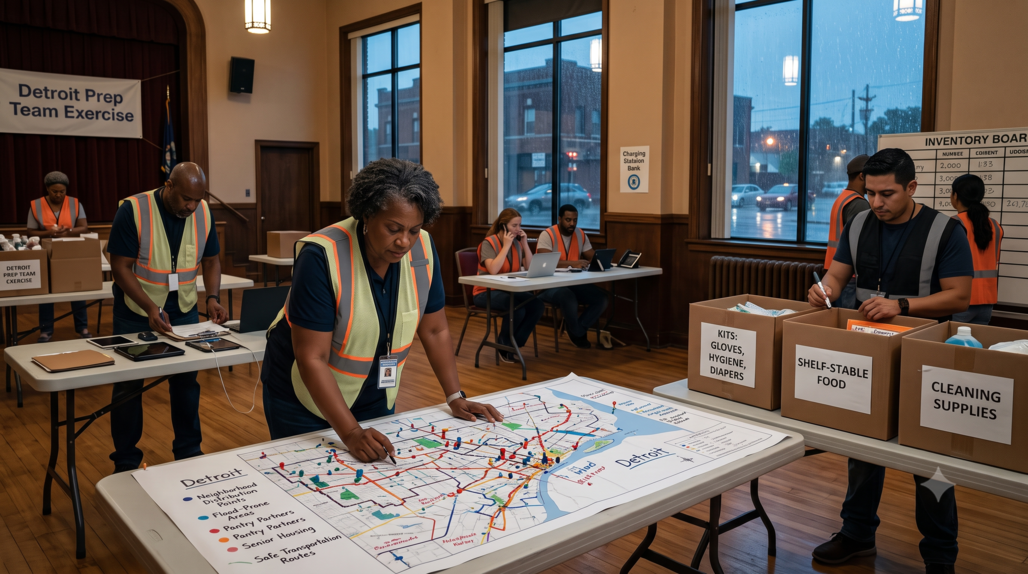
    The South Texas Food Bank flood response gives Detroit churches, food pantries, neighborhood groups, and community outreach teams a clear warning: emergency aid depends on volunteer systems built before roads close, families lose food, and supply requests start moving faster than local groups can organize. In July 2026, the food bank said flooding had affected 75% of the communities in its service area, including Val Verde, Kinney, Dimmit, Maverick, Webb, and Zapata counties, with relief needs centered on food, bottled water, cleaning supplies, safe distribution, donations, and volunteers. The food bank’s official South Texas flood response page frames the situation as a regional emergency across a wide service territory.

    For Detroit aid groups, the local lesson is not limited to Texas flooding. Severe weather, basement flooding, sewer backups, extended power outages, heat waves, food-benefit disruptions, and neighborhood-level emergencies can all create sudden demand for food boxes, water, cleaning kits, wellness checks, phone calls, transportation, and verified public information. A disaster-ready volunteer system gives local groups a safer way to respond without turning good intentions into crowded donation rooms, outdated flyers, or unsafe travel.

    Why A Six-County Flood Response Matters For Detroit Aid Planning

    The South Texas Food Bank serves a large region that includes Webb, Zapata, Jim Hogg, Starr, Maverick, Dimmit, Kinney, and Val Verde counties through partner agencies and direct-service programs. When flooding reached six of those counties, the problem was not just supply volume. It became a coordination test across rural roads, damaged communities, public agencies, local partners, and families needing immediate help. Reporting from late July said the food bank’s Disaster Relief Team had reached 6,972 neighbors in three hard-hit counties, with Val Verde County totals still being finalized after access barriers required support to move through trusted local partners. The report described food, clean water, and essential supplies moving through affected communities as the response continued.

    That kind of emergency reveals a planning truth Detroit groups should take seriously. Food relief is not only about collecting cans. Disaster response needs trained volunteers, staging areas, safe routes, donation instructions, supply tracking, public-agency awareness, and trusted local contact points. A church basement, pantry storage room, parish hall, or community center can help during an emergency only if organizers already know who has keys, who can sort supplies, who can answer phones, who can check on older adults, and who should wait for official direction.

    Saint Joseph Detroit’s recent food-access coverage has already raised the need for stronger planning around local distribution, volunteer coordination, and family support. That same issue appears in Detroit food access planning, where fresh-food work depends on partners, storage, volunteers, education, and reliable delivery. Disaster relief is faster and higher pressure, yet it relies on the same foundation: people, places, supplies, and communication.

    How Flood Relief Turns Volunteers Into A Logistics Network

    The South Texas Food Bank’s disaster updates asked supporters to help through donations, volunteer work, and sharing accurate information about flood relief, food distributions, volunteer opportunities, and donation drives. The official page lists non-perishable food, bottled water, cleaning supplies, baby supplies, personal hygiene items, and monetary gifts as practical support paths, with updates tied to community needs.

    That mix matters for Detroit. After a flood, families may lose refrigerated food, need bottled water, face cleanup costs, or need gloves, trash bags, disinfecting supplies, diapers, wipes, formula, and hygiene items. A pantry that prepares only for shelf-stable food may miss urgent cleanup needs. A neighborhood group that collects cleaning supplies may miss families who need food after power loss. A church that wants to deliver supplies may need to wait until roads, basements, and buildings are safe.

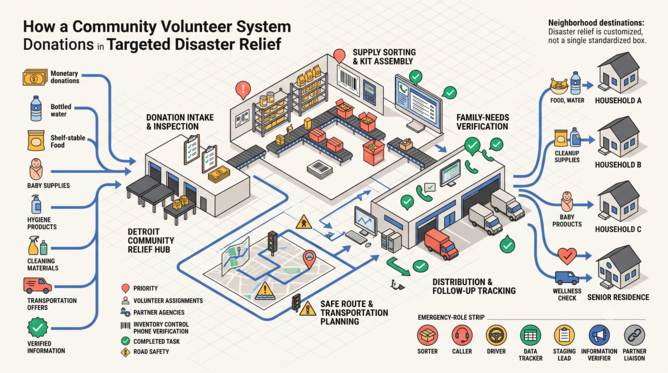
    A useful disaster volunteer system separates roles before the emergency. Some volunteers can sort donations. Others can pack food boxes. Others can call families, confirm hours, share official updates, or help with transportation once conditions are safe. Some volunteers may have medical, CERT, logistics, language, or data-entry skills. Others may be best suited for pantry work, check-in tables, cleanup kit assembly, or follow-up calls.

    Volunteer System NeedEmergency RoleDetroit Planning Question
    Role AssignmentsKeeps volunteers from crowding the same taskWho sorts, calls, drives, tracks, stages, and cleans?
    Safe Deployment RulesPrevents travel into flooded or unsafe areasWho decides when volunteers can leave the site?
    Supply StagingTurns donations into usable food, water, and cleanup kitsWhere will items be sorted before distribution?
    Partner ContactsConnects churches, pantries, city agencies, and local nonprofitsWhich trusted sites can receive or move supplies?
    Follow-Up TrackingRecords needs that remain after first contactWho checks whether families still need help two days later?

    Detroit groups can build this table into a simple emergency worksheet. The goal is not bureaucracy. The goal is to prevent confusion when residents are already under stress.

    Why Detroit Groups Need Training Before The Emergency

    Detroit has public preparedness resources that community groups can use before disaster demand grows. The City of Detroit’s Emergency Management and Homeland Security training page points residents toward disaster preparedness resources for professional and volunteer emergency management communities, including training designed to improve public awareness and preparation. The city’s emergency volunteer training page gives outreach groups a stronger starting point than informal guessing.

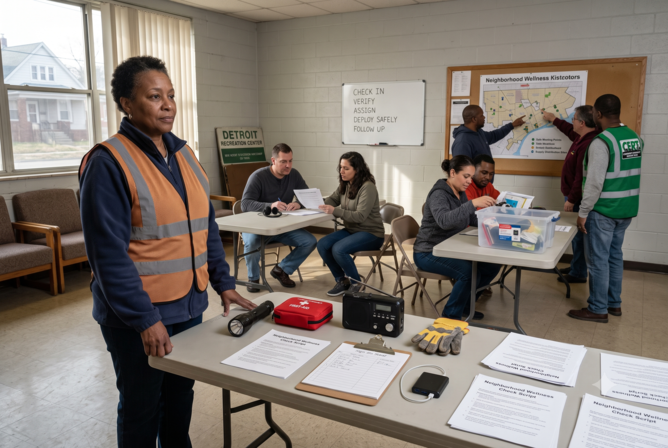
    The city also lists Community Emergency Response Team, or CERT, volunteering as a way for residents to learn disaster preparedness. CERT is useful because it creates a bridge between official emergency management and residents who want to help their neighborhoods more safely. Detroit groups do not need every volunteer to complete formal training, but each group should know which volunteers are trained, which are able to handle logistics, and which should be assigned lower-risk support roles.

    Michigan’s disaster volunteer needs are not theoretical. In April 2026, the American Red Cross in Michigan said it had an urgent need for volunteers to support disaster relief operations across more than 50 communities affected by flooding and storms, including work connected to damage assessment and relief-supply distribution. The Red Cross Michigan disaster volunteers notice shows how quickly a statewide storm response can require trained people, not just donated items.

    Detroit churches and neighborhood organizations can use that lesson by creating tiers of volunteers. A first tier may include people with CERT, Red Cross, medical, logistics, or emergency-management experience. A second tier may include food pantry, supply sorting, transportation, and phone-bank volunteers. A third tier may include communications, prayer-line, resident check-in, childcare-area, and follow-up helpers. During a crisis, coordinators can activate the correct tier instead of asking every willing person to show up at once.

    How Food, Water, Cleaning Supplies, And Information Work Together

    Flood relief usually does not move in one straight line. A family may need bottled water on day one, food on day two, cleaning supplies after the water recedes, help documenting damage, and referrals for housing, insurance, utility, or public-assistance questions later. The South Texas Food Bank’s official disaster page tells residents to follow local emergency management officials, local news, and trusted community sources for safety, road, and resource updates.

    Detroit aid groups should make verified information part of relief planning. A volunteer who shares the wrong pantry hours can send a family across town for nothing. A donation flyer that stays online after a site closes can overwhelm the wrong location. A rumor about supplies can create lines at a place with no capacity. In an emergency, information control is a service.

    Each outreach group should assign one person to verify details before public posts go out. That person can check city updates, pantry hours, partner requests, drop-off rules, and volunteer assignments. No group should share road, safety, shelter, or emergency claims from rumor channels when official sources are available.

    Detroit’s own experience with flooding and sewer backups makes that discipline valuable. The Detroit Area Disaster Recovery Group describes itself as a volunteer-based, community-led organization formed around flooding and sewer backups, with work tied to groundwater flooding, sewer backup, toxic mold, and frequent power outages. Its Detroit disaster recovery focus shows why local groups need disaster systems before damage affects families at the block or basement level.

    Why Regional Food Networks Need Local Partners

    Large food banks can move huge volumes of supplies, but local partners often decide whether families receive help quickly. During the South Texas response, access challenges meant some deliveries had to move through trusted local partners rather than a direct route from the food bank to every affected household. That same pattern can apply in Detroit after flooding, outages, or food-benefit interruptions.

    Forgotten Harvest’s food-finder page lists more than 200 agencies across Metro Detroit offering emergency food assistance through mobile pantries, brick-and-mortar pantries, shelters, and soup kitchens. The organization asks residents to call ahead to confirm hours and requirements, which is especially relevant during emergencies when service times can change. The Metro Detroit food assistance network shows how many local doors may be involved when families need urgent help.

    That network is an asset, but only if community groups know how to use it responsibly. A church should know which nearby pantry is open on which day. A neighborhood group should know which food bank partners require appointments, ID, residency details, or pantry cards. A volunteer team should know whether a site accepts walk-ins or only scheduled clients. A social-media post should direct residents to confirmed information, not stale assumptions.

    For Detroit aid groups, disaster planning should include a partner map. The map does not need to be public. It can be a shared worksheet listing pantries, churches, community centers, city resources, senior sites, youth programs, transportation helpers, supply-storage rooms, and trained volunteer leads. When a crisis arrives, that list can save hours.

    What A Disaster-Ready Detroit Volunteer Calendar Could Include

    A disaster-ready system should be built across the year. Winter may focus on warming resources, utility help, and senior check-ins. Spring and summer may focus on flooding, heat relief, food access, and cleaning-supply readiness. Fall can be used to update contact lists, train new volunteers, and review what worked during the summer.

    Detroit groups can create a simple annual rhythm:

    • January To March: Update emergency contacts, identify seniors and families needing check-ins, review warming and utility resources.
    • April To June: Train volunteers, inspect storage areas, prepare flood and cleanup kit plans, confirm pantry partners.
    • July To September: Monitor heat and storm updates, review transportation options, keep bottled water and hygiene referrals current.
    • October To December: Review lessons, restock supplies, recruit volunteers, update communication templates.

    That kind of calendar helps small organizations stay ready without waiting for a public emergency. It also helps donors understand what is useful before a disaster. Instead of asking for random items after a storm, groups can ask for specific supplies by season.

    Why Money Can Be More Useful Than Random Supplies

    One lesson from regional flood relief is that cash donations can be more flexible than unplanned supply drives. The South Texas Food Bank’s disaster page directs supporters to make monetary donations for emergency relief and lists several needed categories, including food, water, cleaning supplies, baby supplies, and hygiene items.

    Detroit groups should explain this clearly to supporters. Donated goods can help when they match real needs and can be sorted safely. Random donations can create extra labor, storage pressure, and waste. Money can allow an organization to buy what families need most that week, such as bottled water, gloves, bleach, diapers, shelf-stable food, gas cards, or cleanup supplies.

    A good emergency donation message should answer four questions: what is needed, where it should go, when it is accepted, and whether cash is preferred. It should also say what is not needed. That prevents a pantry or church hall from being filled with unusable items.

    What Detroit Aid Groups Should Build Before The Next Emergency

    The South Texas Food Bank’s six-county flood relief push shows that disaster response is a system, not a spontaneous act. Food, water, supplies, money, volunteers, local partners, official information, and safe transportation all need to work together. When they do, families can receive help faster. When they do not, volunteers can become overwhelmed and residents can receive mixed messages.

    Detroit aid groups can start small. They can list volunteer roles, identify trained helpers, confirm local pantry partners, prepare supply-staging space, assign one information verifier, create a phone-check team, and save official city emergency links. They can ask which families may need home check-ins, which volunteers have vehicles, and which sites can safely host distribution if a storm or outage disrupts normal routines.

    The goal is not to replace emergency management or large food banks. The goal is to make local groups more useful inside the wider response. Churches, block clubs, food pantries, and neighborhood nonprofits have trust that larger systems may not always have. That trust becomes stronger when it is paired with preparation.

    South Texas’ flood response is a reminder that emergencies move quickly across counties, roads, homes, and supply networks. Detroit outreach groups should use that lesson now, before the next heavy rain, outage, heat wave, or food-disruption alert turns planning into triage.

  • Types of housing support

    Types of housing support

    When life gets tough, knowing where to turn for housing help can make all the difference. A coordinated network of community resources exists to provide a safety net for individuals and families facing a crisis.

    Immediate options include emergency shelters and transitional housing facilities. These safe havens are designed for specific groups. For example, The Youth Hub serves young people, while Belinda’s Place supports women. The Bridge offers refuge for men and families.

    Beyond a roof overhead, day-to-day support is vital. Drop-in centers provide a welcoming space. They offer essential services like meals, laundry, and connections to further aid.

    This network also adapts to changing needs. Seasonal shelters activate during extreme weather. Community meal programs ensure no one goes hungry. Together, these resources work to provide stability and meet basic human needs.

    Emergency rent assistance

    Emergency rent assistance is a quick fix to stop homelessness during a financial crisis. It acts as a safety net, catching families before they fall into housing trouble.

    The main goal is to offer a timely financial bridge. This bridge helps secure a new apartment or prevent eviction. The aim is always to keep housing stable.

    Take Toronto’s Housing Stabilization Fund (HSF) as an example. It’s designed to prevent homelessness for those on social assistance. It provides financial help for essential housing costs.

    The HSF helps with several key expenses. Each area has specific rules or flat-rate amounts. This offers clear, substantial support.

    • Last Month’s Rent Deposit: This helps cover the upfront cost to secure a new rental unit. It’s often the biggest hurdle for someone leaving a shelter or unstable situation.
    • Establishing a Residence: This is a one-time grant to help furnish a new home. It covers essentials like beds, a table, or kitchenware, making a new start possible.
    • Rental Arrears: Funds can be used to pay back-owed rent. This stops an eviction process and gives a family time to get back on their feet.
    • Energy Arrears: Assistance is also available for overdue utility bills (like gas or electricity). Keeping these services on is vital for health and safety.
    • Moving Costs: The program can help with the expense of physically relocating to a new, stable home.

    This rent assistance is based on family size. The amounts are set to address the immediate crisis. It’s not meant to replace income for long.

    Similar programs exist in other areas. For example, Durham’s Housing Stability Program (HSP) has the same mission. These local efforts are key to the safety net.

    By covering these urgent costs, emergency rental assistance does more than pay a bill. It gives families breathing room. It turns a desperate situation into a manageable one, allowing families to focus on long-term solutions.

    Long-term housing programs

    Long-term housing help changes a family’s life for the better. It offers a stable path forward. These programs help when the immediate crisis is over but finding a home is hard.

    They focus on building a strong foundation. This helps families plan for the future, find better jobs, and succeed in their communities.

    long-term housing help

    Subsidized Housing is a common long-term support. It’s for those with lower incomes. The government or a housing agency pays part of the rent based on your income.

    This makes housing more affordable. It lets people live in safe, decent homes without worrying about rent.

    Housing with Supports is another key option. It offers a home and daily living services. Residents get help with meals, supervision, and more.

    This is great for seniors or those with disabilities. It helps them live independently with the support they need.

    There are also programs for families escaping domestic violence. Domestic Violence Supports provide safe shelters and services. They offer counseling and crisis lines to help survivors start anew.

    These long-term solutions show a strong commitment to housing security. They are essential for turning hope into reality for a stable home.

    Eligibility requirements

    Figuring out if you qualify for rent assistance is the first step to stable housing. Programs have rules to help those who need it most. Knowing these rules makes applying easier.

    Most programs require you to live in a specific city or county. You must prove you’ve lived there for a certain time, like three months. This shows you’re part of the local community seeking help.

    Your income is a big factor. Agencies check if you have low income. This means your net income is below a certain level, often tied to the local median income.

    They use pay stubs, tax returns, or social assistance statements as proof. The goal is to confirm you really need financial help for housing.

    Another common rule is about your housing costs. Many programs check if you spend too much on rent. A common rule is spending more than 85-90% of your income on housing.

    This shows your current housing is unaffordable and unsustainable. Programs aim to lower this cost to a manageable level.

    rent assistance eligibility documents

    Gathering the right paperwork is key. Being prepared speeds up your application. Here are the documents you’ll likely need:

    • Government-issued photo ID for all adult household members.
    • Proof of income for the last 30-60 days (pay stubs, award letters).
    • A current lease agreement showing your rent amount.
    • Utility bills or other proof of residency.
    • Notices of eviction or past-due rent statements, if applicable.

    The table below summarizes these common eligibility checks to give you a clear overview.

    Requirement Typical Rule Key Documentation
    Residency Live in the service area for 3+ months Driver’s license, utility bill, lease
    Income Limit Household net income below local threshold Pay stubs, tax return, benefit letter
    Housing Cost Burden Spending >85% of income on rent & utilities Lease agreement, rent receipts, bills
    Special Circumstances Facing eviction, homelessness, or a crisis Eviction notice, court documents, referral

    Each program has its own specific guidelines, so always check with the local agency. Having your documents ready is half the battle. For a detailed look at the steps involved, learn more about the application process.

    Don’t let the requirements discourage you. They are in place to direct resources effectively. If you meet these common criteria, taking the next step to apply for rent assistance could provide the stability your family needs.

    How activists can help connect families

    Finding the right housing help can feel overwhelming for a family in crisis. Activists and community organizations act as essential guides. They work on the front lines to bridge the gap between people in need and the services available.

    Outreach services are a critical first point of contact. Teams provide case management and service navigation. They help families understand their options and make referrals. Mobile support, like a Street Outreach Van, brings this housing help directly to neighborhoods. This approach meets people where they are.

    These same community groups often operate the shelters, drop-in centers, and meal programs discussed earlier. They are not just service providers. They are trusted entry points into a complex system. Their daily work builds the relationships that turn a scary process into a supported journey.

    Supporting these advocates strengthens the entire safety net. It helps ensure no family falls through the gaps. When looking to contribute, consider choosing effective charities that focus on building capacity. Lasting change happens when we empower the connectors who light the path to stable housing.

  • Why Thanks Matter

    Why Thanks Matter

    Let’s cut through the nonprofit noise for a second. You know that warm fuzzy feeling when someone genuinely acknowledges your contribution? That’s not just etiquette – it’s economic strategy.

    I’ve watched organizations treat gratitude like an optional garnish. Big mistake. Retention consistently outperforms acquisition – your existing supporters already voted with their wallets.

    Why treat that like a transaction when it could be the start of something beautiful? We’re talking about turning one-time givers into lifelong champions through strategic thank donors approaches.

    It’s not rocket science, but apparently it needs saying: proper appreciation is survival economics. The timing, the personal touch, the impact statement – these aren’t nice-to-haves.

    They’re the bedrock of sustainable fundraising. If you’re not treating gratitude as core strategy, you’re basically leaving money on the table while slighting your biggest believers. Smart organizations understand that meaningful donor appreciation transforms relationships.

    Personalized Gifts & Notes

    Remember that scene in “Schitt’s Creek” where David picks out special gifts for his family? That’s what we aim for, minus the hesitation. True appreciation isn’t about big gestures; it’s about small, thoughtful ones that show you care.

    Generic thank-yous are like mass emails that say “Dear valued customer.” They seem impersonal. But when you mix authenticity with creativity, magic happens.

    personalized donor appreciation gifts

    • Handwritten notes that show you have feelings
    • Custom GIFs that make inside jokes
    • Personalized playlists that match their music taste
    • Video thank-yous that feel real
    • Gifts that relate to your cause

    Just using someone’s name right and mentioning their donation can make a big difference. It turns a simple thank-you into a meaningful connection.

    It’s like the difference between a generic card and a heartfelt letter. Both say “I’m thinking of you,” but only one is sincere. For more ideas on donor appreciation gifts, check out these budget-friendly yet impactful suggestions.

    Technology should make things better, not worse. Updates that share real stories, timely texts, and genuine emails build strong bonds.

    At the core, personalized appreciation is simple: Does this feel made just for one person? If yes, you’re on the right track.

    Public Recognition

    Let’s explore how nonprofits can make donors feel like stars without the drama. Public recognition taps into our deep need for validation. It’s fascinating to see how it works.

    We all want to be seen and appreciated. When you thank donors publicly, you’re saying they’re heroes. It’s a mix of psychology and marketing.

    Smart recognition uses social media to reach more people. Think of Snapchat stories that leave a mark. Or Facebook Live videos that show real change happening.

    donor recognition ideas

    Donor profiles should be like celebrity interviews. They should tell stories of impact, not just numbers. For example, showing how $50 helped buy textbooks.

    Modern recognition includes digital donor walls that grow over time. These are dynamic, not static, and show generosity in action.

    But remember, always ask permission first. Some donors like to stay anonymous. For those who want to be recognized, it boosts your cause.

    Public recognition creates a cycle of appreciation. The more you celebrate donors, the more others want to give. It’s a mix of social psychology and giving back.

    Platform Best For Engagement Level Permission Needed
    Social Media Shout-outs Younger donors High viral Always
    Digital Donor Walls All ages Moderate but lasting Recommended
    Facebook Live Videos Showing immediate impact Very high Always
    Donor Profile Spotlights Major contributors Personal connection Essential
    Email Newsletters Older demographics Steady engagement Usually

    The best recognition ideas know it’s not about ego. It’s about building a culture of giving. When done right, it turns donors into advocates.

    It’s the difference between a simple donation and becoming part of a movement. That’s the power of recognition done well.

    Donor Spotlights

    Ever wonder why some nonprofit stories resonate more than others? It’s not just the money that matters. It’s the people behind the donations that truly touch our hearts.

    Donor spotlights turn simple gifts into powerful stories. It’s like combining journalism with heartfelt thanks. You’re not just saying thanks for the money. You’re exploring the reasons behind their generosity.

    Real donor profiles are like human interest stories. They make even the toughest journalist feel something. We’re talking about:

    • The cancer survivor funding research so others don’t suffer
    • The teacher supporting education initiatives after seeing systemic failures
    • The environmental lawyer protecting ecosystems for future generations

    These stories create a deep emotional connection. They make us think, “I want to be part of that story too.” It’s a way to honor donors while moving your mission forward.

    To truly thank donors, ask them the right questions. Find out why they gave. Was it a personal experience? A shared value? A moment of change?

    Spotlight Element Basic Approach Impact-Driven Approach
    Donor Background Professional achievements Personal journey to giving
    Mission Connection General support statement Specific emotional catalyst
    Impact Description Dollar amount donated Lives changed through gift

    The best spotlights mix stories of beneficiaries, volunteers, and campaign successes. They show how one person’s gift can change many lives.

    When you authentically thank donors by sharing their stories, you build a community of inspired supporters. This approach turns one-time donors into lifelong supporters.

    Want to get better at this? Check out detailed strategies for meaningful donor recognition that goes beyond simple thank-you notes.

    Events for Thanking

    Most donor appreciation events feel like corporate retreats with better wine. We’ve all been to stiff galas with rubber chicken and forced small talk. It’s like a Marvel movie sequel.

    Smart organizations throw events people want to go to. They’re about celebration, not just obligation. Think less formal auction, more community building.

    Environmental nonprofits host tree-planting parties. Donors get their hands dirty. Animal shelters have “yappy hours” with adoptable pups. Literacy groups hold intimate author discussions.

    Your event should show your organization’s personality. A scrappy startup might have a picnic or game night. An established foundation might have an elegant dinner.

    Virtual events are also popular. Online cooking classes, digital wine tastings, and remote game nights offer intimacy. It’s about connecting authentically, not impressing with luxury.

    Event Type Budget Level Engagement Factor Best For
    Community Picnic Low ($500-1,000) High (casual mingling) Family-friendly orgs
    Virtual Wine Tasting Medium ($1,000-2,500) Medium (guided experience) National donor bases
    Gala Dinner High ($5,000+) Traditional (formal) Major gift recognition
    Interactive Workshop Medium ($2,000-4,000) Very High (hands-on) Skill-building missions

    Great donor appreciation events tell stories worth sharing. They turn passive donors into active community members. The best events make donors feel they’re part of something special.

    Your event should match your mission. An environmental group spending thousands on a carbon-heavy gala is like a vegan restaurant serving steak. It’s a mismatch that will overshadow any appreciation.

    Creative constraints can lead to memorable events. A limited budget can spark innovation. It might create your signature event that donors look forward to.

    Building Long-Term Relationships

    Most organizations treat donor appreciation like a one-night stand when it should be a marriage. They focus on the transaction instead of the transformation. Real donor recognition ideas aren’t about flashy gestures—they’re about building ecosystems where appreciation evolves alongside your supporters.

    The magic happens when you stop seeing donors as ATMs and start treating them as partners. This means creating actionable gratitude schedules that feel less like calendar reminders and more like genuine human connection. It’s understanding that today’s $25 donor could become tomorrow’s $25,000 champion if you nurture the relationship properly.

    Smart organizations use tools like DonorPerfect’s donor management system to track preferences and life stages—recognizing that empty-nesters have different needs than newlyweds. The best donor recognition ideas honor these transitions while keeping the mission central.

    This isn’t fundraising—it’s friend-raising. The ultimate thank-you isn’t a plaque or event invitation; it’s the ongoing privilege of doing meaningful work together across generations.