Empowering Detroit Communities Together

  • Bridging The Gap: How The $20M Brennan Community Center Is Reshaping Youth Development In District 7

    Bridging The Gap: How The $20M Brennan Community Center Is Reshaping Youth Development In District 7

    The Historical Context Of Recreation In Cody Rouge

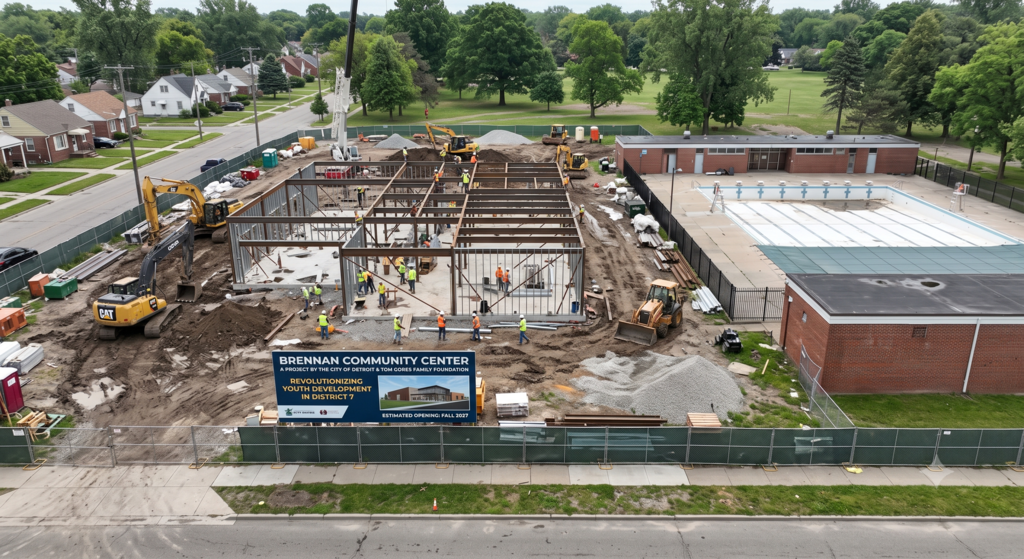
    City leaders and residents gathered at Rouge Park on June 25, 2026, to break ground on a highly anticipated infrastructure project. District 7 has operated for years without a dedicated indoor community center. This structural gap left thousands of families in the Cody Rouge neighborhood with limited options for year-round recreation and youth programming.

    Brennan Pools served as the primary seasonal gathering spot since 1929. A pool cannot sustain neighborhood engagement during the long Michigan winters. The seasonal nature of outdoor recreation limits the scope of mentorship and public health interventions. Medical professionals recognize that continuous, year-round access to safe public spaces correlates directly with lower rates of juvenile conflict and improved mental health outcomes.

    The city required a permanent structural solution to meet these demographic needs. Municipal planners and private investors identified the land adjacent to Brennan Pool as the optimal site for new construction.

    Analyzing The Major Financial Investment

    Large-scale municipal projects require significant capital backing. Detroit Pistons owner Tom Gores committed $20 million through his Family Foundation to fund the construction. This financial injection bypasses the typical delays associated with municipal budget constraints. The project moves directly from the planning phase into active construction.

    The blueprint outlines a 25,000-square-foot facility. This represents a massive increase in usable civic space for the west side of Detroit. The financial commitment extends beyond the physical building materials. The funding model includes allocations for future operational costs and programmatic resources.

    Organizers recognize that an empty building provides little civic value. The financial structure guarantees the center will open with fully funded activities, staff, and maintenance protocols in place.

    Strategic Facility Design And Community Programming Needs

    Architects designed the Brennan Community Center based on direct input from the people who live in the surrounding blocks. The city and project stakeholders held multiple engagement sessions starting in 2022 to gather resident feedback. This participatory approach ensures the physical space matches the actual requirements of the local population.

    The building layout prioritizes flexibility and multi-generational use. Planners discarded single-use room concepts in favor of adaptable environments.

    Facility FeatureIntended Community Function
    Multi-Use Sports CourtsYear-round athletic leagues and physical wellness programs
    Flexible Programming RoomsMentorship sessions, financial literacy, and workforce training
    Commercial Kitchen SpaceFamily gatherings, community classes, and nutritional education

    The focus areas identified by residents extend far beyond simple recreation. They asked for life skills training and direct avenues for career advancement. The physical layout accommodates these requests directly.

    Building Cross-Sector Partnerships For Civic Growth

    The Brennan Community Center represents a clear shift in how Detroit handles neighborhood revitalization. The project relies on a cooperative model connecting the City of Detroit Parks and Recreation Department, private equity, and residents.

    Mayor Mary Sheffield emphasized during the groundbreaking that strong civic spaces require this exact type of collaboration. Government agencies manage the land and long-term integration. Private donors provide the immediate capital to accelerate the timeline. Local organizations supply the volunteers and the operational trust required to bring people through the doors.

    This model relieves the tax burden on city residents. It simultaneously creates a blueprint for future infrastructure upgrades across other neglected districts. Detroit aims to replicate this funding structure for future civic projects.

    Addressing Structural Access Gaps In District 7

    Physical distance creates the largest barrier to public health and educational resources. Teenagers in Cody Rouge previously had to travel across multiple transit zones to find an open gymnasium or a quiet study hall during the winter. Removing this logistical hurdle changes the daily routine for an entire demographic.

    Providing safe, predictable environments serves as a core component of Detroit community support services. A teenager needs a reliable place to go after the school day ends. The new facility will offer consistent operating hours and professional supervision.

    The design integrates heavily with existing Rouge Park community initiatives. The indoor center creates a central anchor point for the 1,184-acre park. It turns a seasonal destination into a permanent neighborhood asset.

    Looking Ahead To The Fall 2027 Opening
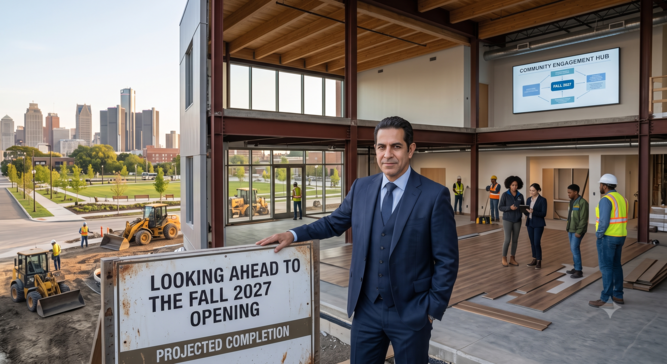
    Heavy machinery now occupies the northern edge of Rouge Park along Plymouth Road. The construction schedule dictates a projected opening in the fall of 2027.

    The adjacent Brennan Pool will remain closed during the 2026 summer season to accommodate the heavy equipment and ensure public safety. City officials directed residents to alternative indoor and outdoor pools across the city to bridge this temporary gap.

    The short-term inconvenience of a closed pool leads directly to a massive long-term gain. The Brennan Community Center will serve thousands of residents annually upon completion. It provides young people with clear avenues for skill development. It gives seniors a modern space to stay active. It gives the Cody Rouge neighborhood the civic anchor it has deserved for decades.

    The start of construction moves the project from a set of architectural renderings into a physical reality. The city expects the framework of the building to take shape before the first winter freeze. Detroit is actively reshaping its urban landscape to prioritize the people who live within it.
  • Advancing Youth Programs To Counteract Summer Violence In Detroit

    Advancing Youth Programs To Counteract Summer Violence In Detroit

    The Shift In Neighborhood Dynamics During Summer Months

    The final school bell rings in June. Thousands of Detroit teenagers lose their primary source of structured daily activity. The sudden surplus of unsupervised time creates clear vulnerabilities across urban districts. Medical professionals and sociologists view spikes in seasonal crime not as a failure of law enforcement, but as a severe gap in public resources.

    Direct intervention requires physical spaces where young adults can gather safely. Idle time correlates heavily with increased neighborhood conflicts. The Centers for Disease Control and Prevention guidelines on violence prevention point directly to structured recreational environments as a primary deterrent. Communities lacking accessible parks, open gymnasiums, and mentorship programs see higher rates of juvenile altercations.

    Municipal planners face a strict timeline to address these logistical gaps before July. Traditional daytime summer camps serve younger children effectively. Teenagers and young adults require entirely different engagement models. They need late-night programming, peer-to-peer competition, and environments that respect their growing independence. Recognizing this demographic reality completely changes how a city allocates its summer budget.

    Mayor Mary Sheffield’s Six-Point Community Safety Plan

    Detroit launched a comprehensive community safety strategy in 2026. Mayor Mary Sheffield outlined six core focus areas. The strategy bypasses heavy-handed policing tactics. It prioritizes neighborhood action, preventive resources, and youth engagement. The administration recognizes that strong communities police themselves when given the proper tools and funding.

    The six-point framework addresses systemic issues directly. City officials distribute free gun locks to families. Department heads walk through targeted neighborhoods to identify broken streetlights and blighted properties requiring immediate repair. The city collaborates with local businesses to upgrade their exterior lighting and safety protocols.

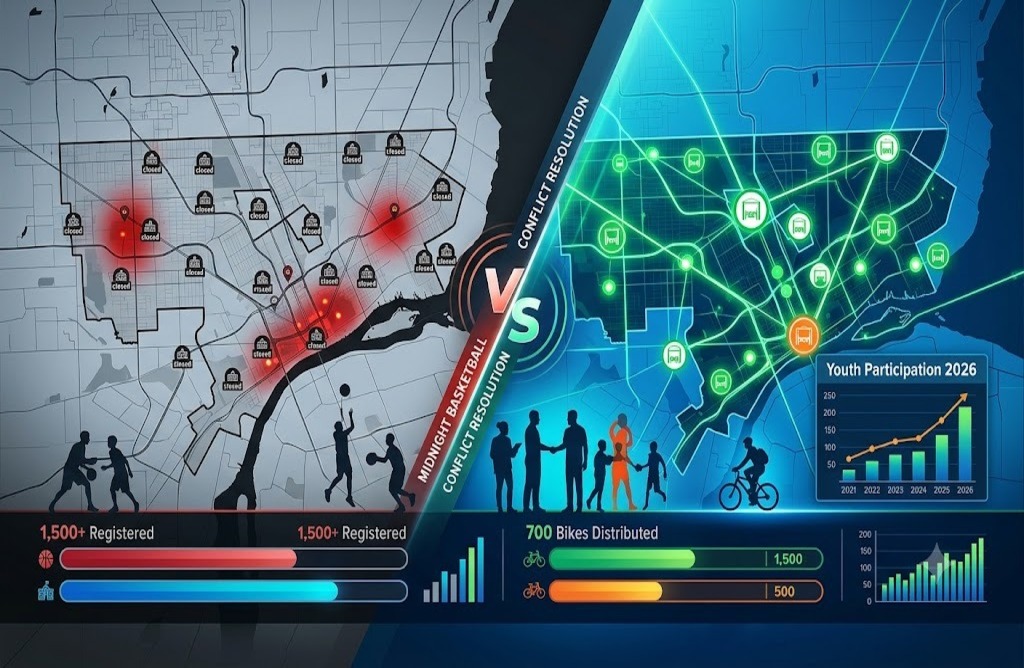
    The most prominent pillar of this strategy focuses entirely on the younger demographic. The city launched the “Occupy the Summer” initiative. This ten-week series of activities builds upon the successful “Occupy the Corner” movement Mayor Sheffield championed during her time on the City Council. The 2026 rollout represents a massive scaling of municipal ambition. Over 1,500 teenagers registered for the events before the mid-June kickoff.

    Late-Night Recreation And Midnight Basketball Leagues

    Recreation centers historically closed their doors just as neighborhood activity peaked. The 2026 safety plan corrects this operational flaw. Nine municipal facilities now operate with extended hours. Locations including Crowell, Farwell, Helen Moore, and the Butzel Family Center remain open until 11:00 PM on Wednesdays, Thursdays, and Saturdays.

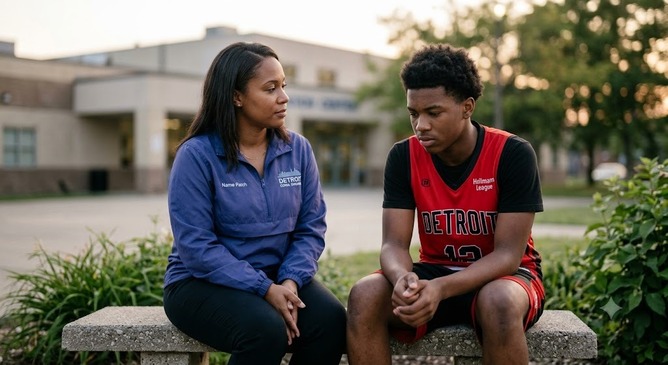
    Extended hours require dedicated programming to keep attendees engaged. The return of Late Night Basketball serves as the main draw for young adults ages 16 through 30. These leagues provide highly structured competition paired with direct mentorship. Participants receive free uniforms and have access to on-site wraparound services. The games give young men and women a reliable, positive outlet during the most critical weekend hours.

    The municipal sports leagues operate across three primary regional hubs. Officials designated overflow sites to handle the massive registration numbers.

    League Region Primary Facility Operational Focus
    East Detroit Heilmann Recreation Center Men’s and Women’s structured league play
    West Detroit Adams Butzel Recreation Center Mentorship and mid-season tournament games
    Southwest Detroit Kemeny Recreation Center Community engagement and wraparound services

    Organizers treat these basketball games as direct public health interventions. Creating a reliable schedule builds trust between the city and its younger residents. The predictable presence of mentors, coaches, and local leaders establishes a strong community safety net.

    Grassroots Partnerships And Private Sector Support

    A ten-week citywide activation requires massive financial backing. Government budgets cover the baseline facility operations. Private donations and non-profit partnerships elevate the experience for the attendees. The mid-June kickoff event at the Adams Butzel Recreation Center proved the effectiveness of cross-sector collaboration.

    The launch event featured live entertainment and family-friendly attractions. The most impactful moment occurred when organizers distributed 700 free bicycles to youth aged 18 and under. Private entities like the Sterling Group and Amazon provided the funding for this massive giveaway. A bicycle offers more than recreation. It provides independent transportation. Teenagers use these bikes to commute to summer jobs, visit friends in neighboring districts, and attend late-night events safely.

    Community coalitions handle the logistical heavy lifting. Organizations operating under the United Way for Southeastern Michigan umbrella provide volunteers, specialized training, and logistical support. These groups ensure the Friday neighborhood activations run smoothly. Every Friday evening, a different City Council district hosts a massive block party featuring local vendors, city resource tables, and cultural programming.

    Integrating Mentorship And Conflict Resolution

    Keeping a teenager busy solves only part of the equation. Equipping them with emotional regulation tools creates lasting behavioral changes. The 2026 summer initiative embeds conflict resolution specialists directly into the recreation centers. These professionals train facility staff to identify signs of distress and de-escalate arguments before they turn physical.

    We must evaluate how trauma impacts urban populations. Young adults carrying unresolved trauma react poorly to perceived disrespect. Incorporating mental health professionals into these sports leagues changes the underlying dynamic. These experts operate casually from the sidelines. They build organic relationships with the players between games.

    This approach mirrors other successful local models. Programs focused on advancing mental health and trauma support for local youth prove that casual, non-clinical interventions work best. A teenager will talk to a trusted basketball coach long before they schedule an appointment with a licensed therapist. The city leverages these existing relationships to deliver subtle but powerful psychological support.

    Tracking The Data And Measuring Neighborhood Impact

    The Sheffield administration insists on rigid accountability for these summer programs. Throwing money at a problem without tracking the outcome wastes taxpayer resources. The city monitors specific metrics to justify the extended recreation center hours and the massive staffing requirements.

    Data collection happens weekly. Police dispatchers track the volume of noise complaints and curfew violations in the neighborhoods surrounding the active recreation centers. A drop in these nuisance calls indicates the teenagers are safely inside the gymnasiums instead of gathering on street corners.

    Monitored Metric Data Collection Method Target Outcome for Summer 2026
    Curfew Violations Police dispatch logs Measurable decrease on weekend nights
    Program Attendance Registration check-ins Sustained participation through August
    Unsupervised Gatherings Resident complaint calls Total elimination of “teen takeover” events

    Addressing Transportation And Accessibility Barriers

    Proximity determines participation. A state-of-the-art basketball facility provides zero value to a teenager living five miles away without a car. Detroit confronts severe logistical barriers regarding public transit. The distribution of 700 bicycles solved a small fraction of the mobility crisis. The administration must implement broader transit solutions to guarantee equitable access to these summer programs.

    Planners mapped the nine participating recreation centers against current bus routes. They identified dead zones where teenagers would have to walk through multiple industrial corridors to reach a safe gym. The city is piloting specialized shuttle services on Friday nights. These shuttles run continuous loops between high-density housing projects and the primary recreation hubs.

    Removing the transit barrier aligns directly with broader public health goals. A teenager should never have to choose between staying home in an isolated environment or risking a dangerous walk across the city at night. The Office of Juvenile Justice and Delinquency Prevention emphasizes that safe passage programs drastically reduce the likelihood of a minor becoming a victim of random street violence. Detroit applies this federal guidance directly to its neighborhood operations.

    Empowering Youth Through Direct Civic Engagement

    The most successful aspect of the 2026 rollout involves the planning process itself. Adults sitting in conference rooms often misunderstand what teenagers actually want. The “Occupy the Summer” schedule reflects direct input from the target demographic. High school students participated in focus groups months before the June launch.

    These teenage advisors requested specific activities. They asked for e-sports tournaments, music production workshops, and late-night skate events. The city listened. The July 10th Skate Night with Royal Skateland at Corrigan Park originated directly from these youth councils. Giving young adults a voice in municipal planning builds profound civic pride.

    When teenagers help design a program, they protect it. They recruit their peers. They enforce basic rules of respect within the facility. This peer-to-peer accountability holds far more weight than any rule posted by a building manager. Detroit is not just keeping kids busy. The city is actively training the next generation of community leaders. The courts, the parks, and the recreation centers belong entirely to them.

  • Advancing Health Equity: Inside Detroit’s 2026-2029 Community Health Improvement Plan

    Advancing Health Equity: Inside Detroit’s 2026-2029 Community Health Improvement Plan

    A Data-Driven Approach To Neighborhood Wellness

    Public health outcomes depend entirely on localized infrastructure. Systemic gaps dictate life expectancy across different zip codes within the same city. The Detroit Health Department released its 2026–2029 Community Health Improvement Plan (CHIP) this week to address these exact disparities. This framework establishes a direct operational timeline to correct long-standing medical vulnerabilities within city limits.

    Chief Public Health Officer Ali Abazeed and Mayor Mary Sheffield presented the findings directly to the public. Their approach abandons passive care models completely. They prioritize direct intervention at the neighborhood level to reach the most vulnerable populations. The development of this blueprint required extensive input from the people living these realities daily.

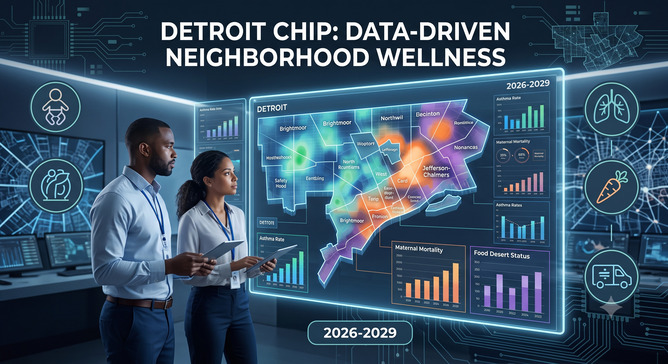
    Over 6,000 Detroit residents provided firsthand testimony regarding their physical and structural challenges. Local voices shaped the entire direction of this initiative from the ground up. Data collection methods involved town halls, direct surveys, and neighborhood block canvassing. Medical professionals correlated the community feedback with hospital admission rates and demographic metrics.

    The findings pointed to clear and undeniable trends across multiple districts. People struggle the most with logistical barriers. Time poverty, unreliable public transit, and economic instability block access to basic preventative medicine. The Centers for Disease Control and Prevention guidelines on preventative care support this exact model of bringing services directly to the residents. To view municipal health through a purely clinical lens ignores the root causes of illness.

    Translating Resident Feedback Into Actionable Policy

    The resulting 2026-2029 CHIP establishes four core pillars of intervention. Officials designed each pillar to disrupt a specific cycle of systemic neglect. The strategy shifts municipal funding directly toward grassroots organizations and localized health hubs. This decentralized model brings the clinical resources directly to the curb.

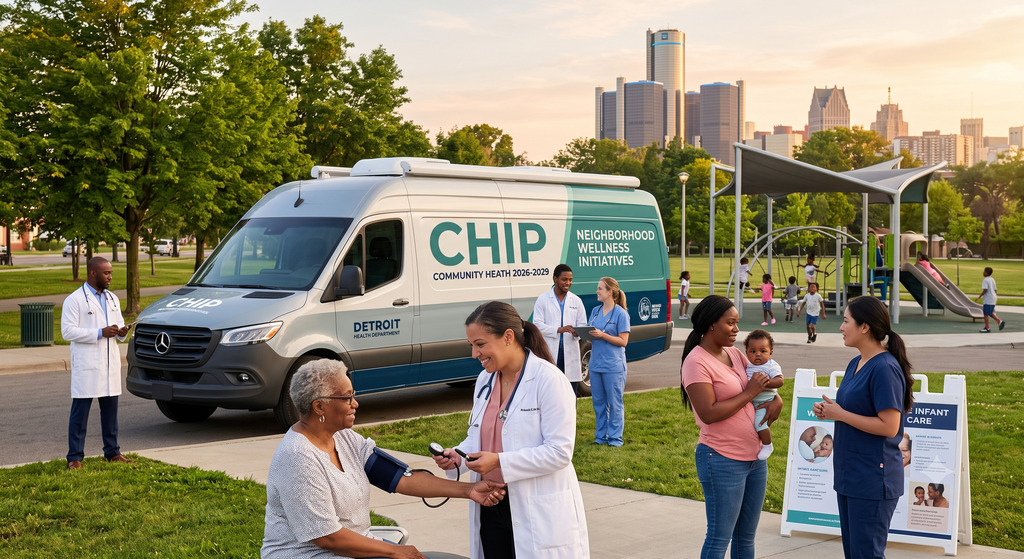
    Centralized hospitals cannot adequately serve marginalized populations struggling with transportation deficits. The CHIP recognizes this physical barrier and actively dismantles it. The city plans to flood recreation centers, local parks, and church parking lots with fully equipped medical personnel.

    The community task force identified the most urgent threats to neighborhood stability. They categorized these threats into actionable intervention zones. This focused strategy maximizes the impact of limited municipal funds.

    PillarFocus AreaProposed Community Action
    1Maternal and Infant HealthExpanding mobile prenatal care and local infant supply pantries.
    2Chronic ConditionsDeploying mobile asthma units and reducing industrial air pollution.
    3Food AccessibilityBuilding neighborhood food networks to eliminate persistent food deserts.
    4Healthcare AccessBringing low-barrier medical screenings directly to recreation centers.

    Tackling Chronic Respiratory Conditions In Urban Zones

    Industrial proximity heavily impacts respiratory outcomes for vulnerable populations. Children living near heavy transit corridors face disproportionate asthma rates compared to those in residential suburbs. The CHIP directly targets this environmental inequity through aggressive mobile interventions.

    Health workers plan to deploy specialized mobile respiratory clinics to areas with high industrial concentration. These units provide rapid testing, inhaler distribution, and localized family education right on the street. The strategy removes the requirement for parents to schedule distant specialist appointments during working hours.

    City leaders are integrating zoning policy with medical data to protect neighborhoods. Tracking pediatric outcomes provides the required evidence to restrict industrial expansion near residential blocks. The health department treats clean air as a baseline medical necessity. They refuse to accept compromised lung function as a normal aspect of urban living.

    National frameworks for tracking pediatric respiratory metrics show that early intervention stops long-term lung damage. The mobile units identify these chronic conditions before they require emergency room interventions.

    Rebuilding Food Infrastructure And Nutritional Support

    Grocery store access dictates dietary habits for entire generations. Whole neighborhoods function without a single full-service supermarket within walking distance. Corner stores saturated with processed items dominate the local food economy in these vulnerable zones.

    The third pillar of the CHIP focuses entirely on nutritional equity. Planners are bypassing traditional retail models to build localized distribution networks. They aim to support urban farming cooperatives and community-owned produce markets directly within the neighborhoods.

    Medical outcomes improve drastically when residents consume fresh and reliable meals daily. Dietary interventions reduce the incidence of pediatric diabetes and adult hypertension. The CHIP outlines financial grants for neighborhood pantries that prioritize fresh produce over non-perishable goods.

    Strategies targeting nutritional deficits mirror the economic mobility grants in Michigan directed by organizations like GreenLight Fund Detroit. Jasahn M. Larsosa and other community leaders stress the need for financial sustainability in these programs. Short-term food drives provide immediate relief but fail to alter long-term nutritional patterns. The new plan creates permanent infrastructure.

    Integrating Education And Faith In Public Health

    Municipal departments cannot execute this massive transition acting alone. They need the physical space and built-in trust of existing community institutions. Churches, community centers, and local schools serve as the backbone for the rollout of these new initiatives.

    Faith leaders and principals hold immense influence within their neighborhoods. When a local church hosts a health screening, attendance rates surpass those held at municipal buildings. This collaboration bridges the gap between residents and government services.

    The plan formalizes these critical local partnerships. Health officials will train congregation members and teachers to identify early signs of trauma and medical neglect. Building strong alliances between faith-based organizations and public schools creates an immediate and familiar safety net for vulnerable families.

    The integration of religious spaces transforms empty buildings into active extensions of the local health system. A willing congregation paired with medical resources solves logistical gaps that school districts cannot fix independently.

    Establishing Measurable Milestones For Success

    The 2026-2029 CHIP contains strict accountability measures to guarantee tangible results. Previous decades saw numerous reports published with minimal real-world implementation. The Sheffield administration insists on transparent, quarterly public reviews of the stated goals.

    Success relies on tracking highly specific data points directly tied to neighborhood wellness.

    • The reduction in emergency room visits for preventable conditions.
    • The exact number of residents receiving preventative care at mobile popup clinics.

    If a specific neighborhood shows no improvement in maternal health outcomes after six months, the intervention model adapts immediately. This flexibility prevents the waste of public funds on ineffective programs.

    Intervention StrategyMonitored Data PointTarget Outcome (By 2029)
    Mobile Asthma ClinicsPediatric emergency room admissions30% reduction in target zip codes
    Neighborhood Food HubsSelf-reported fresh produce consumption40% increase among surveyed residents
    Prenatal Support NetworksLow birth weight occurrencesMeasurable drop below state averages

    The Role Of Cross-Sector Collaboration

    Medical equity demands input from housing authorities, transit planners, and economic developers. Poor housing quality directly causes lead poisoning and severe allergies. Unreliable bus routes force missed medical appointments.

    The new health plan forces these separate departments to share data constantly. A unified municipal strategy prevents redundant efforts and accelerates positive outcomes for the residents. Treating housing and transit as medical issues allows for complete neighborhood care.

    The community acts as the final arbiter of success. The CHIP tasks a 30-member coalition of local activists to evaluate the ongoing rollout. This committee holds veto power over proposed operational changes. They keep the health department focused entirely on lived neighborhood realities.

    Sustaining The Momentum Beyond The Initial Rollout

    Long-term viability depends entirely on permanent funding streams. Grant money initiates the programs, and structural budget adjustments sustain them over the decades. The city must institutionalize these services into the annual operating budget to protect them from future cuts.

    Community leaders are working to secure state and federal matching funds right now. They present the localized data to prove the massive return on investment. Preventive care costs a fraction of reactive emergency interventions. A single mobile screening saves thousands of dollars in hospital fees down the line.

    The 2026-2029 CHIP represents a massive operational shift for Detroit. It moves resources directly to the streets where they belong. The strategy relies on aggressive, localized support networks to create lasting medical equity. The work begins right now to translate this comprehensive data into tangible neighborhood healing.

  • Meeting Residents Where They Are: Detroit’s Push for Mobile Health Equity

    Meeting Residents Where They Are: Detroit’s Push for Mobile Health Equity

    Have you ever evaluated the physical distance between your neighborhood and the nearest reliable medical clinic?

    For many residents across Detroit, accessing basic medical care requires overcoming massive logistical barriers. Time poverty, unreliable public transportation, and a lack of childcare options turn routine check-ups into insurmountable hurdles. Public health professionals are realizing that centralized hospitals cannot adequately serve marginalized populations.

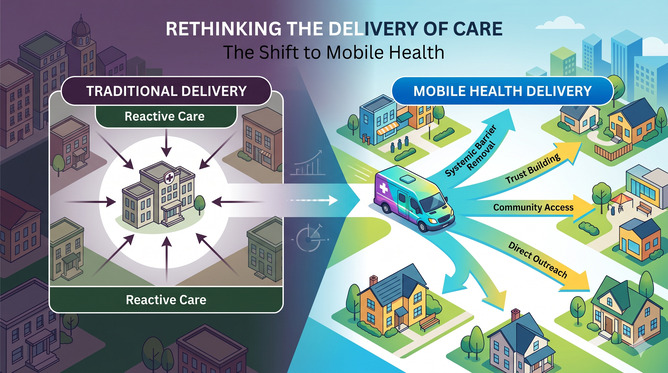
    The framework is shifting from expecting patients to travel to clinics to bringing fully equipped clinics directly to the people. Detroit is currently undergoing a massive structural change in how it delivers public services. Community leaders and health officials are aggressively moving interventions away from traditional facilities and directly into local parks, recreation centers, and neighborhood streets.

    This pivot is driven by the stark reality that zip codes frequently dictate life expectancy. Recognizing this disparity requires a complete operational shift. Under the guidance of Mayor Mary Sheffield and Chief Public Health Officer Ali Abazeed, the Detroit Health Department is redefining equitable care. They are deploying mobile units to bridge the gap between systemic neglect and proactive wellness.

    Rethinking the Delivery of Care

    The traditional model of healthcare relies on a passive approach. Providers wait for patients to schedule appointments, secure transportation, and deal with complicated insurance systems. This model inherently disadvantages working-class families and those living in historically marginalized areas.

    Ali Abazeed has prioritized a “Health in All Policies” framework for Detroit. This strategy integrates wellness considerations into every aspect of municipal decision-making. The goal is to reshape the environment where people live, work, and gather to naturally support better outcomes.

    By mobilizing resources, the city dismantles the most common obstacles to wellness. Mobile units do more than administer vaccines; they rebuild trust within communities that have long felt abandoned by the medical establishment. Seeing medical professionals consistently show up at local block parties and neighborhood parks creates a reliable, visible support system.

    Organizations operating these mobile fleets bring preventative medicine directly to the curb. The Wayne Mobile Health Unit stands as a prime example of this decentralized model. Their vans canvass neighborhoods throughout Detroit, offering an extensive menu of medical and social services right at the doorsteps of residents.

    The Pull Up Project at Palmer Park

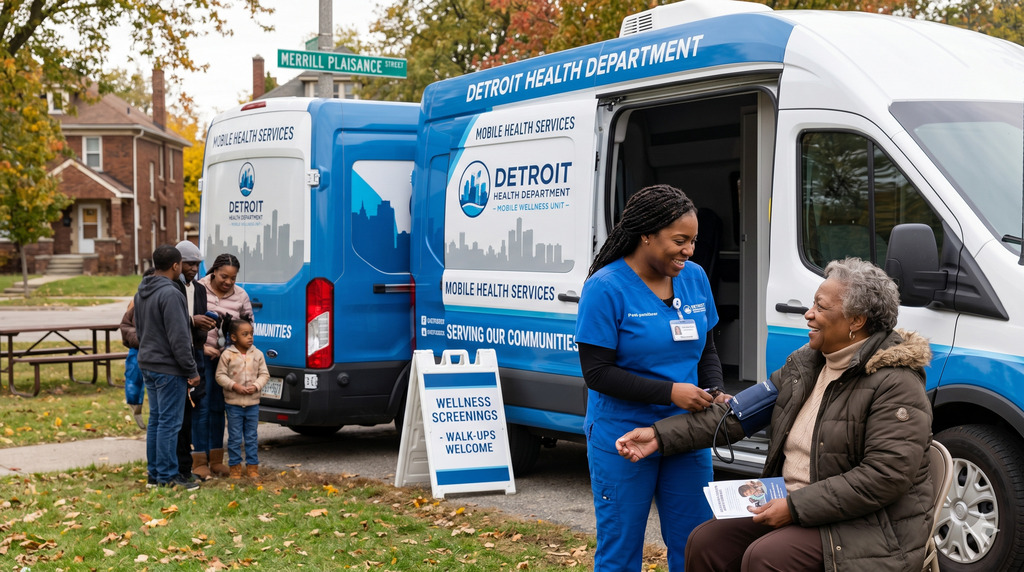
    One of the most effective manifestations of this strategy is the “Pull Up Project.” Hosted at Palmer Park on Merrill Plaisance Street, this initiative transforms a public recreation space into a comprehensive wellness hub. It represents a direct collaboration between the Detroit Health Department and various community partners.

    The Pull Up Project operates on the philosophy that wellness should be accessible, stigma-free, and community-centered. Residents can walk up to the mobile units without appointments, without insurance, and without judgment. This immediate, low-barrier access is critical for identifying chronic conditions before they require emergency room interventions.

    The initiative blends clinical screening with basic human needs. Alongside blood pressure checks, organizers distribute hygiene supplies and connect families with social services. This holistic approach addresses the root causes of medical vulnerability.

    InitiativeLocationPrimary Services Provided
    The Pull Up ProjectPalmer ParkPreventative screenings, hygiene supplies, HIV prevention
    Wayne Mobile Health UnitCitywide CanvassingBlood pressure, diabetes monitoring, rapid Hepatitis C screening
    RxKids DetroitMunicipal ClinicsMaternal support, infant care resources, cash assistance

    Integrating Safety and Wellness

    Public health extends far beyond clinical diagnoses. It encompasses physical safety, mental well-being, and the reduction of community violence. Initiatives like Detroit’s Occupy the Summer program demonstrate how creating safe, engaging spaces for youth directly correlates with improved community health metrics.

    When neighborhoods are safe, residents are more likely to utilize outdoor spaces, exercise, and interact with their neighbors. This social cohesion is a known protective factor against mental health crises. The alignment of police resources, parks departments, and health workers creates a comprehensive safety net.

    Treating violence and trauma as public health issues allows for proactive interventions. Behavioral health co-response teams and mobile crisis units are replacing punitive measures with compassionate care. Identifying trauma early and providing immediate resources prevents the escalation of conflict and reduces the strain on emergency services.

    Policy Driven by Data and Compassion

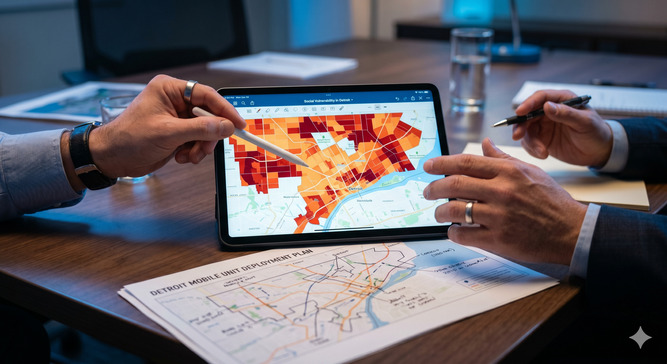
    The push for mobile equity relies heavily on analyzing social vulnerability indices. Officials map out the specific neighborhoods experiencing the highest rates of chronic illness, infant mortality, and overdose incidents. They dispatch mobile units directly to these identified hotspots.

    This targeted approach maximizes the impact of limited municipal funds. Instead of blanket campaigns, resources flow exactly where the data indicates the greatest need. The Centers for Disease Control and Prevention guidelines on Health in All Policies heavily support this data-informed, cross-sector collaboration to improve population metrics.

    Poverty remains the primary determining factor for large-scale medical outcomes. Detroit’s leadership acknowledges that treating symptoms without addressing the underlying financial instability creates an endless cycle of hospital readmissions. Pairing poverty alleviation strategies with mobile interventions creates a sustainable path forward.

    Programs like RxKids, recently championed by the Sheffield administration, reflect this dual approach. By providing critical assistance to expectant mothers and infants alongside accessible maternal care, the city attacks the root causes of infant mortality. Providing financial stability directly improves clinical outcomes.

    Rebuilding Trust Through Consistent Presence

    Historical inequities have bred deep skepticism toward large medical institutions within many Detroit neighborhoods. Overcoming this distrust requires consistency, transparency, and a profound respect for the community. Mobile units achieve this by operating on the community’s turf and on the community’s terms.

    When a mobile unit visits Voyageur Academy or the Northwest Farmers Market, it integrates into the daily rhythm of the neighborhood. Healthcare becomes a routine part of community gatherings rather than an isolated, stressful event. This familiarity encourages individuals who might otherwise avoid doctors to seek preventative screenings.

    The professionals staffing these units reflect the communities they serve. Culturally competent care ensures that language barriers and cultural misunderstandings do not impede treatment. Listening to residents and adapting the services to their specific requests builds a foundation of mutual respect.

    Addressing the broader social determinants of wellness requires a commitment from every level of local government. Transportation, housing, and food security are all medical issues. When a mobile unit assists a resident with utility bills or food resources, it acts as a lifeline, preventing future medical crises.

    A Blueprint for Lasting Change

    The transition toward decentralized, mobile support services represents a profound evolution in urban policy. Detroit is moving away from reactive crisis management toward proactive, compassionate engagement. Meeting residents exactly where they are proves that effective government intervention is possible.

    Empowering neighborhoods requires providing the physical and social infrastructure necessary for success. Mobile units deliver that infrastructure directly to the streets. They prove that wellness is not a privilege reserved for those with resources, but a fundamental right accessible to all.

    The continued expansion of these programs relies on sustained funding, inter-departmental cooperation, and the unwavering dedication of local organizers. By valuing lived experiences alongside clinical data, Detroit is constructing a resilient, equitable support system. This localized approach serves as a blueprint for cities nationwide facing similar systemic challenges.

  • Empowering Our Youth: How Detroit’s ‘Occupy the Summer’ is Creating Safe Neighborhood Spaces

    Empowering Our Youth: How Detroit’s ‘Occupy the Summer’ is Creating Safe Neighborhood Spaces

    Have you ever considered what happens when a city shifts its focus from policing youth to actively engaging them in safe, structured environments?

    For years, major urban centers have grappled with finding productive outlets for teenagers during the long summer months. Here in Detroit, the narrative is officially changing.

    Instead of merely reacting to unauthorized gatherings or the rising trend of isolated disruptions, local leadership is stepping up to provide viable, attractive alternatives.

    On June 12, 2026, the city took a definitive step forward with the launch of the Occupy the Summer initiative.

    Kicking off at the Adams Butzel Recreation Center, this ambitious program is redefining how we support our youngest residents. It proves that when we invest in our neighborhoods, we cultivate a stronger, safer, and more united community.

    Moving Beyond the Reactive Narrative

    Our youth have consistently asked for more safe spaces, recreational options, and fun activities when school is out. We have to listen to their needs.

    Historically, the absence of accessible programming has left young people to create their own entertainment. Sometimes, this leads to chaotic situations that lack adult guidance, mentorship, or structured support.

    Rather than relying solely on enforcement, Detroit is building a proactive foundation of engagement. This strategy recognizes that boredom and a lack of neighborhood resources are the root causes of many community challenges.

    By prioritizing proactive engagement, we are addressing public safety from a holistic, compassionate perspective. This approach aligns perfectly with our ongoing efforts to expand youth mental health and trauma support across our local communities.

    When we create environments where teenagers feel valued, we inherently reduce the friction that leads to neighborhood disruptions. It is about empowering our youth with resources to improve their quality of life.

    The Core Pillars of Occupy the Summer

    The launch of Occupy the Summer was not just a symbolic gesture; it was backed by tangible resources and massive community participation.

    More than 1,500 young people registered for the activities, demonstrating a profound hunger for structured neighborhood programming.

    To meet this demand, the initiative deployed several major interventions designed to keep kids active, connected, and safe.

    The strategy relies heavily on maximizing the utility of existing city infrastructure and transforming it into vibrant community hubs.

    InitiativeLocation / ScopeCommunity Impact
    Free Bicycle DistributionAdams Butzel Recreation CenterDistributed 700+ bikes to provide youth with independent transportation and healthy recreation.
    Extended Recreation Hours9 City LocationsFacilities remain open until 11 p.m. on Wednesdays, Thursdays, and Saturdays, offering a safe late-night haven.
    Late Night BasketballEast, West, and Southwest DetroitEngages 16–30-year-olds with structured play, consistent mentorship, and vital wraparound support services.

    Strengthening Neighborhoods Through Strategic Partnerships

    A citywide initiative of this magnitude cannot survive on civic goodwill alone. It requires robust logistical and financial support.

    The success of the launch event highlighted the incredible power of local and corporate collaboration.

    Sponsors like the Sterling Group, Amazon, and Ally provided the necessary funding to make the massive bike giveaway possible. Local businesses, such as Mike’s Garage, also stepped in to supply bicycles and donate skateboards.

    These partnerships signify a shared understanding that corporate social responsibility must extend directly into our neighborhoods.

    When private entities and public offices collaborate, the impact on our community is exponential. We see this not just in the donation of goods, but in the sustained commitment to neighborhood revitalization.

    Furthermore, integrating effective youth engagement strategies requires continuous cooperation between local artists, athletes, and entertainers.

    By bringing in recognizable figures—like Detroit rapper Skilla Baby for the kickoff—the program ensures that the spaces remain culturally relevant and highly attractive to local teens.

    The Role of Accessible Programming in Public Safety

    Public safety is intrinsically linked to community opportunity. We cannot effectively police our way out of systemic underinvestment.

    Occupy the Summer is explicitly framed as a major component of a broader six-point community safety plan.

    By extending the operating hours of nine recreation centers until 11 p.m., the city is directly targeting the hours when youth are most vulnerable to finding themselves in unsafe situations.

    These facilities offer more than just a place to hang out. They are intentionally designed to serve as entry points for critical neighborhood resources.

    The inaugural Late Night Basketball League, for instance, goes far beyond sports. With 135 players receiving free jerseys at the launch, it establishes a vital sense of belonging and pride.

    The league intentionally targets young adults ages 16 to 30, a demographic that is often overlooked in traditional summer programming. By pairing competitive sports with wraparound services, the city is actively working to dismantle barriers to employment and emotional support.

    Mentorship programs, conflict resolution workshops, and these late-night leagues provide structured environments where young adults can build relationships with positive role models.

    This model of engagement is essential for violence prevention. It replaces idle time with skill-building, teamwork, and community integration.

    Building a Sustainable Framework for the Future

    The current 10-week summer program is a blueprint for year-round community investment.

    Every Friday, rotating activations across different City Council districts will bring the energy and resources directly to the neighborhoods that need them most.

    These rotating block parties ensure that transportation barriers do not prevent families from accessing summer fun. Whether it is a Juneteenth celebration, a community skate night, or a local arts and culture festival, the programming is tailored to reflect the unique identity of each district.

    These events function as mobile resource centers. They connect families with city services, local vendors, and cultural programming right in their own backyards.

    This hyper-local approach is exactly what it takes to rebuild trust and foster deep, lasting neighborhood connections.

    Occupy the Summer proves that our youth are ready to participate in positive, empowering activities when given the chance.

    It is now up to us—the residents, leaders, and advocates of Detroit—to ensure these safe spaces remain funded, accessible, and vibrant for generations to come.

  • Expanding Mental Health and Trauma Support for Local Youth

    Expanding Mental Health and Trauma Support for Local Youth

    Have you ever looked at a crowded classroom and wondered how many students are silently carrying the weight of unaddressed trauma?

    In our rapidly changing world, the emotional well-being of our young people has never been more critical. The pressures they face today extend far beyond academic expectations, reaching deep into their personal lives and community interactions.

    Mental health challenges among youth, ranging from chronic anxiety to severe trauma, require a compassionate and coordinated response. We cannot afford to wait for these struggles to manifest as full-blown crises in our emergency rooms.

    Instead, we must actively build resilient environments where every child feels seen, supported, and safe. Expanding our local mental health infrastructure is not just a healthcare priority; it is a foundational pillar of our neighborhood’s survival.

    Recently, the national landscape for youth mental health received a vital infusion of resources. In June 2026, federal health agencies recognized the urgency of this crisis, announcing significant financial commitments aimed at grassroots recovery.

    The Substance Abuse and Mental Health Services Administration (SAMHSA) unveiled a sweeping $40 million funding package aimed directly at addressing child trauma, suicide prevention, and community safety.

    This unprecedented investment offers a unique opportunity for local organizations here in Detroit. We now have the federal backing to translate ambitious public health goals into tangible, neighborhood-level solutions.

    The Urgency Of Trauma-Informed Care

    When we discuss trauma in young people, we are often talking about profound experiences that disrupt their fundamental sense of safety and stability.

    Exposure to violence, systemic food insecurity, and the prolonged isolation of recent years leave lasting imprints on a developing brain. These adverse childhood experiences can derail both emotional regulation and cognitive development if left completely unaddressed.

    Trauma-informed care shifts the core question we ask our youth. Instead of demanding to know, “What is wrong with you?” we must learn to ask empathetically, “What has happened to you?”

    This shift in perspective is crucial for effective intervention and long-term healing. It removes the stigma associated with behavioral challenges and replaces it with empathetic understanding.

    Locally, the demand for these specialized services has skyrocketed over the past year. Outreach navigators in Detroit report that youth are struggling with an epidemic of loneliness that heavily exacerbates their existing traumas.

    Addressing these deep-rooted issues requires more than weekly clinical therapy sessions. It requires an integrated community safety net that catches vulnerable children before they fall through the cracks.

    Breaking Down The 2026 Federal Resource Allocation

    To understand how our neighborhoods can actually benefit, we must look closely at how this recent $40 million federal initiative is structurally designed. The funding strategically targets specific areas of need, ensuring that interventions reach the most vulnerable populations quickly.

    A significant portion of these grants is dedicated to the National Center for Child Traumatic Stress. This ensures that the most current, evidence-based practices are rapidly disseminated to our local care providers.

    By prioritizing community-driven behavioral systems, the initiative acknowledges that top-down, bureaucratic solutions rarely work without passionate grassroots implementation.

    Funding Target AreaDeficit AddressedMeasurable Outcome
    Community Safety PartnershipsHigh rates of neighborhood violence and behavioral distressIntegrated crisis response systems and reduced crime impacts
    Child Traumatic Stress CentersLack of specialized, evidence-based trauma treatmentElevated standard of care and trained local providers
    Youth Suicide PreventionRising isolation and severe mental health crises among teensExpanded early intervention screening and peer support networks

    As we advocate for our local youth, understanding these targeted areas helps us align our neighborhood programs with available national resources. We must ensure Detroit captures its fair share of this critical funding.

    Creating Safe Spaces Beyond The Clinic

    Clinical environments are undeniably essential, but true healing happens where young people spend the majority of their time. We must bring trauma support directly into their daily routines.

    Schools, recreation centers, and faith-based organizations serve as the primary social ecosystems for Detroit’s youth. These familiar spaces must be fully equipped to recognize and respond to emotional distress on the spot.

    When a child exhibits highly disruptive behavior in an after-school program, it is rarely just a simple issue of discipline. It is frequently a desperate plea for help from a nervous system overwhelmed by external stressors.

    Training educators, sports coaches, and volunteer mentors in psychological first aid is a vital first step. When trusted adults know exactly how to de-escalate a crisis, they become vital anchors of stability for a panicking child.

    Furthermore, these communal spaces can safely host peer-led support groups. Young people are significantly more likely to open up about their internal struggles when interacting with peers who share similar lived experiences.

    By decentralizing mental health resources, we break down the logistical and cultural barriers that often prevent working families from seeking professional help.

    Leveraging Community Collaboration

    No single organization can shoulder the immense responsibility of youth mental health alone. The sheer complexity of trauma requires a unified, multi-disciplinary approach from all sectors.

    Local nonprofits, healthcare providers, and civic leaders must break out of their traditional operational silos. Cross-sector collaboration allows us to pool our limited resources and aggressively eliminate redundant services.

    For example, when a neighborhood food pantry seamlessly partners with a behavioral health clinic, they can simultaneously address food insecurity and anxiety. This holistic approach treats the whole child, rather than isolated symptoms.

    Building these robust coalitions requires deliberate communication, transparency, and shared community goals. We must actively foster relationships with existing community outreach programs to ensure that every available resource is maximized.

    Our local leaders are already laying the foundational groundwork for these integrated networks. However, they desperately need the active participation of dedicated neighbors to make them sustainable.

    Collaborative ActionCommunity PartnersExpected Impact
    Co-locating ServicesPublic schools and behavioral clinicsImmediate access to counseling during the school day
    Shared Training InitiativesFaith leaders and mental health professionalsWidespread trauma awareness across diverse neighborhood hubs
    Family Education WorkshopsNonprofits and parent-teacher associationsEmpowering caregivers with effective de-escalation techniques

    Empowering Caregivers And Mentors

    While systemic changes are necessary, the true foundation of a child’s resilience is built on the daily relationships they have with the adults in their lives.

    Caregivers are the very first line of defense against long-term psychological damage. However, parenting a child who has experienced profound trauma is inherently exhausting, isolating, and deeply complex.

    We must aggressively extend our support services to include those who care for our youth. Caregiver burnout is a real and present danger that can easily destabilize an otherwise safe home environment.

    Providing adults with easy access to respite care, educational workshops, and their own therapeutic resources is essential. A healthy, emotionally regulated adult is the single most effective tool for calming an anxious child.

    Mentorship programs also play a wildly critical role in this delicate ecosystem. Consistent, positive, and non-judgmental interactions with a mentor can significantly alter a vulnerable youth’s entire life trajectory.

    When a young person knows that a reliable adult is genuinely invested in their success, their internal capacity to overcome adversity expands exponentially.

    Transforming Awareness Into Meaningful Action

    Public awareness of the youth mental health crisis is at an all-time high across the country. Yet, awareness without concrete action rapidly leads to community complacency.

    The recent federal funding announcements serve as a powerful catalyst, but the real, life-saving work must happen on our local streets. We have the data, we understand the complicated science of trauma, and the financial resources are finally beginning to flow into our local systems.

    Now, the heavy responsibility falls directly to us as a unified community. We must fiercely hold our local institutions accountable for accessing these federal grants and aggressively implementing evidence-based care.

    Every single resident has a valuable role to play in this crucial initiative. Whether you are a teacher adapting your classroom environment, a business owner sponsoring a local youth program, or simply a neighbor offering a listening ear, your contribution matters deeply.

    By actively committing to a trauma-informed approach, we are not just treating passing symptoms. We are permanently investing in a resilient future where Detroit’s youth can thrive, completely free from the silent burdens of their past.

  • How to Build Partnerships With Local Schools

    How to Build Partnerships With Local Schools

    Have you ever evaluated the physical infrastructure available in your immediate neighborhood? You will likely find faith-based organizations occupying significant space right next to public schools.

    As public health professionals, we view these congregations as massive, underutilized health and social support networks.

    Strong partnerships with local schools create an immediate safety net for vulnerable families. Children facing weekend food insecurity or lacking basic winter clothing cannot focus during Monday morning classes.

    Connecting a willing congregation with a struggling student body solves logistical gaps that school districts cannot fix alone.

    This structured collaboration turns empty buildings and willing congregants into active extensions of the local public health system.

    Addressing Non-Academic Student Needs

    Administrators track exact data on how environmental factors affect student performance. A child who misses regular meals faces severe cognitive delays and behavioral challenges.

    School districts lack the budget to provide comprehensive weekend nutrition or after-school health interventions. Local congregations possess the volunteer density and facility space to absorb this exact burden.

    Successful programs often start with simple backpack food deliveries. Volunteers pack nutritious, non-perishable meals on Thursday evenings for students to take home on Friday afternoons.

    This direct intervention prevents weekend malnutrition and stabilizes the child’s physical health for the upcoming week. Examining models from childhood hunger initiatives shows a direct reduction in Monday morning nurse visits.

    You organize these efforts effectively by building local volunteer networks directly from the church’s existing membership. The congregation already meets weekly, providing a built-in workforce ready for deployment.

    Church Gardens at Schools

    Structuring Volunteer And Facility Support

    A successful collaboration requires moving past vague offers of help. You must provide the school principal with a specific inventory of available physical and human resources.

    Churches own large halls, commercial kitchens, and passenger vans that sit empty for most of the week. Schools desperately need safe off-site spaces for health screenings and parent education seminars.

    Matching the church’s idle assets with the school’s specific deficits creates immediate community value.

    Asset AvailableSchool Deficit AddressedMeasurable Health Outcome
    Commercial KitchensLack of weekend nutritionReduced pediatric malnutrition
    Passenger VansPoor medical transportationLower missed clinic appointments
    Classroom SpacesNo after-school supervisionDecreased localized youth trauma

    Defining these roles clearly prevents administrative confusion. The church manages the logistics, and the school identifies the families requiring assistance.

    Current sociological research on faith-based community initiatives proves that shared resource models drastically lower the operational costs for municipal governments.

    Your goal is to become an operational extension of the school’s existing social work department.

    Establishing Legal And Operational Boundaries

    Public schools operate under strict state and federal compliance laws. A congregation must separate its theological mission from its community support role to work within these public buildings.

    You must draft clear memorandums of understanding before any volunteer steps foot on campus. These documents define the exact scope of service and outline mandatory background check procedures.

    School administrators face severe liabilities regarding student data and physical safety. Your church volunteers must complete the same rigorous screening processes required of standard district employees.

    Applying structured creative fundraising ideas helps cover the administrative costs of these background checks. The school never pays for your organization to become compliant.

    Keeping the relationship focused entirely on physical well-being and academic support guarantees long-term sustainability. The partnership survives administrative turnover when it consistently delivers measurable relief to the school’s budget.

    Measuring The Health And Academic Impact

    Sustaining any neighborhood program requires proving the actual results. You must move past anecdotal success stories and track hard data alongside the school administration.

    Request basic, anonymized metrics from the principal at the end of each semester. Track the absenteeism rates and behavioral referrals of the student populations utilizing your services.

    If your weekend nutrition program works, you will see a measurable drop in Monday morning sick days. If your after-school mentoring succeeds, detention rates will fall rapidly.

    Tracking this data aligns with standard community health assessment protocols used by county health departments to allocate future funding.

    Presenting these concrete numbers to your congregation justifies their continued financial and physical investment. It proves that their time directly improves the physical and mental health of the surrounding neighborhood.

  • How Community Partnerships Strengthen Local Support Systems

    How Community Partnerships Strengthen Local Support Systems

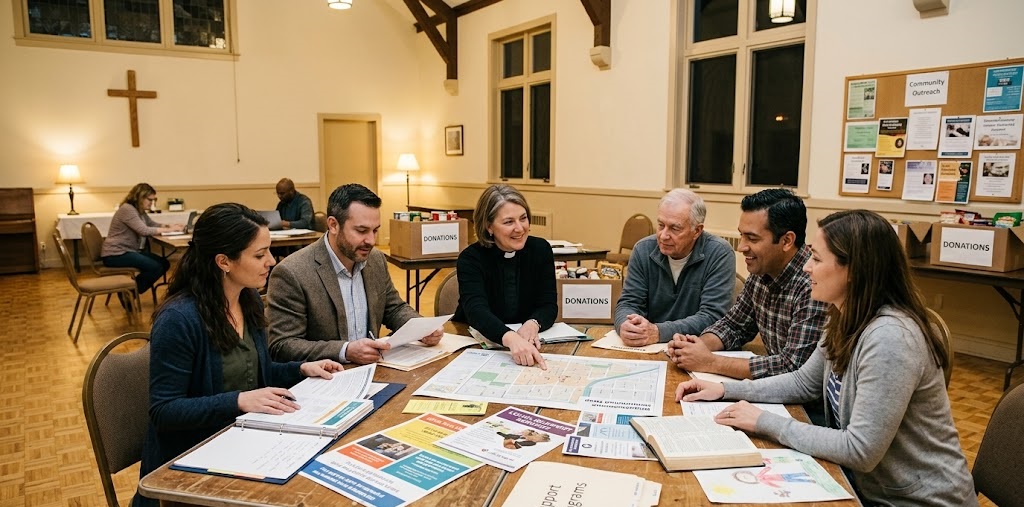
    Local support systems rarely grow from one organization acting alone. They become stronger when churches, schools, nonprofits, civic leaders, volunteers, and families begin working from the same map. A food pantry may meet an immediate need. A school may identify families under pressure. A church may provide trusted space. A nonprofit may bring program experience. When those pieces connect, the community receives more than scattered help. It receives a network.

    That is why community partnerships matter so much for local outreach. They help organizations move beyond one-time service and toward long-term stability, shared responsibility, and deeper trust. For faith-based organizations, this kind of collaboration also reflects a practical expression of service: seeing the whole person, not just the visible need.

    Strong partnerships do not erase the identity of each organization. They make each partner more useful. A church can remain a church. A school can remain a school. A nonprofit can remain focused on its mission. But when they coordinate, they reduce gaps, avoid duplicated work, and help families find support before small challenges become emergencies.

    Why Local Support Systems Need More Than Good Intentions

    Good intentions are important, but they are not enough to build a dependable support system. Communities need structure. They need communication. They need shared goals. Without those elements, even generous outreach efforts can become fragmented.

    Imagine three organizations trying to help the same neighborhood. One hosts a clothing drive. Another offers tutoring. A third provides emergency grocery assistance. Each effort is valuable. But if those groups never speak with one another, families may miss services, volunteers may be underused, and leaders may never see the full pattern of need.

    Partnerships help turn isolated efforts into coordinated care. They allow organizations to ask better questions. Who is already serving this group? Where are families falling through the cracks? Which needs are seasonal, and which are ongoing? What resources exist nearby but remain disconnected?

    This kind of coordination is especially important for churches and faith-based organizations. Many people turn to trusted local institutions first when they are facing financial stress, educational challenges, grief, housing insecurity, or family pressure. When those institutions are connected to a wider support network, they can respond with wisdom instead of guesswork.

    That is the difference between activity and impact. Activity says, “We hosted an event.” Impact asks, “Did the right people receive the right help at the right time?”

    The Power Of Shared Trust

    Trust is one of the most valuable assets in community work. It cannot be rushed, purchased, or announced into existence. It grows when people see organizations keeping promises, listening carefully, and showing up consistently.

    Churches often have deep trust within their communities because they are present through many seasons of life. Schools build trust through daily contact with children and families. Nonprofits build trust by delivering specialized services. Local businesses build trust by investing in the places where they operate.

    When these groups partner well, they share more than resources. They share credibility.

    For example, a family may feel more comfortable attending a financial literacy workshop if it is hosted at a familiar church. A school may be able to reach more parents if a local nonprofit helps with translation, transportation, or childcare. A nonprofit may gain stronger volunteer support when faith communities help spread the word.

    This is why community support networks are so important. They allow local organizations to build a bridge between need and action. Instead of asking residents to navigate a confusing system alone, partnerships create warmer pathways into help.

    The strongest partnerships are not built on publicity. They are built on respect. Each partner understands what the others bring, and no one treats collaboration as a way to control the whole effort.

    What Strong Partnerships Actually Look Like

    Not every partnership needs to be large or complicated. In many cases, the most effective collaborations are simple, focused, and consistent.

    A church might offer space for after-school tutoring while a local educator designs the learning plan. A nonprofit might train volunteers while a neighborhood group recruits families. A school might identify student needs while a local business donates supplies. A health organization might provide screenings during a community workshop hosted by a faith-based group.

    The key is alignment. Partners should know the purpose, the audience, the responsibilities, and the expected outcome before the work begins.

    Partnership TypeHow It Strengthens Local Support
    Churches and schoolsConnect families with tutoring, mentoring, supplies, and trusted support
    Nonprofits and volunteersExpand service capacity while improving organization and training
    Local businesses and charitiesProvide funding, supplies, visibility, and workplace giving opportunities
    Civic groups and faith organizationsImprove outreach, communication, and neighborhood-level coordination

    The best partnerships also include clear communication. That means regular check-ins, honest updates, and a willingness to adjust when something is not working. A partnership that never evaluates itself can become busy without becoming effective.

    Strong collaboration also respects the dignity of the people being served. Community members should not be treated as projects. They should be treated as neighbors, contributors, and voices in the process.

    Lessons From Tribal-State Cooperation

    Community partnerships are not limited to churches and nonprofits. Larger public systems also show why cooperation matters. In Oklahoma, discussions around strong Tribal–state partnerships highlight how collaboration between governments can affect education, economic development, public policy, and long-term community well-being.

    The lesson applies beyond Oklahoma. When institutions work with one another instead of around one another, the public benefit grows. That principle matters at every level, from state policy to neighborhood outreach.

    Tribal Nations, local governments, schools, churches, and nonprofits all understand something important: communities are interconnected. A decision in one area can affect families in another. Education affects workforce opportunity. Health affects school attendance. Transportation affects access to food, work, and worship. Economic stability affects family stress.

    Local support systems become stronger when leaders recognize those connections. A church organizing a school supply drive may also learn that families need transportation help. A nonprofit running a food program may discover that seniors need social connection. A volunteer group helping with home repairs may uncover deeper needs around safety, disability access, or caregiver support.

    Partnerships help organizations respond to the whole picture. They make it easier to connect dots that one group might miss alone.

    How Churches Can Build Better Community Partnerships

    Churches and faith-based organizations do not need to wait for a perfect opportunity to begin. A strong partnership can start with one conversation.

    The first step is listening. Before launching a new program, leaders should talk with school staff, nonprofit directors, neighborhood leaders, parents, and volunteers. What needs are they seeing? Which services already exist? Where is there duplication? Where is there a gap?

    The second step is choosing focus. No organization can solve every problem. A church may decide to focus on youth mentoring, food support, caregiver encouragement, educational workshops, or volunteer mobilization. A clear focus makes it easier to choose the right partners.

    The third step is defining roles. Confusion can weaken even a well-intentioned collaboration. Partners should know who manages communication, who recruits volunteers, who tracks attendance, who provides supplies, and who follows up with families.

    A simple partnership plan should answer:

    • Who are we serving?
    • What need are we addressing?
    • What will each partner contribute?
    • How will we measure progress?
    • How will we protect trust and dignity?

    The final step is consistency. One event can be helpful, but repeated support builds reliability. Families are more likely to engage when they know a program will continue, volunteers are more likely to commit when expectations are clear, and partners are more likely to invest when they see steady results.

    Measuring The Strength Of A Partnership

    Community partnerships should feel compassionate, but they also need practical measurement. This does not mean reducing people to numbers. It means paying attention to whether the work is actually helping.

    A church or nonprofit might track how many families attended a workshop, how many students received school supplies, how many volunteers returned for another project, or how many partner referrals led to real assistance. These numbers can reveal whether a program is reaching people effectively.

    Still, the best measurement combines data with stories. A rising attendance number matters. But so does the parent who says a tutoring program helped their child regain confidence. A volunteer count matters. But so does the retiree who found purpose through weekly service. A donation total matters. But so does the family that avoided a crisis because support arrived at the right moment.

    Strong partnerships create visible and invisible outcomes. They improve services, but they also build trust. They solve immediate problems, but they also strengthen the community’s ability to respond next time.

    That is why the goal should not be partnership for its own sake. The goal should be better care, stronger relationships, and more resilient neighborhoods.

    A Stronger Community Is Built Together

    Local support systems become stronger when organizations stop asking, “What can we do alone?” and start asking, “What can we build together?”

    For churches, this shift is deeply practical. Partnership allows faith communities to serve more wisely, reach more people, and connect compassion with structure. It also reminds the wider community that support is not only about programs. It is about relationships.

    A strong partnership can help a child receive tutoring, a parent find encouragement, a senior feel less isolated, or a family discover support before a crisis deepens. Those outcomes may begin with a meeting, a shared calendar, a volunteer sign-up sheet, or a simple conversation between leaders who care about the same neighborhood.

    When churches, nonprofits, schools, civic groups, and local residents work together, support becomes easier to find and harder to break. That is how communities grow stronger: not through one organization carrying every burden, but through many hands carrying the work with purpose.

  • 5 Creative Fundraising Ideas for Local Causes

    5 Creative Fundraising Ideas for Local Causes

    Have you ever noticed how the most successful neighborhood fundraising events do more than just collect donations? They actively improve the daily lives of the participants involved.

    As professionals evaluating public health data, we see a direct link between community funding and localized well-being. Sustainable charity models replace traditional fatigue-inducing bake sales with initiatives that offer immediate value to the donor.

    We know financial health and physical health run on parallel tracks. Building a reliable funding base requires thinking beyond standard requests for cash.

    You must offer your neighbors an exchange of real value that addresses their immediate concerns. This approach turns passive donors into active participants in their own community’s success.

    The most effective strategies blend financial collection with direct community action.

    Structuring Campaigns Around Public Health

    Our first two strategies center on physical activity and preventative care. A community step-challenge replaces the traditional static gala. Participants secure pledges based on the number of miles they walk over a 30-day period.

    This model forces individuals to increase cardiovascular activity, lowering local health risks. Collecting funds tied to physical milestones creates strict accountability for everyone involved.

    The second concept features a preventative care pledge drive. Local organizations partner with neighborhood clinics to offer discounted wellness screenings.

    Donors contribute to a general fund that subsidizes these check-ups for uninsured neighbors. This strategy addresses immediate health disparities without requiring massive overhead costs.

    Integrating financial goals with health objectives creates a compelling narrative. We see a clear correlation in community health improvement models that utilize localized funding to lower chronic disease rates.

    People donate more frequently upon seeing their money keep neighbors out of the emergency room. It shifts the messaging from charity to mutual survival.

    Applying this strategy alongside building local volunteer networks multiplies your reach. Your volunteers become the primary advocates for these health-based funding drives.

    Leveraging Local Business Partnerships

    Our third concept focuses on corporate wellness matching programs. Many mid-sized companies search for ways to improve employee health metrics to lower their insurance premiums.

    You can approach local business owners with a mutually beneficial proposal. The company agrees to match donations raised by their employees, provided those employees participate in a local wellness event.

    This structure gives the business a favorable tax deduction and a healthier workforce. Your local cause gains access to a concentrated pool of recurring funds.

    Clear tracking systems are necessary to present this idea to business owners. They demand exact data showing how their participation translates into community value.

    Partnership BenefitBusiness AdvantageCommunity Cause Advantage
    Employee ParticipationBetter team cohesion and wellnessLarger and more active donor base
    Financial MatchingFavorable corporate tax deductionsDoubled revenue streams
    Public RelationsVisible local investmentIncreased media exposure

    Presenting this table to a local manager changes the conversation entirely. You move from asking for a handout to offering a strategic local partnership.

    Tracking these business initiatives is standard practice for modern nonprofits. Current standards published by the National Council of Nonprofits outline the exact compliance steps needed for these joint ventures.

    Driving Engagement With Skill-Based Workshops

    Our fourth approach involves hosting skill-based community workshops. You sell knowledge that protects your neighborhood instead of selling physical goods.

    Partner with certified professionals to teach CPR, basic first aid, or nutritional cooking classes. Attendees pay a modest registration fee that goes entirely to your local cause.

    This provides high-value, actionable education that attendees can apply in their daily lives. The perceived value of learning a life-saving skill far outweighs the cost of a standard donation ticket.

    You directly increase the health literacy of your demographic. Communities with higher health literacy report fewer preventable hospital admissions.

    Instructors often volunteer their time for the exposure, keeping your operational costs near zero. You keep full control of the generated revenue.

    Combining these educational events with targeted digital outreach efforts fills your registration lists quickly. Online advertising reaches the families most likely to benefit from this training.

    This model scales easily across different neighborhoods and varying demographics. You can swap out the workshop topic based on the specific seasonal needs of your area.

    Measuring Financial And Social Returns

    Our fifth concept centers on creating a localized micro-grant funding pool. You gather a large group of community members who agree to donate a small, fixed amount each month.

    Once a quarter, the entire group votes on which local health or safety project receives the accumulated funds. This democratic process keeps donors deeply invested in the outcome of their money.

    It creates a continuous loop of funding and immediate, visible impact. You must publish clear quarterly reports showing exactly how the money was deployed.

    Transparency drives retention in recurring donation models. People renew their monthly commitment right after seeing a new community garden or a funded health clinic.

    Tracking both the dollars raised and the social outcomes achieved provides a complete picture of your success. This dual-metric approach aligns with modern philanthropic impact investing standards used by major foundations.

    Clear metrics allow you to adjust your strategies based on hard evidence. Your organization becomes a trusted entity capable of driving real change in your city.